

In brief
OEM digital aircraft records should preserve the delivered configuration, approved data, serialized assets, acceptance evidence, and continuing requirements while creating a controlled path for field changes and service history to return to the aircraft record.

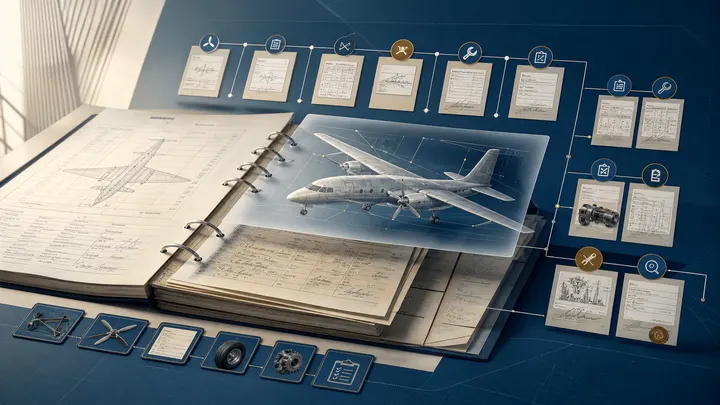
The OEM creates the first authoritative story of an aircraft: what was designed, produced, conformed, tested, configured, accepted, and delivered. After delivery, that story fragments across operators, MROs, parts providers, program systems, and regulatory records.
A digital aircraft record should preserve the factory baseline while building a controlled, evidence-based history of change.
The OEM aircraft record model
Organize around:
- Aircraft model and manufacturer serial number.
- Tail or registration history.
- As-designed effectivity.
- As-built and as-delivered configuration.
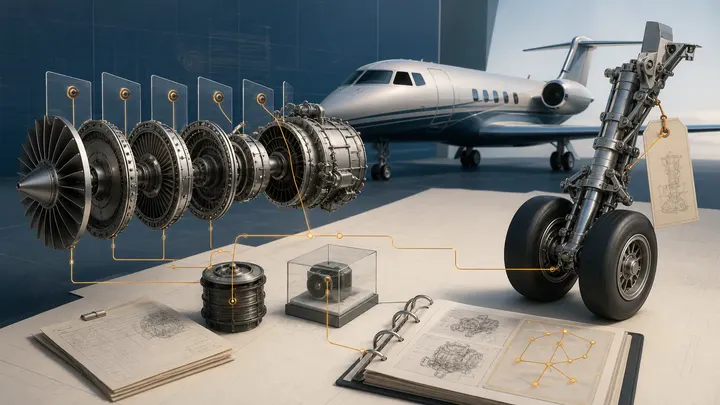
- Serialized engines, APU, propellers, landing gear, and major components.
- Production and conformity evidence.
- Ground and flight test evidence.
- Customer acceptance and delivery.
- Manuals and approved data.
- Service bulletins and campaigns.
- Warranty and field-service events.
- Modifications and continued-airworthiness requirements.
The aircraft identity remains stable even as registration, owner, operator, and component positions change.
As-built versus as-maintained
Preserve distinct layers:
| Layer | What it answers |
|---|---|
| As-designed | What configuration was approved for the model and effectivity? |
| As-built | What was physically produced and conformed? |
| As-delivered | What did the customer accept at delivery? |
| As-maintained | What configuration and status exist after field changes? |
| As-represented | What facts are shared for sale, support, finance, or analytics? |
Do not overwrite the factory record with the latest field configuration. Add events that explain how one became the other.
Delivery records
A delivery package may include:
- Aircraft identification and certificates.
- Statement of conformity and acceptance evidence as applicable.
- Installed equipment and serialized component list.
- Weight and balance.
- Flight-manual and supplement set.
- Production and completion records.
- Test and inspection results.
- Open-item and concession disposition.
- Warranty start and coverage.
- Maintenance-program and subscription setup.
- Customer-furnished equipment.
- Digital access and administrator transfer.
Use a delivery index with acceptance status rather than a folder of unexplained files.
Configuration and effectivity
Connect each part, option, software load, modification, and service document to:
- Product model and serial effectivity.
- Aircraft serial number.
- Installation position.
- Part and serial number.
- Hardware and software standard.
- Approval basis.
- Date and source.
- Continuing requirements.
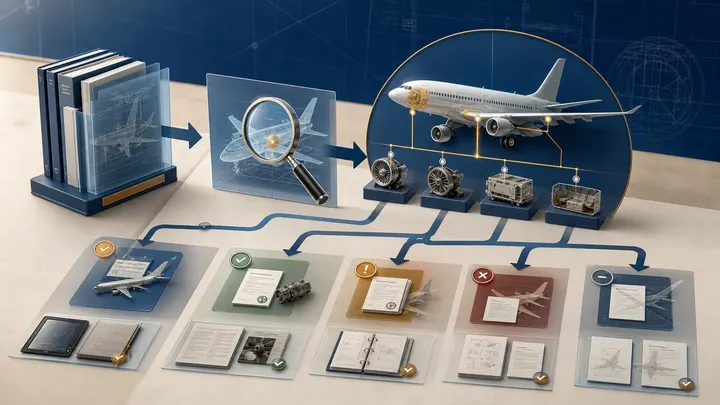
This configuration layer supports service bulletin targeting, parts eligibility, troubleshooting, warranty, and resale documentation.
Service bulletins and campaigns
For each service document:
- Define affected models, serials, parts, and configurations.
- Record issue and revision.
- Identify urgency and commercial program.
- Distinguish regulatory mandate from manufacturer recommendation.
- Track customer notification.
- Record embodiment evidence.
- Handle partial accomplishment and alternative configurations.
- Link resulting maintenance and configuration changes.
The aircraft service bulletin tracking guide explains why effectivity and embodiment need source-linked review.
Warranty and field support
A connected record can show:
- Delivery and warranty dates.
- Covered asset and serial.
- Utilization.
- Reported defect and troubleshooting.
- Maintenance history.
- Parts removed and installed.
- Prior similar events.
- Campaign or bulletin relationship.
- Claim decision and source.
This reduces repeated document requests and makes claim decisions more consistent without eliminating technical or contractual judgment.
Modification and completion history
Business aircraft may leave delivery with completions or later receive cabin, avionics, connectivity, performance, or mission changes.
Preserve:
- Approved design and engineering package.
- STC or other approval.
- Installation records.
- Parts and release documents.
- Tests and inspections.
- Weight and balance.
- Flight-manual supplements.
- Instructions for continued airworthiness.
- Software and wiring configuration.
The OEM record should clearly distinguish factory authority from third-party approval while maintaining the connected aircraft history.
Data exchange with operators and MROs
Use controlled exchange:
- Stable aircraft and component identifiers.
- Defined document and event schemas.
- Source-file preservation.
- Role and permission boundaries.
- Customer consent and contract controls.
- Duplicate and conflict handling.
- Review status.
- Export and continuity.
Do not force customers to choose between sending an entire data room and sending no useful history. Support decision-specific, permissioned packages.
Fleet intelligence
Connected records can support:
- Configuration population.
- Service bulletin effectivity and embodiment.
- Reliability and repeat-event analysis.
- Parts demand.
- Warranty trends.
- Maintenance burden by configuration.
- Residual-value and support questions.
- Fleet campaign progress.
- Transition and resale readiness.
Analytics should link back to the aircraft events and documents that produced each signal.
Security and governance
Define:
- OEM, operator, owner, lender, and MRO data rights.
- Tenant and fleet separation.
- Export-control and sensitive-data treatment.
- Customer-controlled sharing.
- Audit trail.
- Retention and deletion rules.
- Incident response.
- Business continuity and export.
The OEM should be able to support the fleet without silently claiming ownership of every operator-created record.
OEM platform evaluation checklist
- Preserves as-built and as-delivered baselines.
- Supports serialized configuration.
- Handles registration and ownership change.
- Links field modifications without erasing factory history.
- Controls service-document revisions and effectivity.
- Connects warranty claims to evidence.
- Supports customer and MRO exchange.
- Preserves source documents.
- Shows reviewer and audit history.
- Exports a complete aircraft record.
Sources and further reading
Common questions
Frequently asked questions
What belongs in an OEM digital aircraft record?
The scope may include as-built configuration, serialized components, production and acceptance evidence, delivery documents, manuals, approved data, service information, warranties, modifications, and selected field-service records.
How are OEM records different from an operator’s logbooks?
OEM records begin with design, production, conformity, and delivery context. Operator records document maintenance and operation after delivery. A connected system preserves each authority and links the histories without treating them as interchangeable.
Can OEM digital records improve warranty and field support?
Yes. Connected configuration, utilization, maintenance, parts, and source evidence can accelerate eligibility review, troubleshooting, campaign planning, and customer support.
Should an OEM overwrite the delivered configuration when an aircraft changes?
No. Preserve the delivered baseline and add time-stamped configuration events with authority, effectivity, source, and review. History is essential for support, safety, value, and future transfer.
Keep researching
Related aircraft guides

Build fleet intelligence from delivery forward
Keep every aircraft connected to its verified history.
Radar turns delivery, configuration, modification, and service evidence into a usable fleet record for OEM teams and customers.