Aircraft Affordability Calculator and Ownership Capacity Planner

Test whether an aircraft fits the balance sheet after purchase equity, financing, operation, maintenance, and retained liquidity are modeled together.

Affordability planner 8 sections · 6 min read Published July 27, 2026 · Updated July 27, 2026

In brief

Aircraft affordability is not purchase price divided by a down-payment percentage. A usable plan combines the cash required at closing, annual debt service, fixed and variable operation, maintenance funding, free-cash-flow coverage, and the liquidity that remains after the transaction.

Tools for this decision

Run the numbers while you read.

See all aircraft tools
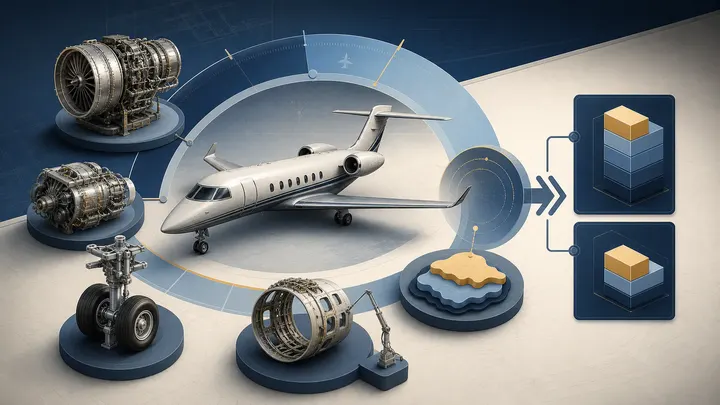
Aircraft Affordability Calculator and Ownership Capacity Planner editorial illustration

The purchase can close and still be unaffordable.

Aircraft buyers often model the equity check and monthly loan payment, then leave annual operation, maintenance events, tax, downtime, and retained liquidity in separate spreadsheets. That fragmentation hides the actual decision: how much cash will this aircraft require, and how much capacity remains when conditions move against the plan?

Use the workbench below for an initial base case. Then replace every default with a written source: lender indication, insurance quote, management proposal, fuel and utilization plan, maintenance status, program contract, shop estimate, tax estimate, and aircraft-specific records.

Interactive acquisition workbench

Model the aircraft and the balance sheet together.

Purchase equity is only the first cash demand. Combine financing, annual operation, maintenance funding, and retained liquidity before deciding what is affordable.

01 Acquisition
02 Debt and operation
03 Capacity and cushion
Planning posture

Estimated cash to close$0Equity + closing costs + immediate maintenance
Annual debt service$0
Annual operating and reserve$0
All-in annual aircraft cash demand$0
Free-cash-flow coverage0.0×
Liquidity runway0 months
Three-year cash demand$0

Downside test

10% more operating cost$0/year
20% fewer flight hours$0/hour

Illustrative planning model only. It is not a lender approval, quote, appraisal, tax recommendation, operating-cost guarantee, or financial advice. Replace every input with terms and evidence for the exact borrower and aircraft.

What the planner is measuring

The tool keeps three questions separate:

What the planner is measuring
QuestionOutputWhy it matters
Can the transaction close?Estimated cash to closePurchase equity alone excludes costs and immediate maintenance
Can the aircraft be carried?All-in annual aircraft cash demandDebt service and operation compete for the same annual cash flow
Can the plan absorb disruption?Coverage ratio and liquidity runwayA base case without a cushion is not a complete affordability decision

The output is a planning posture, not permission to buy. A resilient result means the entered assumptions leave more margin than a tight result. It does not mean the assumptions are accurate.

Build the aircraft assumption sheet first

Do not begin with a generic operating-cost table. Assemble a one-page assumption sheet for the exact aircraft and mission.

Build the aircraft assumption sheet first
InputStrong sourceWeak substitute
Purchase priceExecuted LOI or purchase agreementAsking price
Accepted valueCurrent appraisal or lender-supported valueAverage listing
Maximum LTVWritten lender indication for the aircraft and borrowerAdvertised maximum
Fixed costsManagement, crew, hangar, insurance, subscriptions, and training proposalsModel-wide internet average
Variable costsMission-specific fuel, handling, navigation, maintenance, and support assumptionsOne hourly number without scope
Maintenance reserveCurrent status, programs, contracts, event estimates, and utilizationA model benchmark treated as a guarantee
Annual utilizationActual mission schedule with positioning and trainingDesired passenger hours only
Immediate maintenancePre-buy findings and accepted corrective-work planSeller’s verbal estimate
Closing costsTax, escrow, title, legal, appraisal, lender, inspection, and delivery estimatesLoan fee alone
Retained liquidityCash remaining after all closing wiresTotal liquid assets before closing

Record an owner and effective date beside every input. Assumptions age at different speeds: a lender indication, fuel estimate, insurance quote, and inspection finding do not remain current for the same period.

A worked acquisition case

Assume a buyer is considering a $3.5 million aircraft:

  • Lender-accepted value: $3.4 million.
  • Maximum LTV: 75%.
  • Closing costs and taxes: $125,000.
  • Immediate maintenance after pre-buy: $150,000.
  • Interest rate: 7.25%.
  • Amortization: 12 years.
  • Fixed annual operating cost: $550,000.
  • Variable operating cost: $2,500 per hour.
  • Maintenance reserve: $650 per hour.
  • Expected utilization: 250 hours.
  • Annual free cash flow before the aircraft: $1.8 million.
  • Liquidity retained after closing: $1.5 million.

The loan advance is constrained by accepted value, not the higher purchase price. That difference moves directly into buyer equity. The annual decision then combines debt service with $550,000 of fixed cost and $3,150 for each modeled flight hour.

Now challenge the case:

  1. Increase operating cost by 10%.
  2. Reduce utilization by 20%, which raises effective fixed cost per hour.
  3. Add the next known inspection or engine event to immediate maintenance.
  4. Reduce accepted value without changing purchase price.
  5. Shorten amortization to the lender’s conservative case.
  6. Delay a planned sale and carry the aircraft for another year.

If one reasonable change breaks the plan, the issue is not the calculator. The proposed transaction has insufficient margin.

Affordability decision gates

Use explicit gates before moving from interest to commitment.

Affordability decision gates
GateQuestionEvidence requiredStop condition
AcquisitionIs all cash to close identified and available?Funds flow and liquidity statementCosts or equity source unresolved
Annual carryDoes recurring free cash flow cover aircraft demand?Base and downside cash-flow modelAircraft relies on optimistic revenue or asset sales
MaintenanceAre major events and programs modeled from current status?Status report, contracts, shop estimatesMaterial exposure remains unpriced
LiquidityIs the post-close cushion real and unrestricted?Post-close balance sheetCushion includes funds already committed elsewhere
ExitCan the owner carry the aircraft through a slower sale?Exit-value and extended-hold scenarioSale timing is required to avoid distress
GovernanceDoes the decision owner accept the downside case?Signed assumption and exception memoRisks are distributed across unowned spreadsheets

Ownership cost is more than operating cost

Annual operation is only one part of economic burden. A full decision may also consider:

  • Tax depreciation and recapture with qualified advice.
  • Opportunity cost of purchase equity and retained liquidity.
  • Market-value change.
  • Major-event timing at exit.
  • Replacement lift during downtime.
  • Management transition or crew turnover.
  • Sale commission, inspection, delivery, and transaction cost.
  • Currency, jurisdiction, and import or export exposure.

Those items do not all belong in the public cash calculator. They do belong in the acquisition memo.

Read the aircraft ownership costs guide for the cost taxonomy and the aircraft valuation guide for exit-value evidence.

The acquisition capacity memo

The downloaded brief from the calculator is a starting exhibit. A decision-ready acquisition memo should attach:

  1. Transaction summary: aircraft, price, value, requested loan, equity, and use.
  2. Cash-to-close statement: purchase equity, deposits, taxes, fees, inspection, delivery, and immediate maintenance.
  3. Annual operating budget: each fixed and variable category with source and effective date.
  4. Maintenance exposure: current status, programs, next events, assumptions, and contingency.
  5. Base and downside cases: utilization, cost, rate, value, downtime, and sale timing.
  6. Liquidity bridge: liquid assets before closing, closing uses, restrictions, and retained cash.
  7. Decision exceptions: unsupported inputs, open quotes, records gaps, and responsible owner.

Do not delete the downside case after approval. Preserve it beside the actual aircraft record and update it when the lender structure, inspection result, program status, or mission changes.

What to do with the result

  • If the posture is resilient, validate the inputs and proceed to lender and aircraft diligence.
  • If it is workable with limited margin, resolve the two assumptions with the largest downside effect before increasing a deposit.
  • If capacity is tight, change the aircraft, capital structure, mission, utilization, cost base, or liquidity plan.

Next, use the aircraft loan-readiness builder to assemble the borrower and collateral evidence behind the financing request.

Sources and further reading

Common questions

Frequently asked questions

How much aircraft can I afford?

There is no responsible answer from income or net worth alone. Model cash to close, annual debt service, fixed and variable operation, maintenance exposure, taxes, retained liquidity, and downside capacity for the exact aircraft and mission.

Does the calculator include depreciation or resale value?

No. The public planner focuses on cash demand and liquidity. Depreciation, tax treatment, opportunity cost, and exit value should be modeled separately with qualified tax, valuation, and financial advisors.

What is a reasonable aircraft liquidity cushion?

There is no universal rule. The planner shows months of modeled aircraft cash demand covered by retained liquidity. The appropriate cushion depends on the owner, business cycle, aircraft, maintenance exposure, lender covenants, and access to other capital.

Is this an aircraft loan approval calculator?

No. It does not predict lender approval or terms. Lenders evaluate credit, collateral, structure, records, title, insurance, use, and policy eligibility in addition to the cash assumptions modeled here.

Make the aircraft history decision-ready

Turn aircraft paperwork into evidence you can use.

Radar digitizes, connects, and verifies the maintenance history behind buying, financing, operating, and selling an aircraft.


Your fleet's records at your fingertips.

Sign up, print a label, and search your first tail within days. Free.

Aircraft Affordability Calculator and Ownership Capacity Planner

Test whether an aircraft fits the balance sheet after purchase equity, financing, operation, maintenance, and retained liquidity are modeled together.

Affordability planner 8 sections · 6 min read Published July 27, 2026 · Updated July 27, 2026

In brief

Aircraft affordability is not purchase price divided by a down-payment percentage. A usable plan combines the cash required at closing, annual debt service, fixed and variable operation, maintenance funding, free-cash-flow coverage, and the liquidity that remains after the transaction.

Tools for this decision

Run the numbers while you read.

See all aircraft tools
Aircraft Affordability Calculator and Ownership Capacity Planner editorial illustration

The purchase can close and still be unaffordable.

Aircraft buyers often model the equity check and monthly loan payment, then leave annual operation, maintenance events, tax, downtime, and retained liquidity in separate spreadsheets. That fragmentation hides the actual decision: how much cash will this aircraft require, and how much capacity remains when conditions move against the plan?

Use the workbench below for an initial base case. Then replace every default with a written source: lender indication, insurance quote, management proposal, fuel and utilization plan, maintenance status, program contract, shop estimate, tax estimate, and aircraft-specific records.

Interactive acquisition workbench

Model the aircraft and the balance sheet together.

Purchase equity is only the first cash demand. Combine financing, annual operation, maintenance funding, and retained liquidity before deciding what is affordable.

01 Acquisition
02 Debt and operation
03 Capacity and cushion
Planning posture

Estimated cash to close$0Equity + closing costs + immediate maintenance
Annual debt service$0
Annual operating and reserve$0
All-in annual aircraft cash demand$0
Free-cash-flow coverage0.0×
Liquidity runway0 months
Three-year cash demand$0

Downside test

10% more operating cost$0/year
20% fewer flight hours$0/hour

Illustrative planning model only. It is not a lender approval, quote, appraisal, tax recommendation, operating-cost guarantee, or financial advice. Replace every input with terms and evidence for the exact borrower and aircraft.

What the planner is measuring

The tool keeps three questions separate:

What the planner is measuring
QuestionOutputWhy it matters
Can the transaction close?Estimated cash to closePurchase equity alone excludes costs and immediate maintenance
Can the aircraft be carried?All-in annual aircraft cash demandDebt service and operation compete for the same annual cash flow
Can the plan absorb disruption?Coverage ratio and liquidity runwayA base case without a cushion is not a complete affordability decision

The output is a planning posture, not permission to buy. A resilient result means the entered assumptions leave more margin than a tight result. It does not mean the assumptions are accurate.

Build the aircraft assumption sheet first

Do not begin with a generic operating-cost table. Assemble a one-page assumption sheet for the exact aircraft and mission.

Build the aircraft assumption sheet first
InputStrong sourceWeak substitute
Purchase priceExecuted LOI or purchase agreementAsking price
Accepted valueCurrent appraisal or lender-supported valueAverage listing
Maximum LTVWritten lender indication for the aircraft and borrowerAdvertised maximum
Fixed costsManagement, crew, hangar, insurance, subscriptions, and training proposalsModel-wide internet average
Variable costsMission-specific fuel, handling, navigation, maintenance, and support assumptionsOne hourly number without scope
Maintenance reserveCurrent status, programs, contracts, event estimates, and utilizationA model benchmark treated as a guarantee
Annual utilizationActual mission schedule with positioning and trainingDesired passenger hours only
Immediate maintenancePre-buy findings and accepted corrective-work planSeller’s verbal estimate
Closing costsTax, escrow, title, legal, appraisal, lender, inspection, and delivery estimatesLoan fee alone
Retained liquidityCash remaining after all closing wiresTotal liquid assets before closing

Record an owner and effective date beside every input. Assumptions age at different speeds: a lender indication, fuel estimate, insurance quote, and inspection finding do not remain current for the same period.

A worked acquisition case

Assume a buyer is considering a $3.5 million aircraft:

  • Lender-accepted value: $3.4 million.
  • Maximum LTV: 75%.
  • Closing costs and taxes: $125,000.
  • Immediate maintenance after pre-buy: $150,000.
  • Interest rate: 7.25%.
  • Amortization: 12 years.
  • Fixed annual operating cost: $550,000.
  • Variable operating cost: $2,500 per hour.
  • Maintenance reserve: $650 per hour.
  • Expected utilization: 250 hours.
  • Annual free cash flow before the aircraft: $1.8 million.
  • Liquidity retained after closing: $1.5 million.

The loan advance is constrained by accepted value, not the higher purchase price. That difference moves directly into buyer equity. The annual decision then combines debt service with $550,000 of fixed cost and $3,150 for each modeled flight hour.

Now challenge the case:

  1. Increase operating cost by 10%.
  2. Reduce utilization by 20%, which raises effective fixed cost per hour.
  3. Add the next known inspection or engine event to immediate maintenance.
  4. Reduce accepted value without changing purchase price.
  5. Shorten amortization to the lender’s conservative case.
  6. Delay a planned sale and carry the aircraft for another year.

If one reasonable change breaks the plan, the issue is not the calculator. The proposed transaction has insufficient margin.

Affordability decision gates

Use explicit gates before moving from interest to commitment.

Affordability decision gates
GateQuestionEvidence requiredStop condition
AcquisitionIs all cash to close identified and available?Funds flow and liquidity statementCosts or equity source unresolved
Annual carryDoes recurring free cash flow cover aircraft demand?Base and downside cash-flow modelAircraft relies on optimistic revenue or asset sales
MaintenanceAre major events and programs modeled from current status?Status report, contracts, shop estimatesMaterial exposure remains unpriced
LiquidityIs the post-close cushion real and unrestricted?Post-close balance sheetCushion includes funds already committed elsewhere
ExitCan the owner carry the aircraft through a slower sale?Exit-value and extended-hold scenarioSale timing is required to avoid distress
GovernanceDoes the decision owner accept the downside case?Signed assumption and exception memoRisks are distributed across unowned spreadsheets

Ownership cost is more than operating cost

Annual operation is only one part of economic burden. A full decision may also consider:

  • Tax depreciation and recapture with qualified advice.
  • Opportunity cost of purchase equity and retained liquidity.
  • Market-value change.
  • Major-event timing at exit.
  • Replacement lift during downtime.
  • Management transition or crew turnover.
  • Sale commission, inspection, delivery, and transaction cost.
  • Currency, jurisdiction, and import or export exposure.

Those items do not all belong in the public cash calculator. They do belong in the acquisition memo.

Read the aircraft ownership costs guide for the cost taxonomy and the aircraft valuation guide for exit-value evidence.

The acquisition capacity memo

The downloaded brief from the calculator is a starting exhibit. A decision-ready acquisition memo should attach:

  1. Transaction summary: aircraft, price, value, requested loan, equity, and use.
  2. Cash-to-close statement: purchase equity, deposits, taxes, fees, inspection, delivery, and immediate maintenance.
  3. Annual operating budget: each fixed and variable category with source and effective date.
  4. Maintenance exposure: current status, programs, next events, assumptions, and contingency.
  5. Base and downside cases: utilization, cost, rate, value, downtime, and sale timing.
  6. Liquidity bridge: liquid assets before closing, closing uses, restrictions, and retained cash.
  7. Decision exceptions: unsupported inputs, open quotes, records gaps, and responsible owner.

Do not delete the downside case after approval. Preserve it beside the actual aircraft record and update it when the lender structure, inspection result, program status, or mission changes.

What to do with the result

  • If the posture is resilient, validate the inputs and proceed to lender and aircraft diligence.
  • If it is workable with limited margin, resolve the two assumptions with the largest downside effect before increasing a deposit.
  • If capacity is tight, change the aircraft, capital structure, mission, utilization, cost base, or liquidity plan.

Next, use the aircraft loan-readiness builder to assemble the borrower and collateral evidence behind the financing request.

Sources and further reading

Common questions

Frequently asked questions

How much aircraft can I afford?

There is no responsible answer from income or net worth alone. Model cash to close, annual debt service, fixed and variable operation, maintenance exposure, taxes, retained liquidity, and downside capacity for the exact aircraft and mission.

Does the calculator include depreciation or resale value?

No. The public planner focuses on cash demand and liquidity. Depreciation, tax treatment, opportunity cost, and exit value should be modeled separately with qualified tax, valuation, and financial advisors.

What is a reasonable aircraft liquidity cushion?

There is no universal rule. The planner shows months of modeled aircraft cash demand covered by retained liquidity. The appropriate cushion depends on the owner, business cycle, aircraft, maintenance exposure, lender covenants, and access to other capital.

Is this an aircraft loan approval calculator?

No. It does not predict lender approval or terms. Lenders evaluate credit, collateral, structure, records, title, insurance, use, and policy eligibility in addition to the cash assumptions modeled here.

Make the aircraft history decision-ready

Turn aircraft paperwork into evidence you can use.

Radar digitizes, connects, and verifies the maintenance history behind buying, financing, operating, and selling an aircraft.

Your fleet's records at your fingertips.

Sign up, print a label, and search your first tail within days. Free.

Aircraft Affordability Calculator and Ownership Capacity Planner

Test whether an aircraft fits the balance sheet after purchase equity, financing, operation, maintenance, and retained liquidity are modeled together.

Affordability planner 8 sections · 6 min read Published July 27, 2026 · Updated July 27, 2026

In brief

Aircraft affordability is not purchase price divided by a down-payment percentage. A usable plan combines the cash required at closing, annual debt service, fixed and variable operation, maintenance funding, free-cash-flow coverage, and the liquidity that remains after the transaction.

Tools for this decision

Run the numbers while you read.

See all aircraft tools
Aircraft Affordability Calculator and Ownership Capacity Planner editorial illustration

The purchase can close and still be unaffordable.

Aircraft buyers often model the equity check and monthly loan payment, then leave annual operation, maintenance events, tax, downtime, and retained liquidity in separate spreadsheets. That fragmentation hides the actual decision: how much cash will this aircraft require, and how much capacity remains when conditions move against the plan?

Use the workbench below for an initial base case. Then replace every default with a written source: lender indication, insurance quote, management proposal, fuel and utilization plan, maintenance status, program contract, shop estimate, tax estimate, and aircraft-specific records.

Interactive acquisition workbench

Model the aircraft and the balance sheet together.

Purchase equity is only the first cash demand. Combine financing, annual operation, maintenance funding, and retained liquidity before deciding what is affordable.

01 Acquisition
02 Debt and operation
03 Capacity and cushion
Planning posture

Estimated cash to close$0Equity + closing costs + immediate maintenance
Annual debt service$0
Annual operating and reserve$0
All-in annual aircraft cash demand$0
Free-cash-flow coverage0.0×
Liquidity runway0 months
Three-year cash demand$0

Downside test

10% more operating cost$0/year
20% fewer flight hours$0/hour

Illustrative planning model only. It is not a lender approval, quote, appraisal, tax recommendation, operating-cost guarantee, or financial advice. Replace every input with terms and evidence for the exact borrower and aircraft.

What the planner is measuring

The tool keeps three questions separate:

What the planner is measuring
QuestionOutputWhy it matters
Can the transaction close?Estimated cash to closePurchase equity alone excludes costs and immediate maintenance
Can the aircraft be carried?All-in annual aircraft cash demandDebt service and operation compete for the same annual cash flow
Can the plan absorb disruption?Coverage ratio and liquidity runwayA base case without a cushion is not a complete affordability decision

The output is a planning posture, not permission to buy. A resilient result means the entered assumptions leave more margin than a tight result. It does not mean the assumptions are accurate.

Build the aircraft assumption sheet first

Do not begin with a generic operating-cost table. Assemble a one-page assumption sheet for the exact aircraft and mission.

Build the aircraft assumption sheet first
InputStrong sourceWeak substitute
Purchase priceExecuted LOI or purchase agreementAsking price
Accepted valueCurrent appraisal or lender-supported valueAverage listing
Maximum LTVWritten lender indication for the aircraft and borrowerAdvertised maximum
Fixed costsManagement, crew, hangar, insurance, subscriptions, and training proposalsModel-wide internet average
Variable costsMission-specific fuel, handling, navigation, maintenance, and support assumptionsOne hourly number without scope
Maintenance reserveCurrent status, programs, contracts, event estimates, and utilizationA model benchmark treated as a guarantee
Annual utilizationActual mission schedule with positioning and trainingDesired passenger hours only
Immediate maintenancePre-buy findings and accepted corrective-work planSeller’s verbal estimate
Closing costsTax, escrow, title, legal, appraisal, lender, inspection, and delivery estimatesLoan fee alone
Retained liquidityCash remaining after all closing wiresTotal liquid assets before closing

Record an owner and effective date beside every input. Assumptions age at different speeds: a lender indication, fuel estimate, insurance quote, and inspection finding do not remain current for the same period.

A worked acquisition case

Assume a buyer is considering a $3.5 million aircraft:

  • Lender-accepted value: $3.4 million.
  • Maximum LTV: 75%.
  • Closing costs and taxes: $125,000.
  • Immediate maintenance after pre-buy: $150,000.
  • Interest rate: 7.25%.
  • Amortization: 12 years.
  • Fixed annual operating cost: $550,000.
  • Variable operating cost: $2,500 per hour.
  • Maintenance reserve: $650 per hour.
  • Expected utilization: 250 hours.
  • Annual free cash flow before the aircraft: $1.8 million.
  • Liquidity retained after closing: $1.5 million.

The loan advance is constrained by accepted value, not the higher purchase price. That difference moves directly into buyer equity. The annual decision then combines debt service with $550,000 of fixed cost and $3,150 for each modeled flight hour.

Now challenge the case:

  1. Increase operating cost by 10%.
  2. Reduce utilization by 20%, which raises effective fixed cost per hour.
  3. Add the next known inspection or engine event to immediate maintenance.
  4. Reduce accepted value without changing purchase price.
  5. Shorten amortization to the lender’s conservative case.
  6. Delay a planned sale and carry the aircraft for another year.

If one reasonable change breaks the plan, the issue is not the calculator. The proposed transaction has insufficient margin.

Affordability decision gates

Use explicit gates before moving from interest to commitment.

Affordability decision gates
GateQuestionEvidence requiredStop condition
AcquisitionIs all cash to close identified and available?Funds flow and liquidity statementCosts or equity source unresolved
Annual carryDoes recurring free cash flow cover aircraft demand?Base and downside cash-flow modelAircraft relies on optimistic revenue or asset sales
MaintenanceAre major events and programs modeled from current status?Status report, contracts, shop estimatesMaterial exposure remains unpriced
LiquidityIs the post-close cushion real and unrestricted?Post-close balance sheetCushion includes funds already committed elsewhere
ExitCan the owner carry the aircraft through a slower sale?Exit-value and extended-hold scenarioSale timing is required to avoid distress
GovernanceDoes the decision owner accept the downside case?Signed assumption and exception memoRisks are distributed across unowned spreadsheets

Ownership cost is more than operating cost

Annual operation is only one part of economic burden. A full decision may also consider:

  • Tax depreciation and recapture with qualified advice.
  • Opportunity cost of purchase equity and retained liquidity.
  • Market-value change.
  • Major-event timing at exit.
  • Replacement lift during downtime.
  • Management transition or crew turnover.
  • Sale commission, inspection, delivery, and transaction cost.
  • Currency, jurisdiction, and import or export exposure.

Those items do not all belong in the public cash calculator. They do belong in the acquisition memo.

Read the aircraft ownership costs guide for the cost taxonomy and the aircraft valuation guide for exit-value evidence.

The acquisition capacity memo

The downloaded brief from the calculator is a starting exhibit. A decision-ready acquisition memo should attach:

  1. Transaction summary: aircraft, price, value, requested loan, equity, and use.
  2. Cash-to-close statement: purchase equity, deposits, taxes, fees, inspection, delivery, and immediate maintenance.
  3. Annual operating budget: each fixed and variable category with source and effective date.
  4. Maintenance exposure: current status, programs, next events, assumptions, and contingency.
  5. Base and downside cases: utilization, cost, rate, value, downtime, and sale timing.
  6. Liquidity bridge: liquid assets before closing, closing uses, restrictions, and retained cash.
  7. Decision exceptions: unsupported inputs, open quotes, records gaps, and responsible owner.

Do not delete the downside case after approval. Preserve it beside the actual aircraft record and update it when the lender structure, inspection result, program status, or mission changes.

What to do with the result

  • If the posture is resilient, validate the inputs and proceed to lender and aircraft diligence.
  • If it is workable with limited margin, resolve the two assumptions with the largest downside effect before increasing a deposit.
  • If capacity is tight, change the aircraft, capital structure, mission, utilization, cost base, or liquidity plan.

Next, use the aircraft loan-readiness builder to assemble the borrower and collateral evidence behind the financing request.

Sources and further reading

Common questions

Frequently asked questions

How much aircraft can I afford?

There is no responsible answer from income or net worth alone. Model cash to close, annual debt service, fixed and variable operation, maintenance exposure, taxes, retained liquidity, and downside capacity for the exact aircraft and mission.

Does the calculator include depreciation or resale value?

No. The public planner focuses on cash demand and liquidity. Depreciation, tax treatment, opportunity cost, and exit value should be modeled separately with qualified tax, valuation, and financial advisors.

What is a reasonable aircraft liquidity cushion?

There is no universal rule. The planner shows months of modeled aircraft cash demand covered by retained liquidity. The appropriate cushion depends on the owner, business cycle, aircraft, maintenance exposure, lender covenants, and access to other capital.

Is this an aircraft loan approval calculator?

No. It does not predict lender approval or terms. Lenders evaluate credit, collateral, structure, records, title, insurance, use, and policy eligibility in addition to the cash assumptions modeled here.

Make the aircraft history decision-ready

Turn aircraft paperwork into evidence you can use.

Radar digitizes, connects, and verifies the maintenance history behind buying, financing, operating, and selling an aircraft.
Your fleet's records at your fingertips.

Sign up, print a label, and search your first tail within days. Free.