In brief
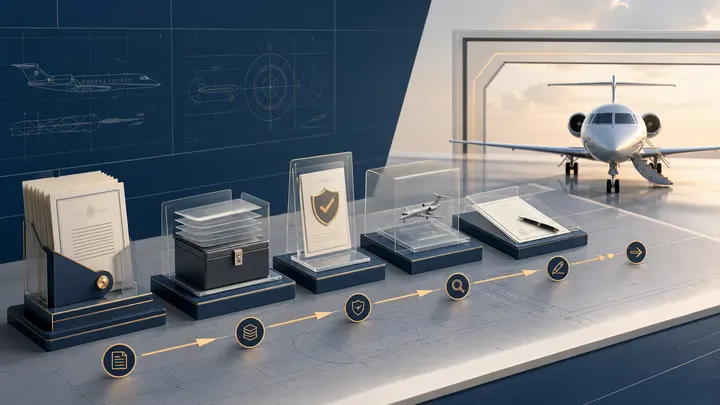
A lender-ready aircraft file combines borrower credit, transaction structure, aircraft facts, value, records, title, insurance, inspection, closing conditions, and ongoing reporting. Readiness means those workstreams are current and internally consistent—not merely uploaded.
Tools for this decision
Run the numbers while you read.

An aircraft loan submission fails in two ways: the lender may dislike the risk, or the lender may be unable to determine the risk because the evidence is incomplete, stale, contradictory, or badly organized.
The second failure is avoidable.
A finance-ready package should let credit, collateral, legal, insurance, and operations reviewers answer their questions without rebuilding the transaction from email. Use this workbench to identify the missing evidence before submission.
Interactive lender-packet builder
Find the evidence gaps before the lender does.
Mark only what is current, internally consistent, and ready to share. The output is a submission plan—not a prediction of credit approval.
Readiness means the identified evidence is assembled for review. It does not mean a lender will accept an item, value the aircraft as assumed, approve the borrower, or offer particular terms. Radar is not a lender or broker.
What the readiness score means
The score measures packet completeness across weighted evidence groups. It does not model the lender’s policy or predict approval.
Critical items receive more weight because their absence can stop both review and closing:
- Borrower financials and repayment case.
- Aircraft specification and identity.
- Current valuation evidence.
- Maintenance records and exceptions.
- Pre-buy and material maintenance exposure.
- Title and security evidence.
A high score with inconsistent documents is still a weak submission. Confirm that names, values, dates, serial numbers, ownership entities, loan requests, use, and closing timelines agree across the package.
Build one indexed lender data room
Use a durable file structure rather than forwarding attachments.
| Folder | Contents | Quality control |
|---|---|---|
| 01 Borrower | Financial statements, tax returns, liquidity, debt schedule, ownership, guarantees | Effective dates visible; entities reconcile |
| 02 Transaction | LOI or purchase agreement, requested structure, funds flow, deposit, use | Price, buyer, seller, and deadlines agree |
| 03 Aircraft | Specification, serial numbers, times, configuration, programs, photos | Matches appraisal, insurance, and records |
| 04 Value | Appraisal, comparables, adjustments, assumptions, market evidence | Purpose and valuation date stated |
| 05 Records | Current status, logbooks, engines, LLPs, ADs, repairs, alterations, exceptions | Summaries link to source pages |
| 06 Inspection | Scope, findings, estimates, corrective work, acceptance | Open findings have owners and disposition |
| 07 Title | Registry, title search, liens, releases, escrow, international filings | Legal names and security path verified |
| 08 Insurance and operation | Indication or binder, pilots, management, hangar, geography, charter | Matches actual intended use |
| 09 Closing | Conditions tracker, loan documents, certificates, funds flow, delivery | One controlling owner and deadline |
| 10 Monitoring | Reporting calendar, insurance, location, maintenance, value, covenants | Owner and source system named |
Do not overwrite a reviewed file silently. Preserve versions and make the current document obvious.
The lender’s parallel reviews
Credit
Credit asks whether the borrower can repay through a downside period. Prepare historical and current financials, liquidity, global debt, cash-flow support, guarantees, business purpose, and ownership.
Explain unusual movements before the reviewer finds them. A one-page bridge is more useful than forcing the lender to infer why liquidity, income, leverage, or ownership changed.
Collateral
Collateral asks whether the exact aircraft supports the proposed value and whether it remains marketable through the loan term. Reconcile:
- Manufacturer, model, year, serial number, and registration.
- Airframe, engine, APU, propeller, and component identity.
- Total time, cycles, and utilization profile.
- Engine and APU program enrollment and standing.
- Inspection and maintenance status.
- Configuration, avionics, cabin, connectivity, paint, and equipment.
- Damage, repairs, alterations, and corrosion.
- Records completeness and exceptions.
Legal and security
The lender must understand ownership, authority, title, liens, escrow, security documentation, registration, and any applicable international filings. The business names in the purchase agreement, loan documents, registry, insurance, and funds flow must describe the intended parties correctly.
Insurance and operation
Insurance evidence must match the aircraft, pilots, limits, geography, management arrangement, and intended use. Part 91, charter, lease, management, international, and specialized mission assumptions can change both underwriting and policy terms.
Closing
Closing converts open diligence into binary conditions: satisfied, waived by the authorized party, or unresolved. A condition is not complete because someone said it was handled.
Use a real conditions tracker
| ID | Condition | Required evidence | Owner | Dependency | Due | Status |
|---|---|---|---|---|---|---|
| C-01 | Final accepted value | Signed appraisal or lender approval | Lender | Current aircraft specification | Before documents | Open |
| C-02 | Title and lien clearance | Updated title report and releases | Escrow/counsel | Seller payoff | Funding | Open |
| C-03 | Pre-buy acceptance | Findings disposition and buyer acceptance | Buyer | Final shop report | Before funding | Open |
| C-04 | Insurance | Binder and required endorsements | Broker | Approved pilots and use | Funding | Open |
| C-05 | Records delivery | Executed records receipt and exception schedule | Buyer/seller | Data-room freeze | Delivery | Open |
Every condition needs an evidence artifact, not just a color. If a condition is waived, preserve who had authority to waive it and what residual risk was accepted.
A worked readiness case
A buyer has strong financials and an executed purchase agreement. The aircraft specification, valuation, and insurance indication are ready. But the current engine program statement is missing, a repair reference does not include its approval data, and the pre-buy scope has not been finalized.
That package is not ready simply because the borrower is creditworthy.
The missing engine evidence can change maintenance exposure and value. The repair support can affect marketability. The incomplete pre-buy scope means the parties have not defined how those questions will be tested. The correct next action is to resolve the collateral evidence—not to send the lender another copy of the financial statement.
Submission choreography
- Freeze the request. State loan amount, price, value, equity, structure, use, borrower, owner, and target closing.
- Run the readiness review. Mark only evidence that is current and shareable.
- Resolve internal conflicts. Fix names, dates, values, times, and terms that disagree.
- Publish the index. Give every file a clear name, date, version, and owner.
- Send one concise narrative. Explain the transaction, repayment case, aircraft, open items, and timetable.
- Track lender questions. Add each request to the conditions tracker with an owner.
- Freeze closing evidence. Preserve the final approved package, funds flow, delivery receipt, and records exceptions.
Common package failures
- A model-wide aircraft specification is supplied instead of the serial-specific configuration.
- Asking price is presented as value.
- Current status is exported without the source records supporting material items.
- Engine program enrollment is mentioned without the current contract or standing.
- An entity appears in the purchase agreement but not the borrower ownership chart.
- Insurance assumes a different use or pilot plan.
- The lender receives thousands of unlabeled logbook pages without an exception summary.
- Pre-buy findings are discussed in email but never placed in the closing tracker.
- A “final” file changes after review without a new version.
Turn the packet into an operating record
The closing data room should not disappear after funding. Reuse it as the baseline for:
- Insurance renewals.
- Maintenance and program monitoring.
- Aircraft value updates.
- Covenant reporting.
- Damage and configuration changes.
- Future refinance or sale diligence.
Radar connects the aircraft conclusions in that baseline to their source pages, so later reviewers can see what changed rather than restart the transaction.
Use the aircraft financing guide for the complete underwriting process and the aircraft purchase closing checklist for delivery and funding control.
Sources and further reading
Common questions
Frequently asked questions
What should be in an aircraft loan package?
A useful package commonly covers borrower financials and ownership, transaction structure, aircraft specification, valuation, maintenance records, pre-buy findings, title and registry evidence, insurance, closing conditions, and post-close reporting.
Does a complete loan package guarantee approval?
No. A complete package makes the request reviewable. The lender still applies its credit, collateral, concentration, aircraft, use, jurisdiction, and documentation policies.
Should aircraft records be sent with the initial loan request?
Provide the lender’s requested scope through a controlled data room. At minimum, prepare the current status, major-event and program evidence, damage and modification history, records exceptions, and source documents needed to support value and marketability.
When should the lender packet be started?
Before a tight purchase-agreement clock begins. Borrower information can be assembled early, while aircraft, title, valuation, insurance, and inspection files are completed as the specific transaction develops.
Keep researching
Related aircraft guides



Make the aircraft history decision-ready
Turn aircraft paperwork into evidence you can use.
Radar digitizes, connects, and verifies the maintenance history behind buying, financing, operating, and selling an aircraft.