Aircraft Down Payment: How Much Equity Do You Need?

How lenders size aircraft equity—and how to avoid treating the down payment as the only cash required to close and operate.

Aircraft down payment 9 sections · 6 min read Reviewed July 26, 2026

In brief

An aircraft down payment is driven by the lender’s accepted value, maximum LTV, aircraft risk, borrower strength, and transaction structure. The buyer must also fund any value shortfall, taxes, fees, initial maintenance, and post-closing liquidity that the loan does not cover.

Tools for this decision

Run the numbers while you read.

See all aircraft tools
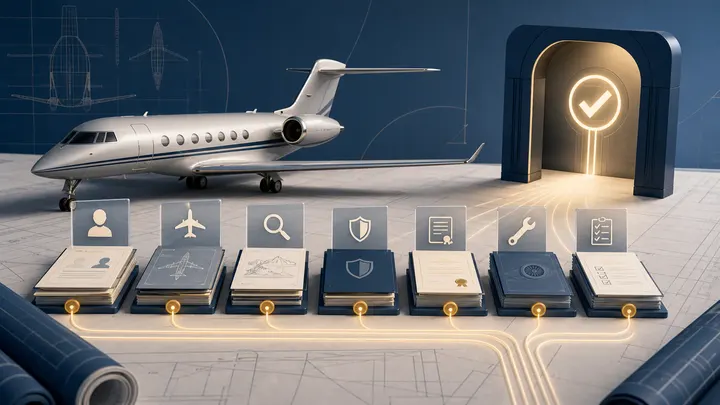
Aircraft Down Payment: How Much Equity Do You Need? editorial illustration

The aircraft down payment is only the first layer of equity in an acquisition. A buyer may also need cash for a value shortfall, taxes, diligence, closing fees, insurance, immediate maintenance, and post-closing reserves.

The correct question is not merely “What percentage do I need?” It is:

Radar is not a lender or financial advisor. Use this framework to prepare scenarios and request binding requirements from qualified lenders.

Aircraft down payment formula

A simple estimate begins with:

Estimated lender advance = accepted aircraft value × maximum LTV

Cash toward purchase = purchase price − lender advance

Then add:

  • Taxes and registration costs.
  • Inspection and records-review costs.
  • Appraisal, title, escrow, legal, and filing fees.
  • Insurance premium or deposit.
  • Immediate maintenance and discrepancy correction.
  • Initial crew, training, hangar, and operating expenses.
  • Liquidity or reserve requirements.

If a $2 million purchase is valued by the lender at $1.8 million and approved at 80% LTV, the estimated advance is $1.44 million. The buyer funds $560,000 toward price—not simply 20% of the $2 million purchase.

Interactive acquisition tool

Calculate the cash this aircraft actually requires.

Change accepted value and lender LTV to expose the value gap that a headline “20% down” estimate misses.

Load a scenario
Purchase price funding0%
Lender advanceBuyer equity
Estimated lender advance$0
Cash toward purchase$0
Value gap inside your equity$0Already included above, not added twice
Estimated cash to close$0Equity + entered costs + immediate maintenance
Minimum liquid cash position$0Cash to close + liquidity retained

Illustrative planning model only. A lender may use a different value basis, advance formula, reserve requirement, or eligible-cost treatment. This is not a quote, appraisal, approval, tax recommendation, or commitment to lend.

Read the result correctly

The value gap is already part of “cash toward purchase.” Do not add it twice. The larger “cash to close” result adds the transaction and immediate-maintenance costs you entered. “Minimum liquid cash position” adds the cash you intend to retain after closing.

Run at least three cases:

  1. Base case: purchase price equals accepted value.
  2. Value-gap case: accepted value is 10% below price.
  3. Downside case: lower value, lower maximum LTV, and the maintenance found during diligence.

If the transaction works only in the base case, the buyer does not yet have a resilient cash plan.

Published ranges are not approvals

Some aircraft financing providers publish program ranges for common aircraft and strong borrowers. These ranges are useful for early planning, but they may assume:

  • A qualifying credit profile.
  • A supported purchase price.
  • An eligible aircraft age and category.
  • Personal or business use acceptable to the program.
  • Complete maintenance records.
  • Minimum and maximum loan sizes.
  • Domestic registration and location.
  • No material damage, title, or inspection exception.

AOPA Aviation Finance has described traditional aircraft loans with common equity ranges while also describing higher-equity, lower-documentation structures. Those are examples of program design, not universal market rules. Review the current provider material and obtain a transaction-specific quote.

What increases the required aircraft down payment

Accepted value below purchase price

The most common surprise is a lender value below the negotiated price. The gap may reflect optimistic pricing, recent market movement, maintenance exposure, configuration, damage, or weak comparable evidence.

Use the aircraft valuation projection model to test how a lower value changes the lender advance and cash required, then confirm the lender’s accepted valuation method.

Older or less liquid aircraft

An aircraft with fewer lenders, fewer recent sales, a small fleet, costly major events, or difficult parts support may require more lender protection.

Commercial or specialized use

Charter, rental, training, special-mission, or international operations can affect utilization, wear, jurisdiction, insurance, and recovery assumptions.

Incomplete or conflicting records

Missing aircraft logbooks, unresolved total-time discrepancies, unsupported life-limited parts, or incomplete damage documentation can reduce accepted value or aircraft eligibility.

Borrower or guarantor risk

Lower liquidity, volatile income, high leverage, limited experience, or material credit events may lead to more equity, guarantees, reserves, or a decline.

Aggressive structure

Long amortization, long maturity, cash-out proceeds, interest-only periods, or weak covenants may need a lower LTV to balance risk.

Down payment versus LTV

Down payment is expressed relative to transaction price. LTV is expressed relative to lender-accepted value. They are related but not interchangeable.

Down payment versus LTV
ScenarioPurchase priceAccepted valueLoanDown payment toward priceLTV
Price equals value$1,000,000$1,000,000$800,000$200,00080%
Price exceeds value$1,000,000$900,000$720,000$280,00080%
More buyer equity$1,000,000$1,000,000$650,000$350,00065%

The lender may use a different basis or apply additional adjustments. Always ask for the accepted value and advance calculation in writing.

Should you make a larger down payment?

Potential benefits include:

  • Lower principal and monthly payment.
  • Lower balloon balance.
  • Better LTV and potentially wider lender appetite.
  • Less total interest if other terms remain constant.
  • More resilience to a decline in aircraft value.

Potential costs include:

  • Less cash available for maintenance and operations.
  • More capital concentrated in a depreciating or illiquid asset.
  • Reduced flexibility for upgrades or unexpected events.
  • Opportunity cost relative to other uses of capital.

Compare multiple structures with the aircraft loan calculator, then add the full aircraft ownership cost and liquidity plan.

Cash needed beyond the down payment

Transaction costs

Budget for title and escrow, legal review, appraisal, pre-buy inspection, records review, filing fees, international registrations where applicable, and travel.

Taxes

Sales, use, property, and other taxes depend on ownership, location, operation, and jurisdiction. Use qualified aviation tax counsel; do not rely on a generic percentage.

Maintenance at acquisition

Pre-buy findings may create correction, credit, escrow, or reserve requirements. Also plan for near-term inspections, engine work, consumables, subscriptions, training, and deferred cosmetic items.

Insurance and operation

Insurance may require a deposit or full premium. Crew, management, hangar, fuel, and initial positioning begin immediately even if the first loan payment does not.

Post-closing liquidity

A lender may want evidence that closing will not exhaust the borrower’s liquid assets. The buyer should independently retain enough liquidity for realistic operating and maintenance volatility.

How aircraft records protect the equity decision

Down-payment planning depends on accepted value. Accepted value depends partly on the cost and uncertainty embedded in the aircraft’s status.

Before committing nonrefundable funds:

  • Reconcile total time and cycles.
  • Review heavy-check and engine-event timing.
  • Confirm engine and APU program standing.
  • Verify life-limited-part traceability.
  • Review damage, major repairs, and alterations.
  • Confirm AD and inspection status.
  • Identify missing or illegible records.
  • Connect each material conclusion to source.

The pre-buy records review should be completed early enough to renegotiate price, change structure, or exit if the evidence changes the economics.

Questions to get answered before the deposit goes hard

Ask the lender and transaction team:

  1. Is the advance based on purchase price, accepted value, or the lower of the two?
  2. Which costs are eligible for financing, and which must be paid separately?
  3. What value method and effective date will the lender accept?
  4. Can pre-buy findings trigger a lower advance, additional equity, or an escrow?
  5. How much liquidity must remain after closing?
  6. Does the commitment permit the intended ownership structure, operation, location, and use?
  7. Which conditions can still change the advance before funding?

Save the calculator’s base and downside cases with the lender’s answers. That is a usable acquisition cash plan; a memorized down-payment percentage is not.

Sources and further reading

Common questions

Frequently asked questions

What is a typical aircraft down payment?

Published aircraft finance programs often reference starting ranges, but there is no universal requirement. Aircraft type, age, value, use, loan size, borrower, accepted appraisal, and lender policy determine the actual equity.

Is an aircraft down payment based on price or appraised value?

The lender may lend against purchase price, accepted value, or the lower of the two. If the purchase price exceeds accepted value, the buyer may need to fund that difference in addition to the required equity percentage.

Can closing costs be included in an aircraft loan?

It depends on the lender and loan program. Buyers should assume title, escrow, legal, appraisal, inspection, tax, filing, insurance, and initial operating costs require separate liquidity until the lender confirms otherwise.

Will a larger down payment improve aircraft loan terms?

It can reduce LTV and lender exposure, potentially improving approval or pricing. But larger equity also ties up cash that may be needed for maintenance, operations, or contingencies. Compare complete structures.

Make the aircraft history decision-ready

Turn aircraft paperwork into evidence you can use.

Radar digitizes, connects, and verifies the maintenance history behind buying, financing, operating, and selling an aircraft.


Your fleet's records at your fingertips.

Sign up, print a label, and search your first tail within days. Free.

Aircraft Down Payment: How Much Equity Do You Need?

How lenders size aircraft equity—and how to avoid treating the down payment as the only cash required to close and operate.

Aircraft down payment 9 sections · 6 min read Reviewed July 26, 2026

In brief

An aircraft down payment is driven by the lender’s accepted value, maximum LTV, aircraft risk, borrower strength, and transaction structure. The buyer must also fund any value shortfall, taxes, fees, initial maintenance, and post-closing liquidity that the loan does not cover.

Tools for this decision

Run the numbers while you read.

See all aircraft tools
Aircraft Down Payment: How Much Equity Do You Need? editorial illustration

The aircraft down payment is only the first layer of equity in an acquisition. A buyer may also need cash for a value shortfall, taxes, diligence, closing fees, insurance, immediate maintenance, and post-closing reserves.

The correct question is not merely “What percentage do I need?” It is:

Radar is not a lender or financial advisor. Use this framework to prepare scenarios and request binding requirements from qualified lenders.

Aircraft down payment formula

A simple estimate begins with:

Estimated lender advance = accepted aircraft value × maximum LTV

Cash toward purchase = purchase price − lender advance

Then add:

  • Taxes and registration costs.
  • Inspection and records-review costs.
  • Appraisal, title, escrow, legal, and filing fees.
  • Insurance premium or deposit.
  • Immediate maintenance and discrepancy correction.
  • Initial crew, training, hangar, and operating expenses.
  • Liquidity or reserve requirements.

If a $2 million purchase is valued by the lender at $1.8 million and approved at 80% LTV, the estimated advance is $1.44 million. The buyer funds $560,000 toward price—not simply 20% of the $2 million purchase.

Interactive acquisition tool

Calculate the cash this aircraft actually requires.

Change accepted value and lender LTV to expose the value gap that a headline “20% down” estimate misses.

Load a scenario
Purchase price funding0%
Lender advanceBuyer equity
Estimated lender advance$0
Cash toward purchase$0
Value gap inside your equity$0Already included above, not added twice
Estimated cash to close$0Equity + entered costs + immediate maintenance
Minimum liquid cash position$0Cash to close + liquidity retained

Illustrative planning model only. A lender may use a different value basis, advance formula, reserve requirement, or eligible-cost treatment. This is not a quote, appraisal, approval, tax recommendation, or commitment to lend.

Read the result correctly

The value gap is already part of “cash toward purchase.” Do not add it twice. The larger “cash to close” result adds the transaction and immediate-maintenance costs you entered. “Minimum liquid cash position” adds the cash you intend to retain after closing.

Run at least three cases:

  1. Base case: purchase price equals accepted value.
  2. Value-gap case: accepted value is 10% below price.
  3. Downside case: lower value, lower maximum LTV, and the maintenance found during diligence.

If the transaction works only in the base case, the buyer does not yet have a resilient cash plan.

Published ranges are not approvals

Some aircraft financing providers publish program ranges for common aircraft and strong borrowers. These ranges are useful for early planning, but they may assume:

  • A qualifying credit profile.
  • A supported purchase price.
  • An eligible aircraft age and category.
  • Personal or business use acceptable to the program.
  • Complete maintenance records.
  • Minimum and maximum loan sizes.
  • Domestic registration and location.
  • No material damage, title, or inspection exception.

AOPA Aviation Finance has described traditional aircraft loans with common equity ranges while also describing higher-equity, lower-documentation structures. Those are examples of program design, not universal market rules. Review the current provider material and obtain a transaction-specific quote.

What increases the required aircraft down payment

Accepted value below purchase price

The most common surprise is a lender value below the negotiated price. The gap may reflect optimistic pricing, recent market movement, maintenance exposure, configuration, damage, or weak comparable evidence.

Use the aircraft valuation projection model to test how a lower value changes the lender advance and cash required, then confirm the lender’s accepted valuation method.

Older or less liquid aircraft

An aircraft with fewer lenders, fewer recent sales, a small fleet, costly major events, or difficult parts support may require more lender protection.

Commercial or specialized use

Charter, rental, training, special-mission, or international operations can affect utilization, wear, jurisdiction, insurance, and recovery assumptions.

Incomplete or conflicting records

Missing aircraft logbooks, unresolved total-time discrepancies, unsupported life-limited parts, or incomplete damage documentation can reduce accepted value or aircraft eligibility.

Borrower or guarantor risk

Lower liquidity, volatile income, high leverage, limited experience, or material credit events may lead to more equity, guarantees, reserves, or a decline.

Aggressive structure

Long amortization, long maturity, cash-out proceeds, interest-only periods, or weak covenants may need a lower LTV to balance risk.

Down payment versus LTV

Down payment is expressed relative to transaction price. LTV is expressed relative to lender-accepted value. They are related but not interchangeable.

Down payment versus LTV
ScenarioPurchase priceAccepted valueLoanDown payment toward priceLTV
Price equals value$1,000,000$1,000,000$800,000$200,00080%
Price exceeds value$1,000,000$900,000$720,000$280,00080%
More buyer equity$1,000,000$1,000,000$650,000$350,00065%

The lender may use a different basis or apply additional adjustments. Always ask for the accepted value and advance calculation in writing.

Should you make a larger down payment?

Potential benefits include:

  • Lower principal and monthly payment.
  • Lower balloon balance.
  • Better LTV and potentially wider lender appetite.
  • Less total interest if other terms remain constant.
  • More resilience to a decline in aircraft value.

Potential costs include:

  • Less cash available for maintenance and operations.
  • More capital concentrated in a depreciating or illiquid asset.
  • Reduced flexibility for upgrades or unexpected events.
  • Opportunity cost relative to other uses of capital.

Compare multiple structures with the aircraft loan calculator, then add the full aircraft ownership cost and liquidity plan.

Cash needed beyond the down payment

Transaction costs

Budget for title and escrow, legal review, appraisal, pre-buy inspection, records review, filing fees, international registrations where applicable, and travel.

Taxes

Sales, use, property, and other taxes depend on ownership, location, operation, and jurisdiction. Use qualified aviation tax counsel; do not rely on a generic percentage.

Maintenance at acquisition

Pre-buy findings may create correction, credit, escrow, or reserve requirements. Also plan for near-term inspections, engine work, consumables, subscriptions, training, and deferred cosmetic items.

Insurance and operation

Insurance may require a deposit or full premium. Crew, management, hangar, fuel, and initial positioning begin immediately even if the first loan payment does not.

Post-closing liquidity

A lender may want evidence that closing will not exhaust the borrower’s liquid assets. The buyer should independently retain enough liquidity for realistic operating and maintenance volatility.

How aircraft records protect the equity decision

Down-payment planning depends on accepted value. Accepted value depends partly on the cost and uncertainty embedded in the aircraft’s status.

Before committing nonrefundable funds:

  • Reconcile total time and cycles.
  • Review heavy-check and engine-event timing.
  • Confirm engine and APU program standing.
  • Verify life-limited-part traceability.
  • Review damage, major repairs, and alterations.
  • Confirm AD and inspection status.
  • Identify missing or illegible records.
  • Connect each material conclusion to source.

The pre-buy records review should be completed early enough to renegotiate price, change structure, or exit if the evidence changes the economics.

Questions to get answered before the deposit goes hard

Ask the lender and transaction team:

  1. Is the advance based on purchase price, accepted value, or the lower of the two?
  2. Which costs are eligible for financing, and which must be paid separately?
  3. What value method and effective date will the lender accept?
  4. Can pre-buy findings trigger a lower advance, additional equity, or an escrow?
  5. How much liquidity must remain after closing?
  6. Does the commitment permit the intended ownership structure, operation, location, and use?
  7. Which conditions can still change the advance before funding?

Save the calculator’s base and downside cases with the lender’s answers. That is a usable acquisition cash plan; a memorized down-payment percentage is not.

Sources and further reading

Common questions

Frequently asked questions

What is a typical aircraft down payment?

Published aircraft finance programs often reference starting ranges, but there is no universal requirement. Aircraft type, age, value, use, loan size, borrower, accepted appraisal, and lender policy determine the actual equity.

Is an aircraft down payment based on price or appraised value?

The lender may lend against purchase price, accepted value, or the lower of the two. If the purchase price exceeds accepted value, the buyer may need to fund that difference in addition to the required equity percentage.

Can closing costs be included in an aircraft loan?

It depends on the lender and loan program. Buyers should assume title, escrow, legal, appraisal, inspection, tax, filing, insurance, and initial operating costs require separate liquidity until the lender confirms otherwise.

Will a larger down payment improve aircraft loan terms?

It can reduce LTV and lender exposure, potentially improving approval or pricing. But larger equity also ties up cash that may be needed for maintenance, operations, or contingencies. Compare complete structures.

Make the aircraft history decision-ready

Turn aircraft paperwork into evidence you can use.

Radar digitizes, connects, and verifies the maintenance history behind buying, financing, operating, and selling an aircraft.

Your fleet's records at your fingertips.

Sign up, print a label, and search your first tail within days. Free.

Aircraft Down Payment: How Much Equity Do You Need?

How lenders size aircraft equity—and how to avoid treating the down payment as the only cash required to close and operate.

Aircraft down payment 9 sections · 6 min read Reviewed July 26, 2026

In brief

An aircraft down payment is driven by the lender’s accepted value, maximum LTV, aircraft risk, borrower strength, and transaction structure. The buyer must also fund any value shortfall, taxes, fees, initial maintenance, and post-closing liquidity that the loan does not cover.

Tools for this decision

Run the numbers while you read.

See all aircraft tools
Aircraft Down Payment: How Much Equity Do You Need? editorial illustration

The aircraft down payment is only the first layer of equity in an acquisition. A buyer may also need cash for a value shortfall, taxes, diligence, closing fees, insurance, immediate maintenance, and post-closing reserves.

The correct question is not merely “What percentage do I need?” It is:

Radar is not a lender or financial advisor. Use this framework to prepare scenarios and request binding requirements from qualified lenders.

Aircraft down payment formula

A simple estimate begins with:

Estimated lender advance = accepted aircraft value × maximum LTV

Cash toward purchase = purchase price − lender advance

Then add:

  • Taxes and registration costs.
  • Inspection and records-review costs.
  • Appraisal, title, escrow, legal, and filing fees.
  • Insurance premium or deposit.
  • Immediate maintenance and discrepancy correction.
  • Initial crew, training, hangar, and operating expenses.
  • Liquidity or reserve requirements.

If a $2 million purchase is valued by the lender at $1.8 million and approved at 80% LTV, the estimated advance is $1.44 million. The buyer funds $560,000 toward price—not simply 20% of the $2 million purchase.

Interactive acquisition tool

Calculate the cash this aircraft actually requires.

Change accepted value and lender LTV to expose the value gap that a headline “20% down” estimate misses.

Load a scenario
Purchase price funding0%
Lender advanceBuyer equity
Estimated lender advance$0
Cash toward purchase$0
Value gap inside your equity$0Already included above, not added twice
Estimated cash to close$0Equity + entered costs + immediate maintenance
Minimum liquid cash position$0Cash to close + liquidity retained

Illustrative planning model only. A lender may use a different value basis, advance formula, reserve requirement, or eligible-cost treatment. This is not a quote, appraisal, approval, tax recommendation, or commitment to lend.

Read the result correctly

The value gap is already part of “cash toward purchase.” Do not add it twice. The larger “cash to close” result adds the transaction and immediate-maintenance costs you entered. “Minimum liquid cash position” adds the cash you intend to retain after closing.

Run at least three cases:

  1. Base case: purchase price equals accepted value.
  2. Value-gap case: accepted value is 10% below price.
  3. Downside case: lower value, lower maximum LTV, and the maintenance found during diligence.

If the transaction works only in the base case, the buyer does not yet have a resilient cash plan.

Published ranges are not approvals

Some aircraft financing providers publish program ranges for common aircraft and strong borrowers. These ranges are useful for early planning, but they may assume:

  • A qualifying credit profile.
  • A supported purchase price.
  • An eligible aircraft age and category.
  • Personal or business use acceptable to the program.
  • Complete maintenance records.
  • Minimum and maximum loan sizes.
  • Domestic registration and location.
  • No material damage, title, or inspection exception.

AOPA Aviation Finance has described traditional aircraft loans with common equity ranges while also describing higher-equity, lower-documentation structures. Those are examples of program design, not universal market rules. Review the current provider material and obtain a transaction-specific quote.

What increases the required aircraft down payment

Accepted value below purchase price

The most common surprise is a lender value below the negotiated price. The gap may reflect optimistic pricing, recent market movement, maintenance exposure, configuration, damage, or weak comparable evidence.

Use the aircraft valuation projection model to test how a lower value changes the lender advance and cash required, then confirm the lender’s accepted valuation method.

Older or less liquid aircraft

An aircraft with fewer lenders, fewer recent sales, a small fleet, costly major events, or difficult parts support may require more lender protection.

Commercial or specialized use

Charter, rental, training, special-mission, or international operations can affect utilization, wear, jurisdiction, insurance, and recovery assumptions.

Incomplete or conflicting records

Missing aircraft logbooks, unresolved total-time discrepancies, unsupported life-limited parts, or incomplete damage documentation can reduce accepted value or aircraft eligibility.

Borrower or guarantor risk

Lower liquidity, volatile income, high leverage, limited experience, or material credit events may lead to more equity, guarantees, reserves, or a decline.

Aggressive structure

Long amortization, long maturity, cash-out proceeds, interest-only periods, or weak covenants may need a lower LTV to balance risk.

Down payment versus LTV

Down payment is expressed relative to transaction price. LTV is expressed relative to lender-accepted value. They are related but not interchangeable.

Down payment versus LTV
ScenarioPurchase priceAccepted valueLoanDown payment toward priceLTV
Price equals value$1,000,000$1,000,000$800,000$200,00080%
Price exceeds value$1,000,000$900,000$720,000$280,00080%
More buyer equity$1,000,000$1,000,000$650,000$350,00065%

The lender may use a different basis or apply additional adjustments. Always ask for the accepted value and advance calculation in writing.

Should you make a larger down payment?

Potential benefits include:

  • Lower principal and monthly payment.
  • Lower balloon balance.
  • Better LTV and potentially wider lender appetite.
  • Less total interest if other terms remain constant.
  • More resilience to a decline in aircraft value.

Potential costs include:

  • Less cash available for maintenance and operations.
  • More capital concentrated in a depreciating or illiquid asset.
  • Reduced flexibility for upgrades or unexpected events.
  • Opportunity cost relative to other uses of capital.

Compare multiple structures with the aircraft loan calculator, then add the full aircraft ownership cost and liquidity plan.

Cash needed beyond the down payment

Transaction costs

Budget for title and escrow, legal review, appraisal, pre-buy inspection, records review, filing fees, international registrations where applicable, and travel.

Taxes

Sales, use, property, and other taxes depend on ownership, location, operation, and jurisdiction. Use qualified aviation tax counsel; do not rely on a generic percentage.

Maintenance at acquisition

Pre-buy findings may create correction, credit, escrow, or reserve requirements. Also plan for near-term inspections, engine work, consumables, subscriptions, training, and deferred cosmetic items.

Insurance and operation

Insurance may require a deposit or full premium. Crew, management, hangar, fuel, and initial positioning begin immediately even if the first loan payment does not.

Post-closing liquidity

A lender may want evidence that closing will not exhaust the borrower’s liquid assets. The buyer should independently retain enough liquidity for realistic operating and maintenance volatility.

How aircraft records protect the equity decision

Down-payment planning depends on accepted value. Accepted value depends partly on the cost and uncertainty embedded in the aircraft’s status.

Before committing nonrefundable funds:

  • Reconcile total time and cycles.
  • Review heavy-check and engine-event timing.
  • Confirm engine and APU program standing.
  • Verify life-limited-part traceability.
  • Review damage, major repairs, and alterations.
  • Confirm AD and inspection status.
  • Identify missing or illegible records.
  • Connect each material conclusion to source.

The pre-buy records review should be completed early enough to renegotiate price, change structure, or exit if the evidence changes the economics.

Questions to get answered before the deposit goes hard

Ask the lender and transaction team:

  1. Is the advance based on purchase price, accepted value, or the lower of the two?
  2. Which costs are eligible for financing, and which must be paid separately?
  3. What value method and effective date will the lender accept?
  4. Can pre-buy findings trigger a lower advance, additional equity, or an escrow?
  5. How much liquidity must remain after closing?
  6. Does the commitment permit the intended ownership structure, operation, location, and use?
  7. Which conditions can still change the advance before funding?

Save the calculator’s base and downside cases with the lender’s answers. That is a usable acquisition cash plan; a memorized down-payment percentage is not.

Sources and further reading

Common questions

Frequently asked questions

What is a typical aircraft down payment?

Published aircraft finance programs often reference starting ranges, but there is no universal requirement. Aircraft type, age, value, use, loan size, borrower, accepted appraisal, and lender policy determine the actual equity.

Is an aircraft down payment based on price or appraised value?

The lender may lend against purchase price, accepted value, or the lower of the two. If the purchase price exceeds accepted value, the buyer may need to fund that difference in addition to the required equity percentage.

Can closing costs be included in an aircraft loan?

It depends on the lender and loan program. Buyers should assume title, escrow, legal, appraisal, inspection, tax, filing, insurance, and initial operating costs require separate liquidity until the lender confirms otherwise.

Will a larger down payment improve aircraft loan terms?

It can reduce LTV and lender exposure, potentially improving approval or pricing. But larger equity also ties up cash that may be needed for maintenance, operations, or contingencies. Compare complete structures.

Make the aircraft history decision-ready

Turn aircraft paperwork into evidence you can use.

Radar digitizes, connects, and verifies the maintenance history behind buying, financing, operating, and selling an aircraft.
Your fleet's records at your fingertips.

Sign up, print a label, and search your first tail within days. Free.