
FOR DIRECTORS OF MAINTENANCE
Get your day back from the logbooks.
Maintenance tracking and your logbooks read back to birth, together or on their own. Work packaged for your vendors, and nothing flies until the paperwork is right. Built with directors of maintenance.
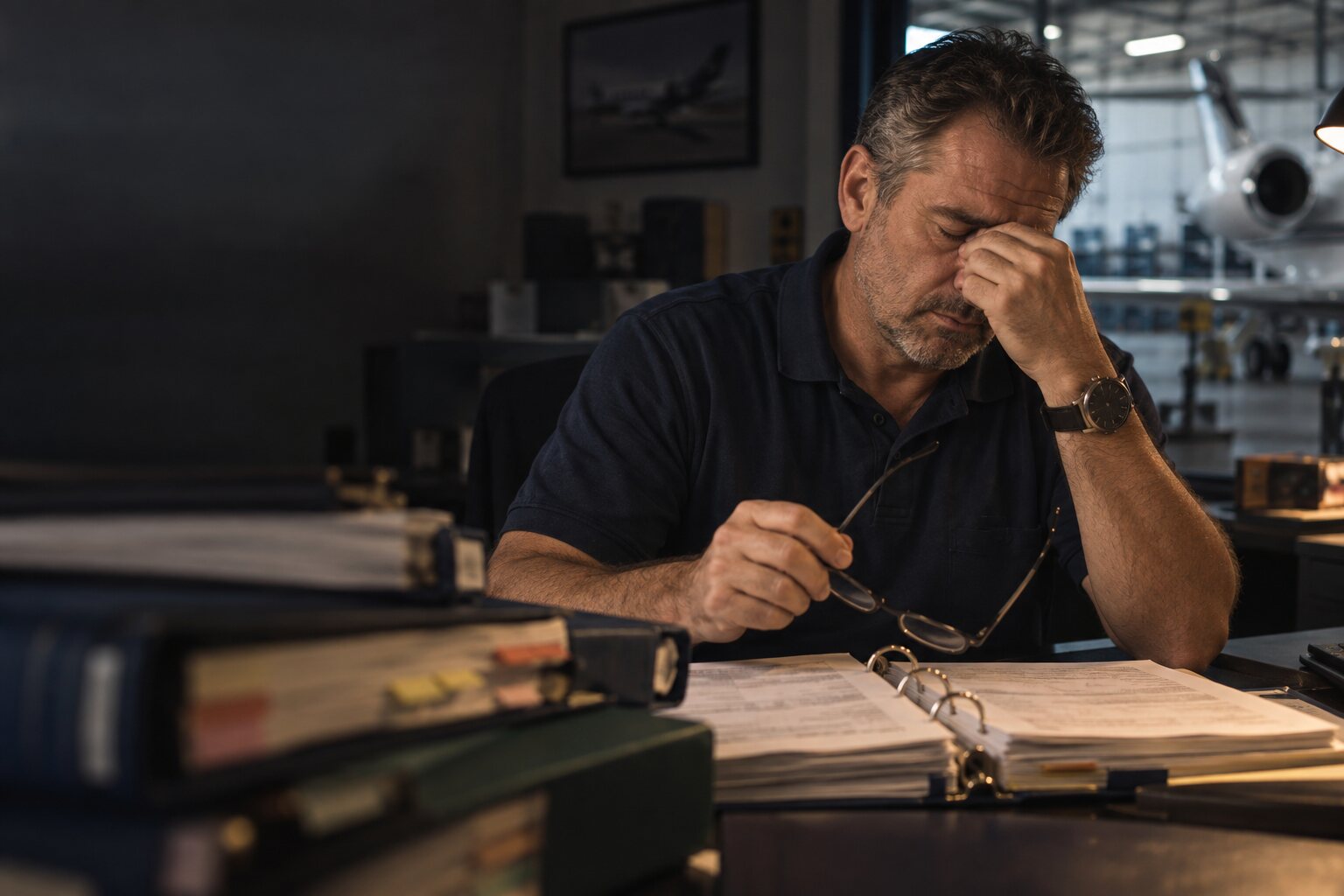
“The average DOM spends two to four hours a day dealing with logbooks. With Radar, it's thirty minutes.”
Ty, Director of Maintenance, Craft
- 1 sign-off per task writes the logbook entry and moves the due list, in place of three separate write-ups
- 10 to 20%1 of a business jet's value rides on complete records
- $20,000 saved on one part a customer was about to re-buy
1 Asset Insight appraisers, cited in AvBuyer, 2021.
A DAY IN RADAR
The same day, with less paper in it.
- Morning
Check the status.
What's due, what's near and what's overdue across every tail, each line with its signed entry.
- Planning
Package the downtime.
Pick the tasks, set the vendor and the dates, and the work plan is ready for the shop.
- Afternoon
Paperwork comes back.
Technicians and inspectors sign each card, and anything the shop still owes stays on the card until it arrives.
- Before it flies
Release with every box checked.
Every card signed, every finding resolved, every required document in.
- Any time
Answer the question.
An auditor, the FSDO or a buyer asks. You open the record and show them the page.
SEE IT PLAY OUT
Five days in a DOM's year, read from the logbooks.
A trip with something coming due, a tail that arrives in boxes, the shop handing the airplane back, an FSDO records review and a buyer's pre-buy. Pick one and watch the due list, the squawks and the release change as the day goes.
ELECTRONIC RECORDS
We help you get approved.
OpSpec A025 is what lets a Part 135 operator keep maintenance records and signatures electronically. We give you the manual language, walk you through the application with your FSDO, and keep the originals as the legal record while you do.
GETTING STARTED
How a tail comes onto Radar.
- Ship or uploadShip the binders with prepaid labels from Radar, or upload the PDFs you already have.
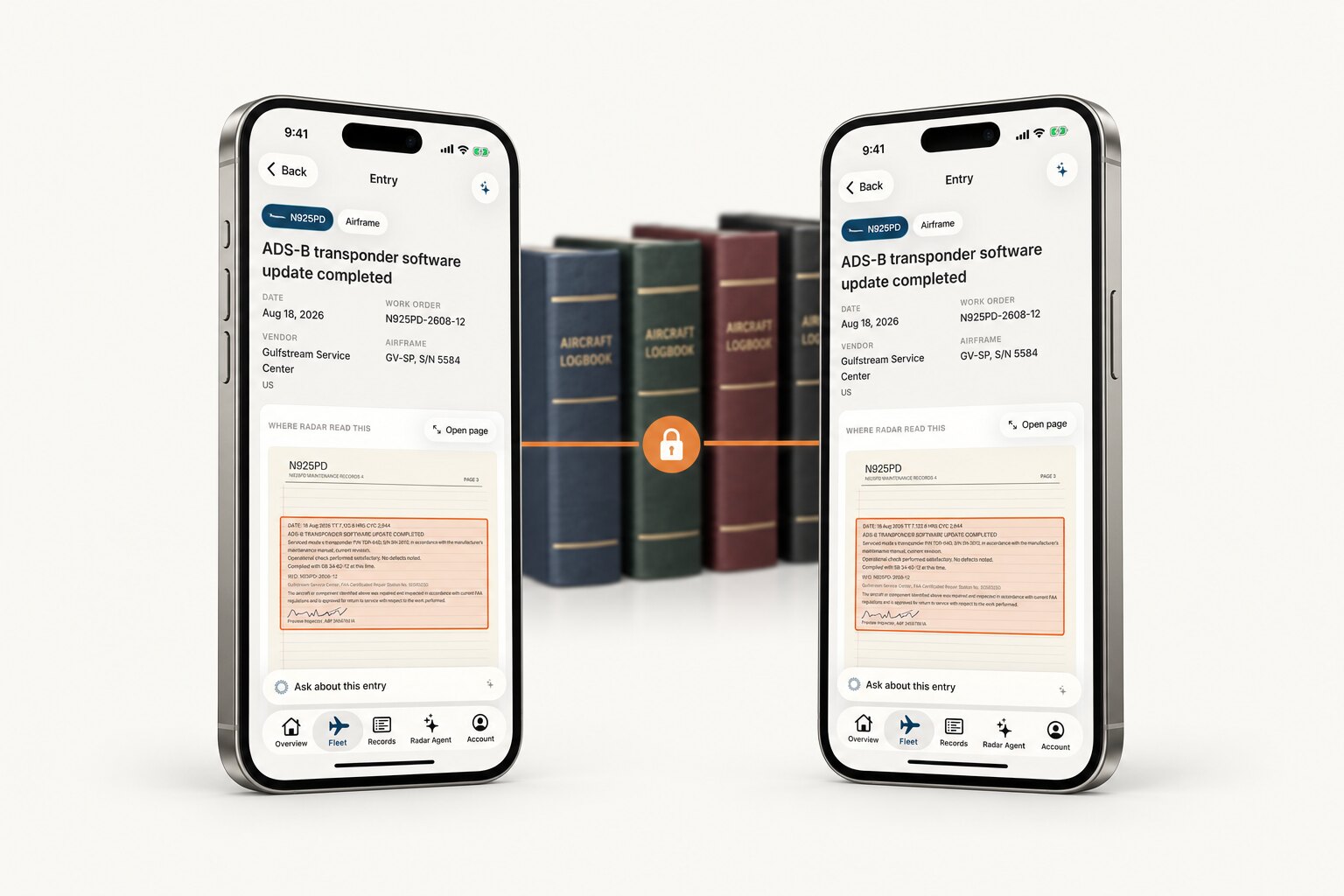
- Read back to birthRadar reads every book, typed or handwritten, and builds the history with the page behind every value.
- Build the statusYour program sets what is due. The signed entries set what was done.
- Run it alongsideKeep CAMP or Traxxall while you check Radar against it, and switch when you are ready.
AUDITS AND PRE-BUYS
Audits and pre-buys without the binders.
Every inspection on your status and every AD in the record opens the signed entry and the page it was read from. When the FSDO, an auditor or a buyer's inspector asks, open the page instead of the binder.
Who on my team uses Radar?
The DOM and maintenance controller for the status and work plans, the records clerk for intake, and anyone who needs an answer from the books.
How do records reach Radar after onboarding?
Upload new entries as the work is signed off, or sign the work in Radar so the logbook entry is written there. Connect a Google Drive or OneDrive folder and new files come in on their own. The iPhone app is coming soon.
Will my FSDO accept electronic records?
The originals stay the legal record, and every answer points to them. If you operate under Part 135, we help you write the manual language for electronic recordkeeping and apply for OpSpec A025.
Can Radar help with conformity?
When you put a tail on your certificate, Radar shows the ADs complied with and the open items from the record, with the page behind every line, so the inspector can check the source.
Moving off Traxxall?
Radar imports your Traxxall status report: programs, parts, last compliance and open items. Run both until you are ready to switch.
What does it cost?
Records is $2,400 to $4,800 per aircraft a year, by aircraft size, with prepaid shipping labels included. Complete, Records with Maintenance Tracking, is $6,000 to $13,500.
GET A DEMO
Start with one tail.
Ship us its binders or upload its PDFs. We'll show you its maintenance status, with the page behind every line.
Product screens show sandbox data.