
MAINTENANCE
Your maintenance status, built on the books.
Every task in your programs with its last compliance, next due and the signed entry behind it. Keep CAMP or Traxxall, or switch over and run your due list in Radar.
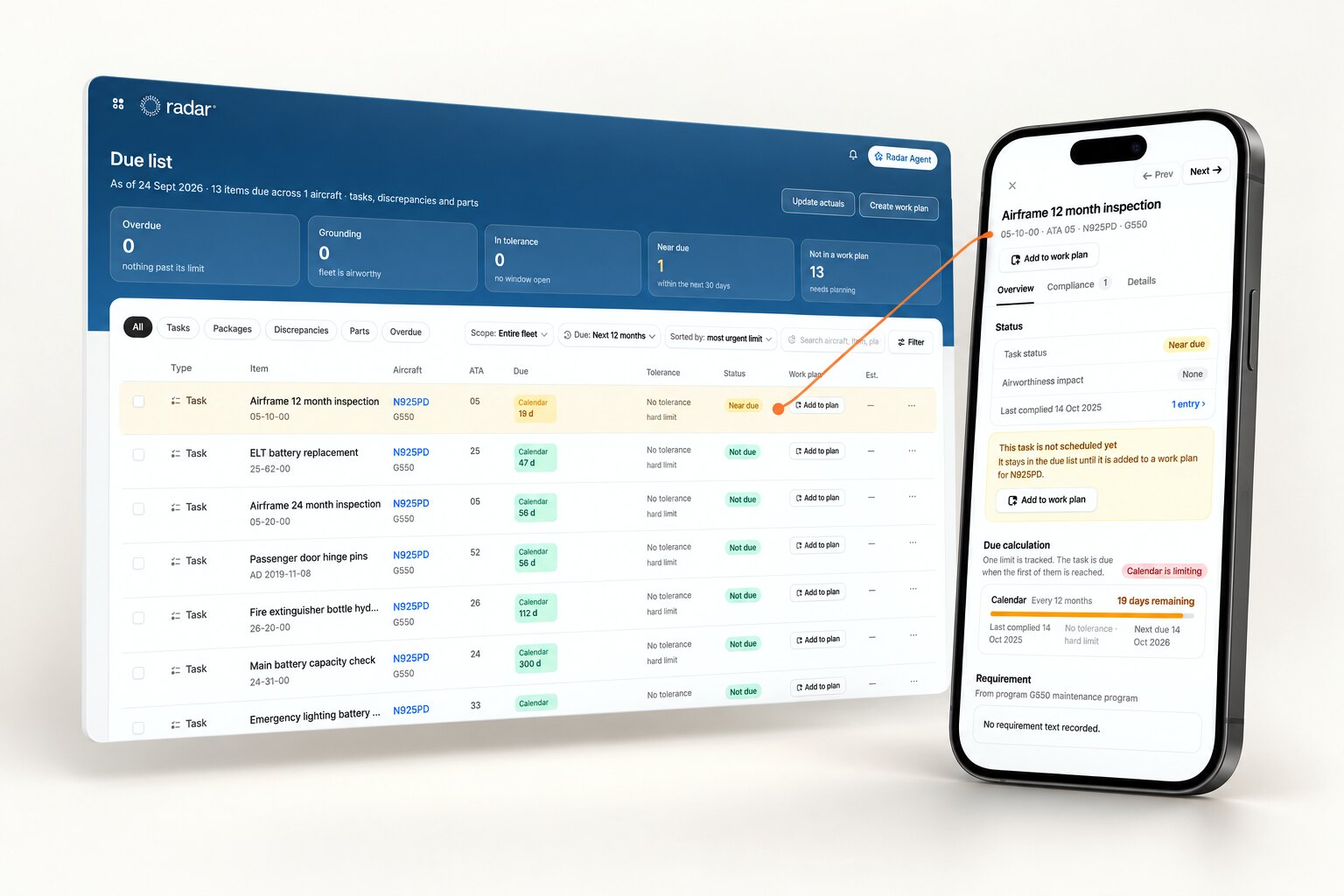
WRITE IT UP ONCE
Today every task is written up three times.
On the shop's work order, in the logbook, and again on a compliance form for your tracker's analyst, where it waits in a queue. In Radar the signed entry is the compliance: sign it off once and the logbook and the due list both update.
PROGRAMS AND YOUR OWN TASKS
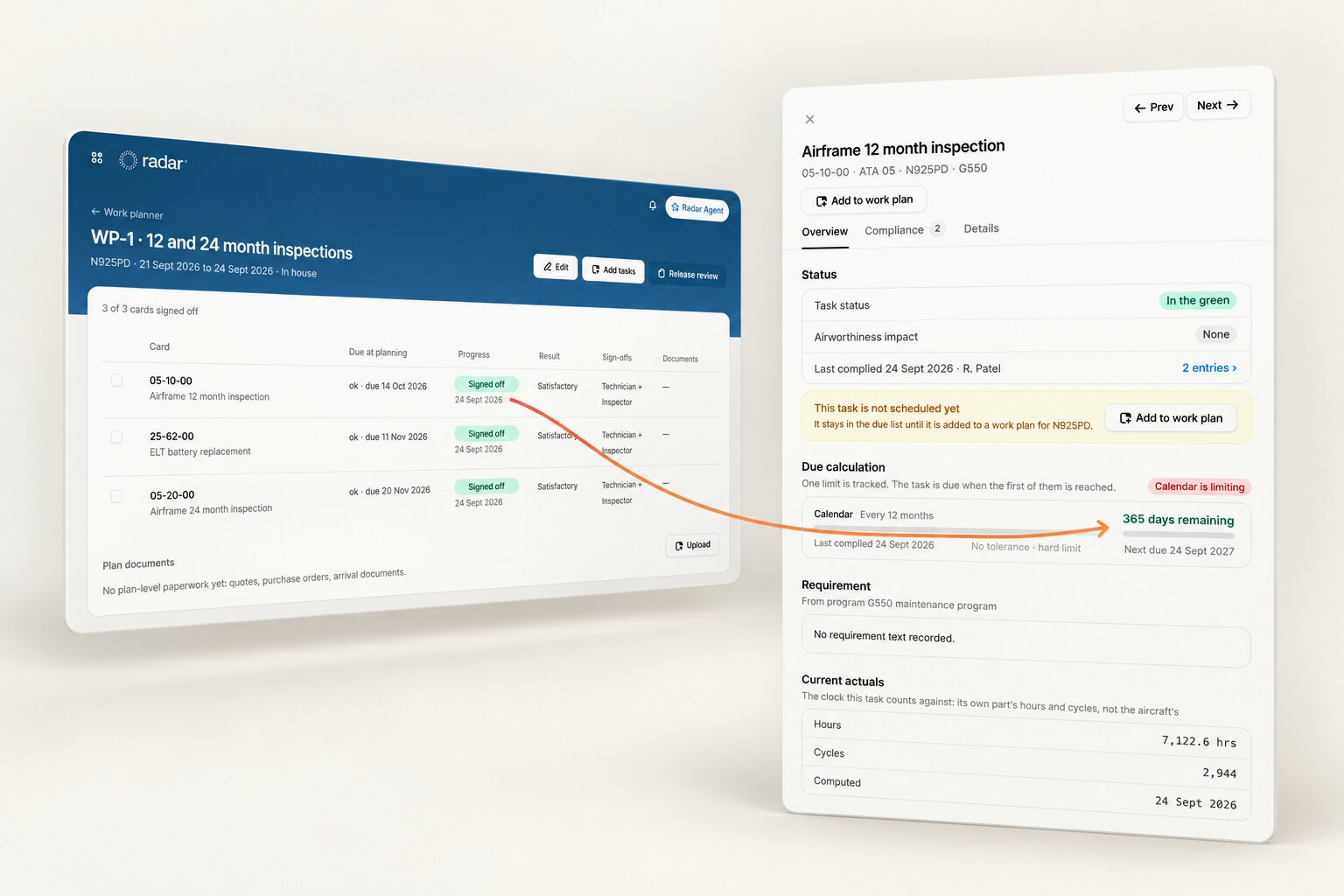
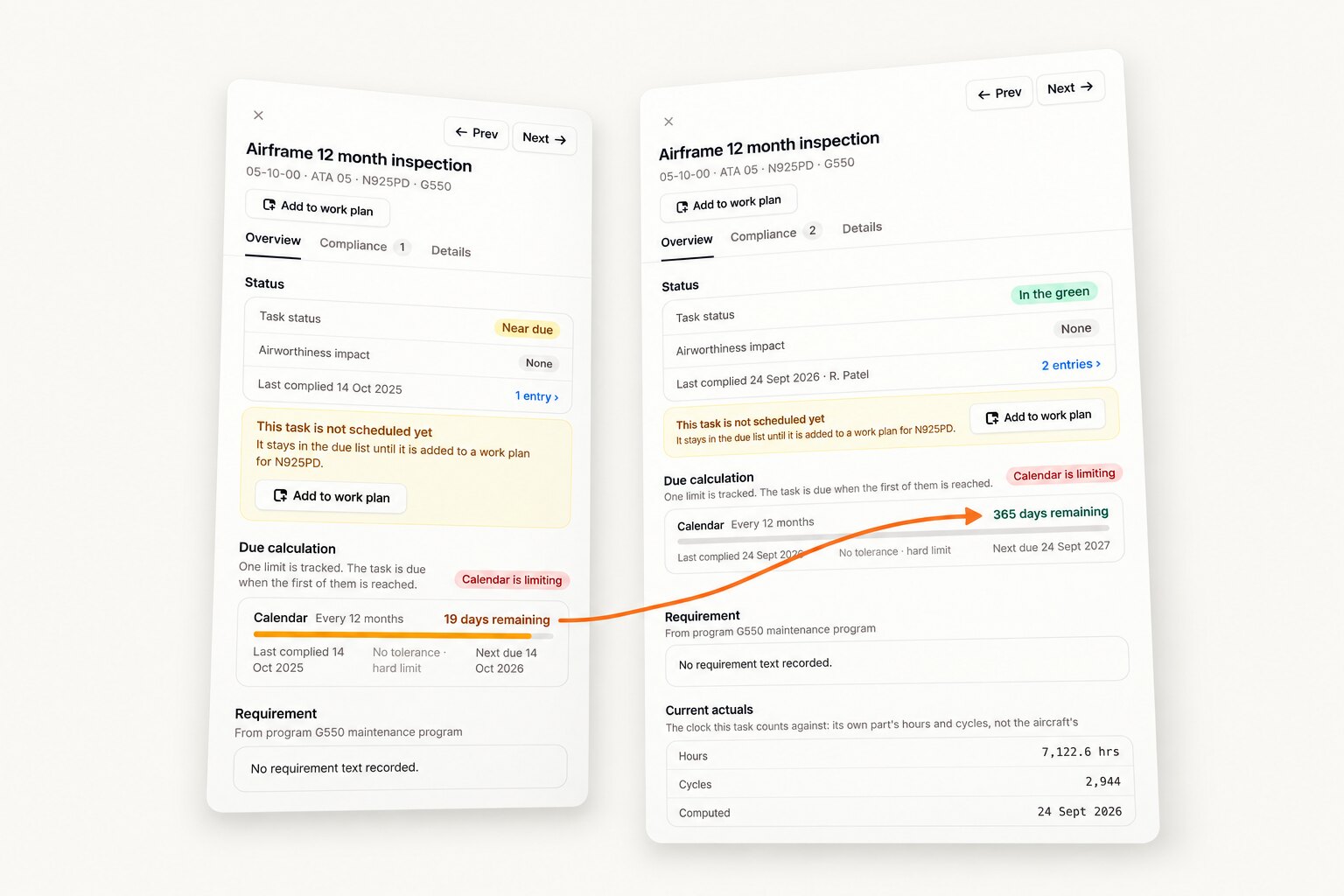
Do it early. The due list keeps up.
Inspections, ADs, SBs and life-limited parts from your maintenance program, by hours, cycles and calendar. Add tasks the manufacturer doesn't require, like a 30-day wash. Do one early and the next due moves from that day.
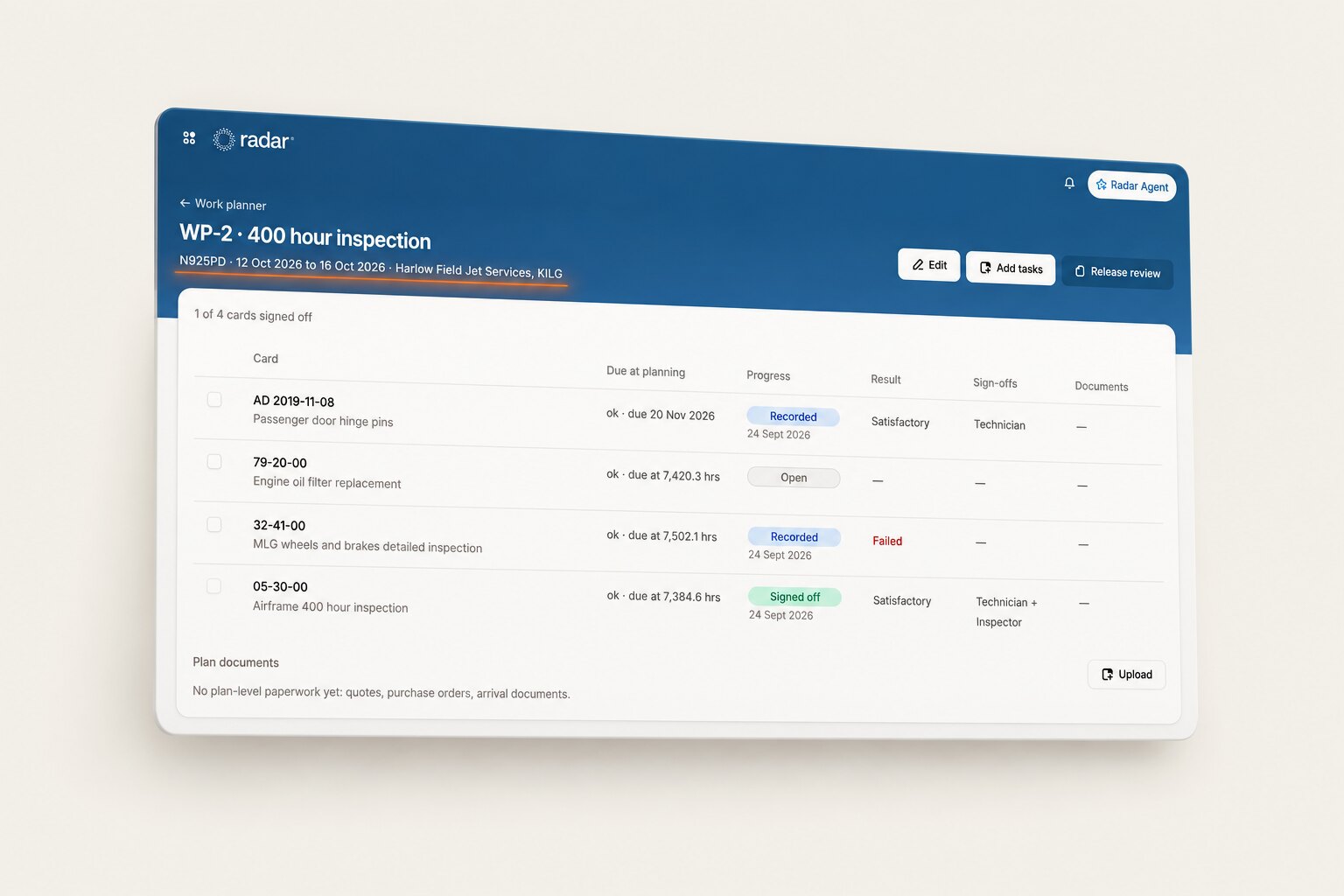
WORK PLANS
Package the downtime. Sign each card once.
Group tasks into a work plan for a vendor and a downtime window. Technicians and inspectors sign each card, paperwork the vendor still owes stays on the card until it arrives, and the signed work becomes the logbook entry.
ON CAMP OR TRAXXALL?
Keep it. Or switch over.
Radar reads the logbooks behind the tracker you have, or becomes your tracker when you are ready.
Keep CAMP or Traxxall
- Every logbook read back to birth
- Every entry searchable, with its page
- Move the due list over when you are ready
Or switch to Radar
- Due list, forecast, work plans and sign-offs
- Last compliance from the signed entry, with its page
- Run both until you cut over
Radar Complete $6,000 to $13,500 per aircraft per year Records and Maintenance Tracking, by aircraft size, with prepaid shipping labels. Records alone from $2,400.
Standalone tracker about $12,000 to $14,000 per tail per year1 for a large business jet, before a separate records service
1 Tracker prices vary by aircraft and plan. Owners report about $2,400 to $6,750 a year for a light jet and $13,000 or more for a Challenger 300 (Phenom Pilots, 2022; Pilots of America, 2016). Confirm current quotes with each vendor.
RELEASE TO SERVICE
Release to service with every box checked.
Before the aircraft goes back into service, Radar checks the whole package. Anything open, unsigned, undocumented or unresolved holds the release and names the card it's on.
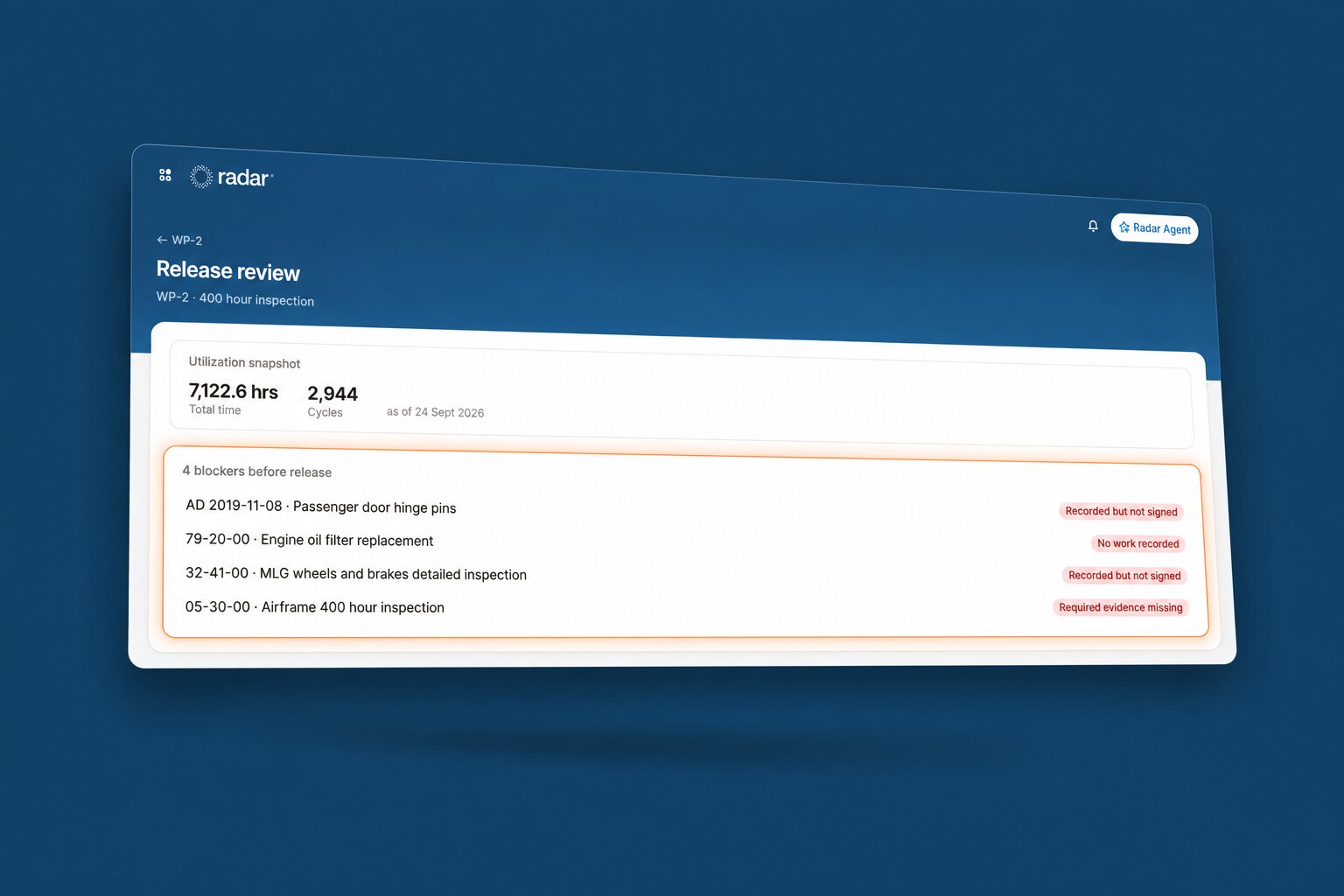
- Every task card recorded, with its result
- Every card signed off
- No missing or rejected documents
- No unresolved findings
“I was about to spend $20,000 on a part to get our airplane flying again. Radar showed me we had bought the same part 11 months earlier, still under warranty. Saved us $20,000, just like that.”
Izzy, Radar customer
AUDITS AND PRE-BUYS
Audits and pre-buys without the binders.
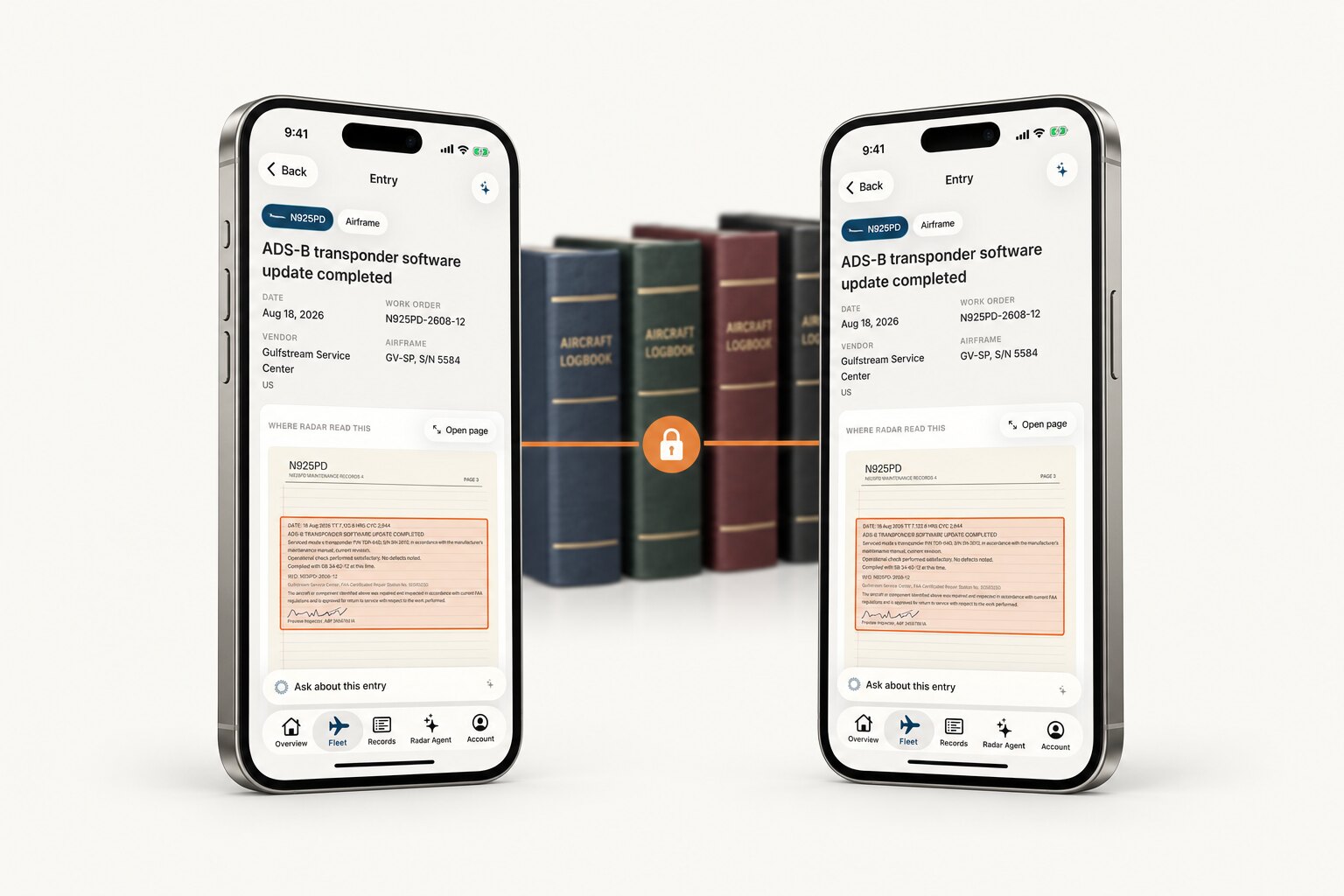
Every inspection on your status and every AD in the record opens the signed entry and the page it was read from. When the FSDO, an auditor or a buyer's inspector asks, open the page instead of the binder.
Moving off Traxxall?
Radar imports your Traxxall status report: programs, parts, last compliance and open items. Run both until you are ready to switch.
Where do the due items come from?
Your maintenance program: inspections, ADs, SBs and life-limited parts, by hours, cycles and calendar. Last compliance for each comes from its signed logbook entry.
Can I add my own tasks?
Yes. Add tasks your manufacturer doesn't require, like a 30-day wash, and they track like any other item. Do one early and the next due moves from that day.
Does it track life-limited parts back to birth?
Yes. Each part carries its own hours, cycles and limits, and every install and removal is traced to its entry.
What happens before release to service?
Radar holds the release until every card is signed, every finding is resolved and the required documents are in, and it shows you exactly what is left.
What does it cost?
Complete, Maintenance Tracking with Records, is $6,000 to $13,500 per aircraft a year, by aircraft size. Maintenance Tracking on its own is quoted for your fleet.
GET A DEMO
Start with one tail.
Ship us its binders or upload its PDFs. We'll show you its maintenance status, with the page behind every line.
Product screens show sandbox data.