Aircraft Maintenance Reserve Calculator

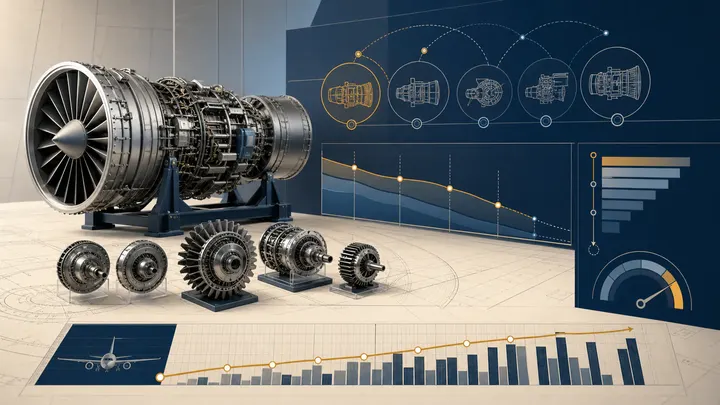
Build a transparent annual and hourly maintenance reserve across engines, APU, airframe inspections, components, and uncertainty.

Planning calculator 14 sections · 7 min read Reviewed July 26, 2026

In brief

This calculator converts user-entered reserve assumptions into scheduled annual funding, contingency, total annual reserve, and an effective hourly rate. It is a planning model—not a maintenance quote, appraisal, financing offer, accounting conclusion, or substitute for aircraft-specific records and technical review.

Tools for this decision

Run the numbers while you read.
See all aircraft tools
Aircraft Maintenance Reserve Calculator editorial illustration

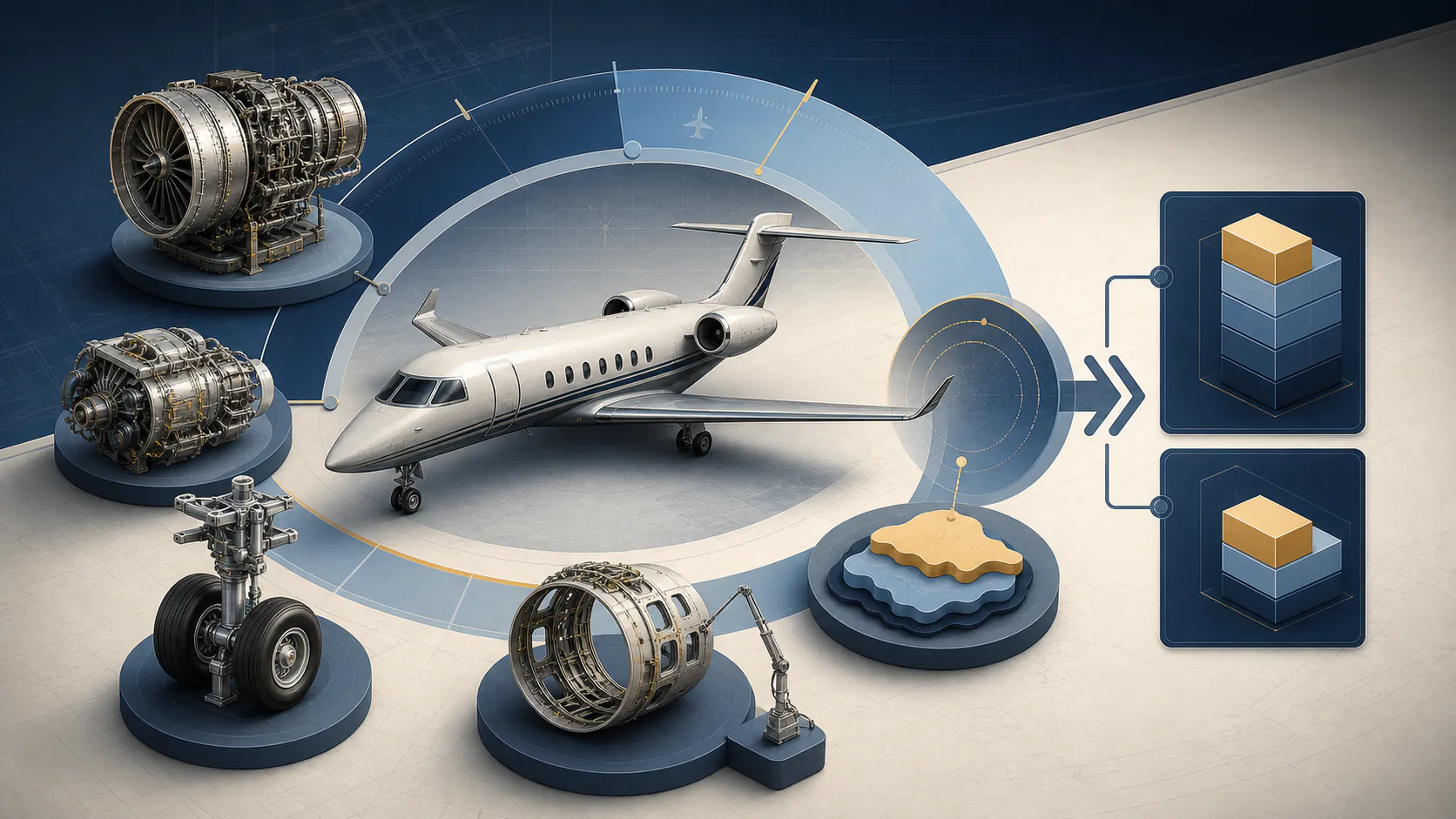
Maintenance reserves smooth irregular future events into a recurring funding plan. The calculation is simple; choosing supportable assumptions is the real work.

Use this tool to combine:

  • Engine reserves per flight hour.
  • APU reserve per flight hour.
  • Annual airframe and inspection funding.
  • Annual component and landing-gear funding.
  • A contingency percentage.

It returns the scheduled annual reserve, contingency, total annual reserve, and effective reserve per flight hour.

Planning tool

Estimate an aircraft maintenance reserve

Build a planning reserve from hourly engine, APU, airframe, inspection, component, and contingency assumptions. Replace every default with aircraft-specific evidence.

Engine and APU reserve per hour$0
Annual scheduled reserve$0
Annual contingency reserve$0
Total annual reserve$0
Effective reserve per hour$0

Illustrative planning model only. It is not a maintenance-program quote, appraisal, financial recommendation, or prediction of actual cost. Use current contracts, shop estimates, maintenance status, escalation, and aircraft-specific records.

Calculator formula

The tool uses:

hourly reserve subtotal = engine reserve/hour + APU reserve/hour

annual hourly reserve = hourly reserve subtotal × annual utilization

scheduled annual reserve = annual hourly reserve + annual airframe/inspection reserve + annual component/landing-gear reserve

contingency = scheduled annual reserve × contingency percentage

total annual reserve = scheduled annual reserve + contingency

effective reserve/hour = total annual reserve ÷ annual utilization

If annual utilization is zero, an hourly output is not meaningful.

What each input means

Annual utilization

Expected flight hours for the next planning year. Use a realistic operating plan, not maximum availability. If engine or component exposure is cycle-driven, build a separate cycle model as well.

Engine reserve per hour

The combined hourly funding assumption for all engines. Define whether it includes:

  • Performance restoration.
  • Life-limited parts.
  • Removal and installation.
  • Shipping.
  • Rental or loaner.
  • Unscheduled findings.
  • Program payments.

Do not add a program rate and a full shop-event reserve for the same covered cost.

APU reserve per hour

Hourly funding for APU scheduled and expected maintenance. If the APU is tracked by APU hours or cycles rather than aircraft flight hours, convert using a documented utilization relationship.

Airframe and inspections per year

Annualized funding for scheduled airframe inspections, calendar checks, major phased events, and planned corrective work. Use the actual maintenance program and current status.

Components and landing gear per year

Annualized funding for overhaul or replacement of time-controlled components, landing gear, wheels and brakes, batteries, emergency equipment, and other material component events not included elsewhere.

Contingency

A percentage applied to the scheduled reserve to reflect findings and uncertainty. It is not a substitute for modeling a known upcoming event.

How to choose an engine reserve

Start with the engine maintenance reserves guide. A basic event-based input is:

net modeled event cost ÷ expected interval

Then test:

  • Current time and cycles.
  • Life-limited-part exposure.
  • Mission mix.
  • Shop-visit scope.
  • Cost escalation.
  • Program coverage.
  • Existing reserve balance.
  • Off-wing cost.
  • Early or unscheduled removal.

For a twin-engine aircraft, confirm whether a quoted rate is per engine or for the shipset.

How to annualize major checks

For a simplified planning view:

annualized event funding = modeled event cost ÷ expected years until recurrence

If a $600,000 event recurs every six years, its normalized annual funding is $100,000. But if it is due in two years and no funds exist, the catch-up requirement is $300,000 per year.

Keep both views:

  • Normalized reserve: long-run average.
  • Catch-up funding: amount needed from the current status and balance.

The calculator can model either, but the input label and workbook should say which.

Calendar, hours, and cycles

Aircraft maintenance is driven by several clocks.

Calendar, hours, and cycles
DriverExamples
Flight hoursEngine or APU reserve, inspections
Cycles or landingsLLPs, landing gear, structural tasks
CalendarInspections, batteries, emergency equipment, corrosion
ConditionTires, brakes, defects, unscheduled findings
EventShop visit, overhaul, major check

An hourly result is a convenient denominator, not proof that every cost is caused by flight hours.

Base, adverse, and severe cases

Run at least three sets of assumptions:

Base

  • Planned utilization.
  • Expected event timing.
  • Current quoted or supported cost.
  • Normal findings.
  • Expected program recovery.

Adverse

  • Lower utilization.
  • Earlier event.
  • Higher escalation.
  • Expanded work scope.
  • Reduced reimbursement.

Severe

  • Unscheduled removal.
  • Major finding.
  • Long rental period.
  • Weak program or reserve recovery.
  • Material downtime.

Compare total annual cash requirement, not just the effective hourly rate.

Worked example

Assume:

Worked example
InputAmount
Annual utilization300 hours
Combined engine reserve$850/hour
APU reserve$70/hour
Airframe and inspections$180,000/year
Components and landing gear$60,000/year
Contingency12%

Calculation:

  • Hourly-driven annual funding: ($850 + $70) × 300 = $276,000.
  • Scheduled annual reserve: $276,000 + $180,000 + $60,000 = $516,000.
  • Contingency: $516,000 × 12% = $61,920.
  • Total annual reserve: $577,920.
  • Effective reserve: $1,926.40 per flight hour.

This is a funding allocation, not a prediction that maintenance will occur evenly or cost exactly $577,920 that year.

Avoid double counting

Common overlaps include:

  • Maintenance-program payment plus covered engine event.
  • Inspection flat rate plus labor already included in a work package.
  • Component overhaul in both an hourly program and annual component line.
  • Contingency applied to a number that already includes a contingency.
  • Reserve balance subtracted twice.
  • Downtime included in both direct maintenance and lost-use model.

Create a scope table showing what each line includes and excludes.

Records that should support the model

Use:

  • Current maintenance status report.
  • Aircraft, engine, APU, and component times and cycles.
  • Life-limited-part status.
  • Prior shop and major-check work scopes.
  • Open defects and deferred items.
  • AD and service bulletin exposure.
  • Maintenance-program agreements and account statements.
  • Vendor proposals and escalation terms.
  • Landing-gear and major-component status.
  • Utilization forecast.
  • Source aircraft records behind each status.

Update the model after material maintenance, utilization changes, new findings, program amendments, acquisition, or refinancing.

Cash, accrual, and contractual reserve

Do not conflate:

Cash, accrual, and contractual reserve
ConceptMeaning
Planning reserveInternal estimate of future maintenance exposure
Accounting treatmentRecognition under applicable accounting policy
Segregated cashFunds actually held and available
Lease reserveContractual payment under a lease
Maintenance programPayment for defined coverage and service
Lender reserveCash control or covenant required by financing

The calculator estimates a planning allocation only.

Acquisition use

Before buying an aircraft:

  1. Establish current technical status.
  2. Model normalized reserve.
  3. Calculate catch-up funding from delivery status.
  4. Identify near-term cash events.
  5. Validate maintenance-program transfer and balances.
  6. Run adverse scenarios.
  7. Compare total ownership cost across candidate aircraft.
  8. Reflect unfunded exposure in price and closing terms.

An aircraft with a lower purchase price can have a higher first-three-year cost.

Lender and operator use

Owners and operators can use the model to:

  • Build annual maintenance budgets.
  • Set hourly departmental or charter cost.
  • Size liquidity.
  • Compare program enrollment.
  • Plan downtime and vendor slots.
  • Evaluate replacement timing.

Lenders can use an evidence-backed version to:

  • Review unfunded maintenance exposure.
  • Set or monitor reserve covenants.
  • Stress collateral value.
  • Understand upcoming cash demands.
  • Reconcile borrower status to source records.

The calculation does not replace a technical appraisal or credit decision.

Calculation checklist

  • [ ] Exact purpose and scope defined.
  • [ ] Annual hours and cycles forecast.
  • [ ] Per-engine versus shipset rates confirmed.
  • [ ] Engine performance and LLP exposure separated.
  • [ ] APU utilization basis documented.
  • [ ] Major calendar and component events annualized.
  • [ ] Catch-up funding shown separately.
  • [ ] Program coverage and balances validated.
  • [ ] Off-wing and downtime costs considered.
  • [ ] Double counting removed.
  • [ ] Contingency and escalation visible.
  • [ ] Base and adverse cases run.
  • [ ] Inputs dated and linked to records.

Sources and further reading

Common questions

Frequently asked questions

How much should I reserve for aircraft maintenance?

It depends on aircraft and engine type, current maintenance status, annual hours and cycles, program coverage, upcoming inspections, component life, operating environment, and cost assumptions. Use aircraft-specific quotes and records rather than a universal percentage.

What does this aircraft maintenance reserve calculator include?

It combines user-entered hourly engine and APU reserves, annual airframe and inspection funding, annual component and landing-gear funding, and a contingency percentage.

Does the calculated hourly reserve equal my actual maintenance cost?

No. It is an allocation based on the assumptions entered. Actual work scope, findings, utilization, escalation, downtime, taxes, logistics, and program or contract terms can materially change cost.

Should maintenance reserves be kept in cash?

That is a treasury, financing, contract, and risk decision. An accounting reserve or spreadsheet accrual is not the same as segregated cash. Owners should obtain qualified financial, legal, tax, and accounting advice.

Make the aircraft history decision-ready

Turn aircraft paperwork into evidence you can use.

Radar digitizes, connects, and verifies the maintenance history behind buying, financing, operating, and selling an aircraft.

Your fleet's records at your fingertips.

Sign up, print a label, and search your first tail within days. Free.

Aircraft Maintenance Reserve Calculator

Build a transparent annual and hourly maintenance reserve across engines, APU, airframe inspections, components, and uncertainty.

Planning calculator 14 sections · 7 min read Reviewed July 26, 2026

In brief

This calculator converts user-entered reserve assumptions into scheduled annual funding, contingency, total annual reserve, and an effective hourly rate. It is a planning model—not a maintenance quote, appraisal, financing offer, accounting conclusion, or substitute for aircraft-specific records and technical review.

Tools for this decision

Run the numbers while you read.

See all aircraft tools
Aircraft Maintenance Reserve Calculator editorial illustration

Maintenance reserves smooth irregular future events into a recurring funding plan. The calculation is simple; choosing supportable assumptions is the real work.

Use this tool to combine:

  • Engine reserves per flight hour.
  • APU reserve per flight hour.
  • Annual airframe and inspection funding.
  • Annual component and landing-gear funding.
  • A contingency percentage.

It returns the scheduled annual reserve, contingency, total annual reserve, and effective reserve per flight hour.

Planning tool

Estimate an aircraft maintenance reserve

Build a planning reserve from hourly engine, APU, airframe, inspection, component, and contingency assumptions. Replace every default with aircraft-specific evidence.

Engine and APU reserve per hour$0
Annual scheduled reserve$0
Annual contingency reserve$0
Total annual reserve$0
Effective reserve per hour$0

Illustrative planning model only. It is not a maintenance-program quote, appraisal, financial recommendation, or prediction of actual cost. Use current contracts, shop estimates, maintenance status, escalation, and aircraft-specific records.

Calculator formula

The tool uses:

hourly reserve subtotal = engine reserve/hour + APU reserve/hour

annual hourly reserve = hourly reserve subtotal × annual utilization

scheduled annual reserve = annual hourly reserve + annual airframe/inspection reserve + annual component/landing-gear reserve

contingency = scheduled annual reserve × contingency percentage

total annual reserve = scheduled annual reserve + contingency

effective reserve/hour = total annual reserve ÷ annual utilization

If annual utilization is zero, an hourly output is not meaningful.

What each input means

Annual utilization

Expected flight hours for the next planning year. Use a realistic operating plan, not maximum availability. If engine or component exposure is cycle-driven, build a separate cycle model as well.

Engine reserve per hour

The combined hourly funding assumption for all engines. Define whether it includes:

  • Performance restoration.
  • Life-limited parts.
  • Removal and installation.
  • Shipping.
  • Rental or loaner.
  • Unscheduled findings.
  • Program payments.

Do not add a program rate and a full shop-event reserve for the same covered cost.

APU reserve per hour

Hourly funding for APU scheduled and expected maintenance. If the APU is tracked by APU hours or cycles rather than aircraft flight hours, convert using a documented utilization relationship.

Airframe and inspections per year

Annualized funding for scheduled airframe inspections, calendar checks, major phased events, and planned corrective work. Use the actual maintenance program and current status.

Components and landing gear per year

Annualized funding for overhaul or replacement of time-controlled components, landing gear, wheels and brakes, batteries, emergency equipment, and other material component events not included elsewhere.

Contingency

A percentage applied to the scheduled reserve to reflect findings and uncertainty. It is not a substitute for modeling a known upcoming event.

How to choose an engine reserve

Start with the engine maintenance reserves guide. A basic event-based input is:

net modeled event cost ÷ expected interval

Then test:

  • Current time and cycles.
  • Life-limited-part exposure.
  • Mission mix.
  • Shop-visit scope.
  • Cost escalation.
  • Program coverage.
  • Existing reserve balance.
  • Off-wing cost.
  • Early or unscheduled removal.

For a twin-engine aircraft, confirm whether a quoted rate is per engine or for the shipset.

How to annualize major checks

For a simplified planning view:

annualized event funding = modeled event cost ÷ expected years until recurrence

If a $600,000 event recurs every six years, its normalized annual funding is $100,000. But if it is due in two years and no funds exist, the catch-up requirement is $300,000 per year.

Keep both views:

  • Normalized reserve: long-run average.
  • Catch-up funding: amount needed from the current status and balance.

The calculator can model either, but the input label and workbook should say which.

Calendar, hours, and cycles

Aircraft maintenance is driven by several clocks.

Calendar, hours, and cycles
DriverExamples
Flight hoursEngine or APU reserve, inspections
Cycles or landingsLLPs, landing gear, structural tasks
CalendarInspections, batteries, emergency equipment, corrosion
ConditionTires, brakes, defects, unscheduled findings
EventShop visit, overhaul, major check

An hourly result is a convenient denominator, not proof that every cost is caused by flight hours.

Base, adverse, and severe cases

Run at least three sets of assumptions:

Base

  • Planned utilization.
  • Expected event timing.
  • Current quoted or supported cost.
  • Normal findings.
  • Expected program recovery.

Adverse

  • Lower utilization.
  • Earlier event.
  • Higher escalation.
  • Expanded work scope.
  • Reduced reimbursement.

Severe

  • Unscheduled removal.
  • Major finding.
  • Long rental period.
  • Weak program or reserve recovery.
  • Material downtime.

Compare total annual cash requirement, not just the effective hourly rate.

Worked example

Assume:

Worked example
InputAmount
Annual utilization300 hours
Combined engine reserve$850/hour
APU reserve$70/hour
Airframe and inspections$180,000/year
Components and landing gear$60,000/year
Contingency12%

Calculation:

  • Hourly-driven annual funding: ($850 + $70) × 300 = $276,000.
  • Scheduled annual reserve: $276,000 + $180,000 + $60,000 = $516,000.
  • Contingency: $516,000 × 12% = $61,920.
  • Total annual reserve: $577,920.
  • Effective reserve: $1,926.40 per flight hour.

This is a funding allocation, not a prediction that maintenance will occur evenly or cost exactly $577,920 that year.

Avoid double counting

Common overlaps include:

  • Maintenance-program payment plus covered engine event.
  • Inspection flat rate plus labor already included in a work package.
  • Component overhaul in both an hourly program and annual component line.
  • Contingency applied to a number that already includes a contingency.
  • Reserve balance subtracted twice.
  • Downtime included in both direct maintenance and lost-use model.

Create a scope table showing what each line includes and excludes.

Records that should support the model

Use:

  • Current maintenance status report.
  • Aircraft, engine, APU, and component times and cycles.
  • Life-limited-part status.
  • Prior shop and major-check work scopes.
  • Open defects and deferred items.
  • AD and service bulletin exposure.
  • Maintenance-program agreements and account statements.
  • Vendor proposals and escalation terms.
  • Landing-gear and major-component status.
  • Utilization forecast.
  • Source aircraft records behind each status.

Update the model after material maintenance, utilization changes, new findings, program amendments, acquisition, or refinancing.

Cash, accrual, and contractual reserve

Do not conflate:

Cash, accrual, and contractual reserve
ConceptMeaning
Planning reserveInternal estimate of future maintenance exposure
Accounting treatmentRecognition under applicable accounting policy
Segregated cashFunds actually held and available
Lease reserveContractual payment under a lease
Maintenance programPayment for defined coverage and service
Lender reserveCash control or covenant required by financing

The calculator estimates a planning allocation only.

Acquisition use

Before buying an aircraft:

  1. Establish current technical status.
  2. Model normalized reserve.
  3. Calculate catch-up funding from delivery status.
  4. Identify near-term cash events.
  5. Validate maintenance-program transfer and balances.
  6. Run adverse scenarios.
  7. Compare total ownership cost across candidate aircraft.
  8. Reflect unfunded exposure in price and closing terms.

An aircraft with a lower purchase price can have a higher first-three-year cost.

Lender and operator use

Owners and operators can use the model to:

  • Build annual maintenance budgets.
  • Set hourly departmental or charter cost.
  • Size liquidity.
  • Compare program enrollment.
  • Plan downtime and vendor slots.
  • Evaluate replacement timing.

Lenders can use an evidence-backed version to:

  • Review unfunded maintenance exposure.
  • Set or monitor reserve covenants.
  • Stress collateral value.
  • Understand upcoming cash demands.
  • Reconcile borrower status to source records.

The calculation does not replace a technical appraisal or credit decision.

Calculation checklist

  • [ ] Exact purpose and scope defined.
  • [ ] Annual hours and cycles forecast.
  • [ ] Per-engine versus shipset rates confirmed.
  • [ ] Engine performance and LLP exposure separated.
  • [ ] APU utilization basis documented.
  • [ ] Major calendar and component events annualized.
  • [ ] Catch-up funding shown separately.
  • [ ] Program coverage and balances validated.
  • [ ] Off-wing and downtime costs considered.
  • [ ] Double counting removed.
  • [ ] Contingency and escalation visible.
  • [ ] Base and adverse cases run.
  • [ ] Inputs dated and linked to records.

Sources and further reading

Common questions

Frequently asked questions

How much should I reserve for aircraft maintenance?

It depends on aircraft and engine type, current maintenance status, annual hours and cycles, program coverage, upcoming inspections, component life, operating environment, and cost assumptions. Use aircraft-specific quotes and records rather than a universal percentage.

What does this aircraft maintenance reserve calculator include?

It combines user-entered hourly engine and APU reserves, annual airframe and inspection funding, annual component and landing-gear funding, and a contingency percentage.

Does the calculated hourly reserve equal my actual maintenance cost?

No. It is an allocation based on the assumptions entered. Actual work scope, findings, utilization, escalation, downtime, taxes, logistics, and program or contract terms can materially change cost.

Should maintenance reserves be kept in cash?

That is a treasury, financing, contract, and risk decision. An accounting reserve or spreadsheet accrual is not the same as segregated cash. Owners should obtain qualified financial, legal, tax, and accounting advice.

Make the aircraft history decision-ready

Turn aircraft paperwork into evidence you can use.

Radar digitizes, connects, and verifies the maintenance history behind buying, financing, operating, and selling an aircraft.

Your fleet's records at your fingertips.

Sign up, print a label, and search your first tail within days. Free.

Aircraft Maintenance Reserve Calculator

Build a transparent annual and hourly maintenance reserve across engines, APU, airframe inspections, components, and uncertainty.

Planning calculator 14 sections · 7 min read Reviewed July 26, 2026

In brief

This calculator converts user-entered reserve assumptions into scheduled annual funding, contingency, total annual reserve, and an effective hourly rate. It is a planning model—not a maintenance quote, appraisal, financing offer, accounting conclusion, or substitute for aircraft-specific records and technical review.

Tools for this decision

Run the numbers while you read.

See all aircraft tools
Aircraft Maintenance Reserve Calculator editorial illustration

Maintenance reserves smooth irregular future events into a recurring funding plan. The calculation is simple; choosing supportable assumptions is the real work.

Use this tool to combine:

  • Engine reserves per flight hour.
  • APU reserve per flight hour.
  • Annual airframe and inspection funding.
  • Annual component and landing-gear funding.
  • A contingency percentage.

It returns the scheduled annual reserve, contingency, total annual reserve, and effective reserve per flight hour.

Planning tool

Estimate an aircraft maintenance reserve

Build a planning reserve from hourly engine, APU, airframe, inspection, component, and contingency assumptions. Replace every default with aircraft-specific evidence.

Engine and APU reserve per hour$0
Annual scheduled reserve$0
Annual contingency reserve$0
Total annual reserve$0
Effective reserve per hour$0

Illustrative planning model only. It is not a maintenance-program quote, appraisal, financial recommendation, or prediction of actual cost. Use current contracts, shop estimates, maintenance status, escalation, and aircraft-specific records.

Calculator formula

The tool uses:

hourly reserve subtotal = engine reserve/hour + APU reserve/hour

annual hourly reserve = hourly reserve subtotal × annual utilization

scheduled annual reserve = annual hourly reserve + annual airframe/inspection reserve + annual component/landing-gear reserve

contingency = scheduled annual reserve × contingency percentage

total annual reserve = scheduled annual reserve + contingency

effective reserve/hour = total annual reserve ÷ annual utilization

If annual utilization is zero, an hourly output is not meaningful.

What each input means

Annual utilization

Expected flight hours for the next planning year. Use a realistic operating plan, not maximum availability. If engine or component exposure is cycle-driven, build a separate cycle model as well.

Engine reserve per hour

The combined hourly funding assumption for all engines. Define whether it includes:

  • Performance restoration.
  • Life-limited parts.
  • Removal and installation.
  • Shipping.
  • Rental or loaner.
  • Unscheduled findings.
  • Program payments.

Do not add a program rate and a full shop-event reserve for the same covered cost.

APU reserve per hour

Hourly funding for APU scheduled and expected maintenance. If the APU is tracked by APU hours or cycles rather than aircraft flight hours, convert using a documented utilization relationship.

Airframe and inspections per year

Annualized funding for scheduled airframe inspections, calendar checks, major phased events, and planned corrective work. Use the actual maintenance program and current status.

Components and landing gear per year

Annualized funding for overhaul or replacement of time-controlled components, landing gear, wheels and brakes, batteries, emergency equipment, and other material component events not included elsewhere.

Contingency

A percentage applied to the scheduled reserve to reflect findings and uncertainty. It is not a substitute for modeling a known upcoming event.

How to choose an engine reserve

Start with the engine maintenance reserves guide. A basic event-based input is:

net modeled event cost ÷ expected interval

Then test:

  • Current time and cycles.
  • Life-limited-part exposure.
  • Mission mix.
  • Shop-visit scope.
  • Cost escalation.
  • Program coverage.
  • Existing reserve balance.
  • Off-wing cost.
  • Early or unscheduled removal.

For a twin-engine aircraft, confirm whether a quoted rate is per engine or for the shipset.

How to annualize major checks

For a simplified planning view:

annualized event funding = modeled event cost ÷ expected years until recurrence

If a $600,000 event recurs every six years, its normalized annual funding is $100,000. But if it is due in two years and no funds exist, the catch-up requirement is $300,000 per year.

Keep both views:

  • Normalized reserve: long-run average.
  • Catch-up funding: amount needed from the current status and balance.

The calculator can model either, but the input label and workbook should say which.

Calendar, hours, and cycles

Aircraft maintenance is driven by several clocks.

Calendar, hours, and cycles
DriverExamples
Flight hoursEngine or APU reserve, inspections
Cycles or landingsLLPs, landing gear, structural tasks
CalendarInspections, batteries, emergency equipment, corrosion
ConditionTires, brakes, defects, unscheduled findings
EventShop visit, overhaul, major check

An hourly result is a convenient denominator, not proof that every cost is caused by flight hours.

Base, adverse, and severe cases

Run at least three sets of assumptions:

Base

  • Planned utilization.
  • Expected event timing.
  • Current quoted or supported cost.
  • Normal findings.
  • Expected program recovery.

Adverse

  • Lower utilization.
  • Earlier event.
  • Higher escalation.
  • Expanded work scope.
  • Reduced reimbursement.

Severe

  • Unscheduled removal.
  • Major finding.
  • Long rental period.
  • Weak program or reserve recovery.
  • Material downtime.

Compare total annual cash requirement, not just the effective hourly rate.

Worked example

Assume:

Worked example
InputAmount
Annual utilization300 hours
Combined engine reserve$850/hour
APU reserve$70/hour
Airframe and inspections$180,000/year
Components and landing gear$60,000/year
Contingency12%

Calculation:

  • Hourly-driven annual funding: ($850 + $70) × 300 = $276,000.
  • Scheduled annual reserve: $276,000 + $180,000 + $60,000 = $516,000.
  • Contingency: $516,000 × 12% = $61,920.
  • Total annual reserve: $577,920.
  • Effective reserve: $1,926.40 per flight hour.

This is a funding allocation, not a prediction that maintenance will occur evenly or cost exactly $577,920 that year.

Avoid double counting

Common overlaps include:

  • Maintenance-program payment plus covered engine event.
  • Inspection flat rate plus labor already included in a work package.
  • Component overhaul in both an hourly program and annual component line.
  • Contingency applied to a number that already includes a contingency.
  • Reserve balance subtracted twice.
  • Downtime included in both direct maintenance and lost-use model.

Create a scope table showing what each line includes and excludes.

Records that should support the model

Use:

  • Current maintenance status report.
  • Aircraft, engine, APU, and component times and cycles.
  • Life-limited-part status.
  • Prior shop and major-check work scopes.
  • Open defects and deferred items.
  • AD and service bulletin exposure.
  • Maintenance-program agreements and account statements.
  • Vendor proposals and escalation terms.
  • Landing-gear and major-component status.
  • Utilization forecast.
  • Source aircraft records behind each status.

Update the model after material maintenance, utilization changes, new findings, program amendments, acquisition, or refinancing.

Cash, accrual, and contractual reserve

Do not conflate:

Cash, accrual, and contractual reserve
ConceptMeaning
Planning reserveInternal estimate of future maintenance exposure
Accounting treatmentRecognition under applicable accounting policy
Segregated cashFunds actually held and available
Lease reserveContractual payment under a lease
Maintenance programPayment for defined coverage and service
Lender reserveCash control or covenant required by financing

The calculator estimates a planning allocation only.

Acquisition use

Before buying an aircraft:

  1. Establish current technical status.
  2. Model normalized reserve.
  3. Calculate catch-up funding from delivery status.
  4. Identify near-term cash events.
  5. Validate maintenance-program transfer and balances.
  6. Run adverse scenarios.
  7. Compare total ownership cost across candidate aircraft.
  8. Reflect unfunded exposure in price and closing terms.

An aircraft with a lower purchase price can have a higher first-three-year cost.

Lender and operator use

Owners and operators can use the model to:

  • Build annual maintenance budgets.
  • Set hourly departmental or charter cost.
  • Size liquidity.
  • Compare program enrollment.
  • Plan downtime and vendor slots.
  • Evaluate replacement timing.

Lenders can use an evidence-backed version to:

  • Review unfunded maintenance exposure.
  • Set or monitor reserve covenants.
  • Stress collateral value.
  • Understand upcoming cash demands.
  • Reconcile borrower status to source records.

The calculation does not replace a technical appraisal or credit decision.

Calculation checklist

  • [ ] Exact purpose and scope defined.
  • [ ] Annual hours and cycles forecast.
  • [ ] Per-engine versus shipset rates confirmed.
  • [ ] Engine performance and LLP exposure separated.
  • [ ] APU utilization basis documented.
  • [ ] Major calendar and component events annualized.
  • [ ] Catch-up funding shown separately.
  • [ ] Program coverage and balances validated.
  • [ ] Off-wing and downtime costs considered.
  • [ ] Double counting removed.
  • [ ] Contingency and escalation visible.
  • [ ] Base and adverse cases run.
  • [ ] Inputs dated and linked to records.

Sources and further reading

Common questions

Frequently asked questions

How much should I reserve for aircraft maintenance?

It depends on aircraft and engine type, current maintenance status, annual hours and cycles, program coverage, upcoming inspections, component life, operating environment, and cost assumptions. Use aircraft-specific quotes and records rather than a universal percentage.

What does this aircraft maintenance reserve calculator include?

It combines user-entered hourly engine and APU reserves, annual airframe and inspection funding, annual component and landing-gear funding, and a contingency percentage.

Does the calculated hourly reserve equal my actual maintenance cost?

No. It is an allocation based on the assumptions entered. Actual work scope, findings, utilization, escalation, downtime, taxes, logistics, and program or contract terms can materially change cost.

Should maintenance reserves be kept in cash?

That is a treasury, financing, contract, and risk decision. An accounting reserve or spreadsheet accrual is not the same as segregated cash. Owners should obtain qualified financial, legal, tax, and accounting advice.

Make the aircraft history decision-ready

Turn aircraft paperwork into evidence you can use.

Radar digitizes, connects, and verifies the maintenance history behind buying, financing, operating, and selling an aircraft.
Your fleet's records at your fingertips.

Sign up, print a label, and search your first tail within days. Free.