Aircraft Engine Maintenance Reserves

How to convert future engine maintenance exposure into a defensible per-hour funding plan—without mistaking a simple rate for the real liability.

Engine reserves 15 sections · 7 min read Reviewed July 26, 2026

In brief

An engine maintenance reserve is a planning or contractual funding amount tied to future engine events. A useful reserve model separates performance-restoration work, life-limited parts, off-wing costs, escalation, utilization, timing, program coverage, and existing fund balances. Records quality matters because time, cycles, build standard, shop history, and eligibility determine the exposure.

Tools for this decision

Run the numbers while you read.
See all aircraft tools
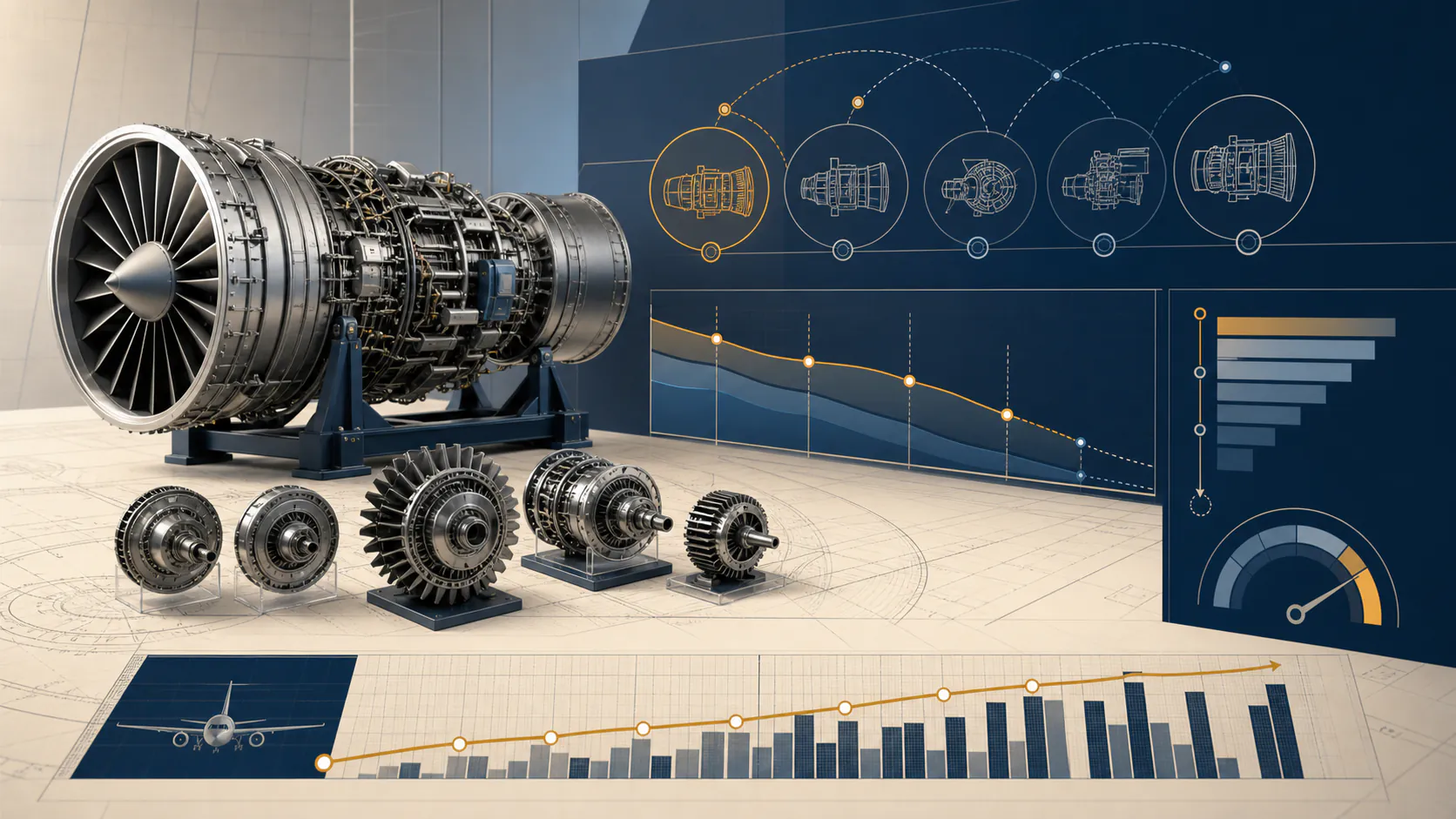
Aircraft Engine Maintenance Reserves editorial illustration

Engine maintenance is one of the largest and least linear costs in turbine-aircraft ownership. A single “engine reserve per hour” can be useful, but only if its scope, timing, and assumptions are visible.

A reserve is not necessarily cash in a protected account, an insurer’s guarantee, or a fixed future invoice. It may be:

  • An internal budget accrual.
  • Cash held in a designated account.
  • Supplemental rent paid under a lease.
  • A lender-required reserve.
  • A maintenance-program payment.
  • A transaction adjustment for remaining engine value.

Define which one you mean before comparing rates.

The core reserve equation

At its simplest:

reserve per utilization unit = net future event cost ÷ remaining utilization to event

For example, if a modeled event will cost $1,200,000 and is expected in 2,400 flight hours, the simple reserve is $500 per flight hour.

That arithmetic is correct and may still be economically incomplete. The model must define the event, condition, timing, utilization basis, escalation, and what existing balances or programs cover.

What an engine reserve may include

What an engine reserve may include
Cost layerExamples
Performance restorationDisassembly, inspection, repair, replacement, reassembly, test
Life-limited partsLLP kits or individual parts reaching mandatory limits
Unscheduled findingsCorrosion, distress, scrap, additional repair
Removal and installationLabor, tooling, access, ground run
LogisticsShipping, customs, insurance, storage
Rental or loanerSubstitute engine and associated minimums
Engineering and supportTechnical representatives, records, configuration review
EscalationLabor and material inflation until event date
Taxes and feesJurisdiction and contract dependent
DowntimeLost use or substitute lift, usually modeled separately

State whether the rate is “shop invoice only” or “all-in owner exposure.”

Performance restoration and LLPs are different

Performance-restoration work addresses engine condition and restores usable margin or performance under the applicable work scope. LLP replacement addresses mandatory part life.

They may occur together, but their economic drivers differ:

Performance restoration and LLPs are different
DriverPerformance restorationLife-limited parts
Primary intervalCondition, program, recommended/approved interval, operationsApproved part life
Main utilizationOften hours, cycles, condition, environmentUsually cycles or other approved life unit
Scope uncertaintyFindings and work-scope variabilityKit configuration, remaining life, pricing
Reset effectDepends on work performedNew parts begin at supported starting life
Records needShop history, configuration, trend and work scopeBack-to-birth identity and accumulated life

Build separate reserve lines even when the planned shop visit combines them.

Inputs for a defensible model

Engine identity and configuration

  • Make, model, serial number.
  • Thrust rating and build standard.
  • Installed modules and LLP serials.
  • Modifications, service bulletins, and AD status.
  • Maintenance-program enrollment and coverage.

Utilization

  • Current engine hours and cycles.
  • Hours-to-cycles ratio.
  • Forecast annual hours and cycles.
  • Mission length and operational severity.
  • Starts, temperature exposure, environment, and storage where material.

Maintenance history

  • Prior shop visits and work scopes.
  • Time and cycles since relevant work.
  • Trend data and borescope findings.
  • Unscheduled removals.
  • LLP status.
  • Repairs, concessions, and configuration changes.

Economic assumptions

  • Quoted or benchmark event cost.
  • Escalation rate.
  • Event timing.
  • Existing reserve or maintenance-program balance.
  • Eligible reimbursement.
  • Deductibles, caps, exclusions, and minimums.
  • Removal, logistics, rental, tax, and downtime.

Every material input should have a date, source, owner, and confidence level.

A layered model

Use several views instead of forcing one answer.

Long-run normalized reserve

full modeled event cost ÷ full expected interval

Useful for stable annual budgeting and comparing aircraft.

Catch-up reserve

unfunded exposure ÷ remaining interval

Useful after acquisition when the engine has already consumed life without a matching fund.

Contractual reserve

The amount required by lease, loan, or program contract, using its stated formulas and escalation.

Transaction adjustment

The negotiated value difference between the engine’s actual status and an agreed reference condition.

These numbers may all be different without any being wrong.

Hours, cycles, and mission mix

Short missions accumulate cycles quickly relative to hours. Long missions do the reverse. An hour-only reserve can understate a cycle-driven LLP exposure.

Model:

  • Performance-restoration reserve per hour.
  • LLP reserve per cycle.
  • Fixed calendar or annual items.
  • Conversion to an effective blended hourly rate using forecast mission mix.

effective hourly LLP reserve = LLP reserve per cycle × forecast cycles per hour

Stress-test the hours-to-cycles ratio. A new route structure can change exposure even if annual flight hours remain steady.

Escalation and time value

Future shop costs can rise faster than general inflation because of:

  • Labor rates.
  • Material and LLP pricing.
  • Supply constraints.
  • OEM price policy.
  • Engine age and supportability.
  • Work-scope growth.
  • Currency and logistics.

If a future nominal event cost is modeled:

future cost = current cost × (1 + escalation rate) ^ years

Use scenario ranges. Do not bury escalation inside a vendor benchmark with no as-of date.

For finance analysis, a team may also model the present value of future cash flows. For cash planning, the nominal amount due may matter more. State the purpose.

Existing balances and maintenance programs

Subtract only funds or benefits that are actually available for the modeled event.

Review:

  • Account ownership and segregation.
  • Reimbursement eligibility.
  • Qualifying minimum work scope.
  • Documentation and submission deadlines.
  • Caps and excluded items.
  • Rate and utilization adjustments.
  • Transferability on sale.
  • Forfeiture or end-of-lease terms.
  • Program provider credit and contract rights.
  • Unfunded supplemental costs.

A “paid-in balance” is not automatically equivalent to cash.

Lease maintenance reserves

Lease reserves or supplemental rent are contractual. The lease should define:

  • Payment basis: hour, cycle, calendar, or combination.
  • Rate escalation.
  • Minimum utilization.
  • Qualifying event.
  • Reimbursement process.
  • Lessors’ approval rights.
  • Documentation.
  • Work-scope exclusions.
  • Whether surplus is refundable.
  • End-of-lease treatment.
  • Security and default treatment.

The lessee’s accounting and cash treatment should follow qualified legal and accounting advice. The technical team should preserve evidence needed to support a claim.

Lender and collateral perspective

A lender may examine:

  • Engine remaining life and next event.
  • Unfunded maintenance exposure.
  • Program enrollment and payment status.
  • LLP trace.
  • Engine value separate from airframe value.
  • Reserve-account control.
  • Covenant compliance.
  • Borrower utilization and concentration.
  • Downside value after a shop-visit shock.

An unsupported status sheet weakens both valuation and covenant monitoring. Link every high-value assertion to records.

Transaction reconciliation

Before an acquisition:

  1. Confirm engine and module serial numbers.
  2. Reconcile hours and cycles.
  3. Review shop-visit work scopes and dates.
  4. Reconstruct LLP status and trace.
  5. Validate program coverage and account standing.
  6. Obtain current event-cost inputs.
  7. Forecast removal based on the intended mission.
  8. Model base, adverse, and early-removal cases.
  9. Reflect the exposure in price, escrow, warranty, or closing condition.
  10. Preserve a signed baseline at delivery.

An average market reserve should not replace engine-specific diligence.

Scenario model

At minimum, show:

Scenario model
ScenarioEvent timingShop scopeFindingsEscalationProgram recovery
BaseExpectedPlannedNormalCentralExpected
AdverseEarlierExpandedElevatedHigherReduced
SevereUnscheduledMajorHighStressDelayed or denied

Also test annual utilization lower than plan. A fixed calendar horizon with fewer hours can raise the effective hourly burden.

Common modeling errors

Using list price without work-scope definition

The model cannot be updated or compared.

Treating TBO as a guaranteed removal date

Actual timing depends on approved requirements, maintenance program, condition, operations, and contractual commitments.

Combining hours and cycles incorrectly

LLP exposure disappears inside an hour-based average.

Counting restricted funds at face value

Reimbursement conditions or caps can leave the owner with a gap.

Ignoring off-wing and downtime cost

The shop invoice is not the entire event.

Using unsupported engine status

Bad times, cycles, or LLP identity corrupt every downstream calculation.

Reserve review checklist

  • [ ] Reserve type and purpose defined.
  • [ ] Exact engine, modules, and LLPs identified.
  • [ ] Hours, cycles, and mission mix source-supported.
  • [ ] Performance restoration and LLPs modeled separately.
  • [ ] Work scope and cost basis dated.
  • [ ] Off-wing, logistics, rental, and downtime addressed.
  • [ ] Escalation and timing visible.
  • [ ] Program or reserve balances tested for availability.
  • [ ] Contract reimbursement conditions reviewed.
  • [ ] Base and adverse scenarios presented.
  • [ ] Transaction adjustment distinguished from long-run reserve.
  • [ ] Model has owner, version, and update triggers.

Sources and further reading

Common questions

Frequently asked questions

What is an aircraft engine maintenance reserve?

It is an amount accrued or paid, often per flight hour or cycle, to fund expected future engine maintenance. It may be an internal planning reserve, a lease payment, a lender covenant, or part of a maintenance program.

How do you calculate an engine reserve per hour?

A basic calculation divides the net expected event cost by the expected utilization interval. A robust model separately accounts for shop-visit scope, LLP exposure, escalation, cycles, utilization, timing, existing balances, program coverage, and off-wing costs.

Are engine reserves refundable?

It depends on the arrangement. Internal reserves remain the owner’s funds; lease reserves, supplemental rent, and maintenance-program payments follow contract terms that may include reimbursement conditions, exclusions, caps, forfeiture, or no refund.

Does an engine maintenance program eliminate reserve risk?

No. Coverage can reduce cost volatility, but exclusions, rate escalation, minimums, utilization adjustments, enrollment condition, noncovered work, removal logistics, and contract credit risk remain. Review the exact program agreement.

Make the aircraft history decision-ready

Turn aircraft paperwork into evidence you can use.

Radar digitizes, connects, and verifies the maintenance history behind buying, financing, operating, and selling an aircraft.


Your fleet's records at your fingertips.

Sign up, print a label, and search your first tail within days. Free.

Aircraft Engine Maintenance Reserves

How to convert future engine maintenance exposure into a defensible per-hour funding plan—without mistaking a simple rate for the real liability.

Engine reserves 15 sections · 7 min read Reviewed July 26, 2026

In brief

An engine maintenance reserve is a planning or contractual funding amount tied to future engine events. A useful reserve model separates performance-restoration work, life-limited parts, off-wing costs, escalation, utilization, timing, program coverage, and existing fund balances. Records quality matters because time, cycles, build standard, shop history, and eligibility determine the exposure.

Tools for this decision

Run the numbers while you read.

See all aircraft tools
Aircraft Engine Maintenance Reserves editorial illustration

Engine maintenance is one of the largest and least linear costs in turbine-aircraft ownership. A single “engine reserve per hour” can be useful, but only if its scope, timing, and assumptions are visible.

A reserve is not necessarily cash in a protected account, an insurer’s guarantee, or a fixed future invoice. It may be:

  • An internal budget accrual.
  • Cash held in a designated account.
  • Supplemental rent paid under a lease.
  • A lender-required reserve.
  • A maintenance-program payment.
  • A transaction adjustment for remaining engine value.

Define which one you mean before comparing rates.

The core reserve equation

At its simplest:

reserve per utilization unit = net future event cost ÷ remaining utilization to event

For example, if a modeled event will cost $1,200,000 and is expected in 2,400 flight hours, the simple reserve is $500 per flight hour.

That arithmetic is correct and may still be economically incomplete. The model must define the event, condition, timing, utilization basis, escalation, and what existing balances or programs cover.

What an engine reserve may include

What an engine reserve may include
Cost layerExamples
Performance restorationDisassembly, inspection, repair, replacement, reassembly, test
Life-limited partsLLP kits or individual parts reaching mandatory limits
Unscheduled findingsCorrosion, distress, scrap, additional repair
Removal and installationLabor, tooling, access, ground run
LogisticsShipping, customs, insurance, storage
Rental or loanerSubstitute engine and associated minimums
Engineering and supportTechnical representatives, records, configuration review
EscalationLabor and material inflation until event date
Taxes and feesJurisdiction and contract dependent
DowntimeLost use or substitute lift, usually modeled separately

State whether the rate is “shop invoice only” or “all-in owner exposure.”

Performance restoration and LLPs are different

Performance-restoration work addresses engine condition and restores usable margin or performance under the applicable work scope. LLP replacement addresses mandatory part life.

They may occur together, but their economic drivers differ:

Performance restoration and LLPs are different
DriverPerformance restorationLife-limited parts
Primary intervalCondition, program, recommended/approved interval, operationsApproved part life
Main utilizationOften hours, cycles, condition, environmentUsually cycles or other approved life unit
Scope uncertaintyFindings and work-scope variabilityKit configuration, remaining life, pricing
Reset effectDepends on work performedNew parts begin at supported starting life
Records needShop history, configuration, trend and work scopeBack-to-birth identity and accumulated life

Build separate reserve lines even when the planned shop visit combines them.

Inputs for a defensible model

Engine identity and configuration

  • Make, model, serial number.
  • Thrust rating and build standard.
  • Installed modules and LLP serials.
  • Modifications, service bulletins, and AD status.
  • Maintenance-program enrollment and coverage.

Utilization

  • Current engine hours and cycles.
  • Hours-to-cycles ratio.
  • Forecast annual hours and cycles.
  • Mission length and operational severity.
  • Starts, temperature exposure, environment, and storage where material.

Maintenance history

  • Prior shop visits and work scopes.
  • Time and cycles since relevant work.
  • Trend data and borescope findings.
  • Unscheduled removals.
  • LLP status.
  • Repairs, concessions, and configuration changes.

Economic assumptions

  • Quoted or benchmark event cost.
  • Escalation rate.
  • Event timing.
  • Existing reserve or maintenance-program balance.
  • Eligible reimbursement.
  • Deductibles, caps, exclusions, and minimums.
  • Removal, logistics, rental, tax, and downtime.

Every material input should have a date, source, owner, and confidence level.

A layered model

Use several views instead of forcing one answer.

Long-run normalized reserve

full modeled event cost ÷ full expected interval

Useful for stable annual budgeting and comparing aircraft.

Catch-up reserve

unfunded exposure ÷ remaining interval

Useful after acquisition when the engine has already consumed life without a matching fund.

Contractual reserve

The amount required by lease, loan, or program contract, using its stated formulas and escalation.

Transaction adjustment

The negotiated value difference between the engine’s actual status and an agreed reference condition.

These numbers may all be different without any being wrong.

Hours, cycles, and mission mix

Short missions accumulate cycles quickly relative to hours. Long missions do the reverse. An hour-only reserve can understate a cycle-driven LLP exposure.

Model:

  • Performance-restoration reserve per hour.
  • LLP reserve per cycle.
  • Fixed calendar or annual items.
  • Conversion to an effective blended hourly rate using forecast mission mix.

effective hourly LLP reserve = LLP reserve per cycle × forecast cycles per hour

Stress-test the hours-to-cycles ratio. A new route structure can change exposure even if annual flight hours remain steady.

Escalation and time value

Future shop costs can rise faster than general inflation because of:

  • Labor rates.
  • Material and LLP pricing.
  • Supply constraints.
  • OEM price policy.
  • Engine age and supportability.
  • Work-scope growth.
  • Currency and logistics.

If a future nominal event cost is modeled:

future cost = current cost × (1 + escalation rate) ^ years

Use scenario ranges. Do not bury escalation inside a vendor benchmark with no as-of date.

For finance analysis, a team may also model the present value of future cash flows. For cash planning, the nominal amount due may matter more. State the purpose.

Existing balances and maintenance programs

Subtract only funds or benefits that are actually available for the modeled event.

Review:

  • Account ownership and segregation.
  • Reimbursement eligibility.
  • Qualifying minimum work scope.
  • Documentation and submission deadlines.
  • Caps and excluded items.
  • Rate and utilization adjustments.
  • Transferability on sale.
  • Forfeiture or end-of-lease terms.
  • Program provider credit and contract rights.
  • Unfunded supplemental costs.

A “paid-in balance” is not automatically equivalent to cash.

Lease maintenance reserves

Lease reserves or supplemental rent are contractual. The lease should define:

  • Payment basis: hour, cycle, calendar, or combination.
  • Rate escalation.
  • Minimum utilization.
  • Qualifying event.
  • Reimbursement process.
  • Lessors’ approval rights.
  • Documentation.
  • Work-scope exclusions.
  • Whether surplus is refundable.
  • End-of-lease treatment.
  • Security and default treatment.

The lessee’s accounting and cash treatment should follow qualified legal and accounting advice. The technical team should preserve evidence needed to support a claim.

Lender and collateral perspective

A lender may examine:

  • Engine remaining life and next event.
  • Unfunded maintenance exposure.
  • Program enrollment and payment status.
  • LLP trace.
  • Engine value separate from airframe value.
  • Reserve-account control.
  • Covenant compliance.
  • Borrower utilization and concentration.
  • Downside value after a shop-visit shock.

An unsupported status sheet weakens both valuation and covenant monitoring. Link every high-value assertion to records.

Transaction reconciliation

Before an acquisition:

  1. Confirm engine and module serial numbers.
  2. Reconcile hours and cycles.
  3. Review shop-visit work scopes and dates.
  4. Reconstruct LLP status and trace.
  5. Validate program coverage and account standing.
  6. Obtain current event-cost inputs.
  7. Forecast removal based on the intended mission.
  8. Model base, adverse, and early-removal cases.
  9. Reflect the exposure in price, escrow, warranty, or closing condition.
  10. Preserve a signed baseline at delivery.

An average market reserve should not replace engine-specific diligence.

Scenario model

At minimum, show:

Scenario model
ScenarioEvent timingShop scopeFindingsEscalationProgram recovery
BaseExpectedPlannedNormalCentralExpected
AdverseEarlierExpandedElevatedHigherReduced
SevereUnscheduledMajorHighStressDelayed or denied

Also test annual utilization lower than plan. A fixed calendar horizon with fewer hours can raise the effective hourly burden.

Common modeling errors

Using list price without work-scope definition

The model cannot be updated or compared.

Treating TBO as a guaranteed removal date

Actual timing depends on approved requirements, maintenance program, condition, operations, and contractual commitments.

Combining hours and cycles incorrectly

LLP exposure disappears inside an hour-based average.

Counting restricted funds at face value

Reimbursement conditions or caps can leave the owner with a gap.

Ignoring off-wing and downtime cost

The shop invoice is not the entire event.

Using unsupported engine status

Bad times, cycles, or LLP identity corrupt every downstream calculation.

Reserve review checklist

  • [ ] Reserve type and purpose defined.
  • [ ] Exact engine, modules, and LLPs identified.
  • [ ] Hours, cycles, and mission mix source-supported.
  • [ ] Performance restoration and LLPs modeled separately.
  • [ ] Work scope and cost basis dated.
  • [ ] Off-wing, logistics, rental, and downtime addressed.
  • [ ] Escalation and timing visible.
  • [ ] Program or reserve balances tested for availability.
  • [ ] Contract reimbursement conditions reviewed.
  • [ ] Base and adverse scenarios presented.
  • [ ] Transaction adjustment distinguished from long-run reserve.
  • [ ] Model has owner, version, and update triggers.

Sources and further reading

Common questions

Frequently asked questions

What is an aircraft engine maintenance reserve?

It is an amount accrued or paid, often per flight hour or cycle, to fund expected future engine maintenance. It may be an internal planning reserve, a lease payment, a lender covenant, or part of a maintenance program.

How do you calculate an engine reserve per hour?

A basic calculation divides the net expected event cost by the expected utilization interval. A robust model separately accounts for shop-visit scope, LLP exposure, escalation, cycles, utilization, timing, existing balances, program coverage, and off-wing costs.

Are engine reserves refundable?

It depends on the arrangement. Internal reserves remain the owner’s funds; lease reserves, supplemental rent, and maintenance-program payments follow contract terms that may include reimbursement conditions, exclusions, caps, forfeiture, or no refund.

Does an engine maintenance program eliminate reserve risk?

No. Coverage can reduce cost volatility, but exclusions, rate escalation, minimums, utilization adjustments, enrollment condition, noncovered work, removal logistics, and contract credit risk remain. Review the exact program agreement.

Make the aircraft history decision-ready

Turn aircraft paperwork into evidence you can use.

Radar digitizes, connects, and verifies the maintenance history behind buying, financing, operating, and selling an aircraft.

Your fleet's records at your fingertips.

Sign up, print a label, and search your first tail within days. Free.

Aircraft Engine Maintenance Reserves

How to convert future engine maintenance exposure into a defensible per-hour funding plan—without mistaking a simple rate for the real liability.

Engine reserves 15 sections · 7 min read Reviewed July 26, 2026

In brief

An engine maintenance reserve is a planning or contractual funding amount tied to future engine events. A useful reserve model separates performance-restoration work, life-limited parts, off-wing costs, escalation, utilization, timing, program coverage, and existing fund balances. Records quality matters because time, cycles, build standard, shop history, and eligibility determine the exposure.

Tools for this decision

Run the numbers while you read.

See all aircraft tools
Aircraft Engine Maintenance Reserves editorial illustration

Engine maintenance is one of the largest and least linear costs in turbine-aircraft ownership. A single “engine reserve per hour” can be useful, but only if its scope, timing, and assumptions are visible.

A reserve is not necessarily cash in a protected account, an insurer’s guarantee, or a fixed future invoice. It may be:

  • An internal budget accrual.
  • Cash held in a designated account.
  • Supplemental rent paid under a lease.
  • A lender-required reserve.
  • A maintenance-program payment.
  • A transaction adjustment for remaining engine value.

Define which one you mean before comparing rates.

The core reserve equation

At its simplest:

reserve per utilization unit = net future event cost ÷ remaining utilization to event

For example, if a modeled event will cost $1,200,000 and is expected in 2,400 flight hours, the simple reserve is $500 per flight hour.

That arithmetic is correct and may still be economically incomplete. The model must define the event, condition, timing, utilization basis, escalation, and what existing balances or programs cover.

What an engine reserve may include

What an engine reserve may include
Cost layerExamples
Performance restorationDisassembly, inspection, repair, replacement, reassembly, test
Life-limited partsLLP kits or individual parts reaching mandatory limits
Unscheduled findingsCorrosion, distress, scrap, additional repair
Removal and installationLabor, tooling, access, ground run
LogisticsShipping, customs, insurance, storage
Rental or loanerSubstitute engine and associated minimums
Engineering and supportTechnical representatives, records, configuration review
EscalationLabor and material inflation until event date
Taxes and feesJurisdiction and contract dependent
DowntimeLost use or substitute lift, usually modeled separately

State whether the rate is “shop invoice only” or “all-in owner exposure.”

Performance restoration and LLPs are different

Performance-restoration work addresses engine condition and restores usable margin or performance under the applicable work scope. LLP replacement addresses mandatory part life.

They may occur together, but their economic drivers differ:

Performance restoration and LLPs are different
DriverPerformance restorationLife-limited parts
Primary intervalCondition, program, recommended/approved interval, operationsApproved part life
Main utilizationOften hours, cycles, condition, environmentUsually cycles or other approved life unit
Scope uncertaintyFindings and work-scope variabilityKit configuration, remaining life, pricing
Reset effectDepends on work performedNew parts begin at supported starting life
Records needShop history, configuration, trend and work scopeBack-to-birth identity and accumulated life

Build separate reserve lines even when the planned shop visit combines them.

Inputs for a defensible model

Engine identity and configuration

  • Make, model, serial number.
  • Thrust rating and build standard.
  • Installed modules and LLP serials.
  • Modifications, service bulletins, and AD status.
  • Maintenance-program enrollment and coverage.

Utilization

  • Current engine hours and cycles.
  • Hours-to-cycles ratio.
  • Forecast annual hours and cycles.
  • Mission length and operational severity.
  • Starts, temperature exposure, environment, and storage where material.

Maintenance history

  • Prior shop visits and work scopes.
  • Time and cycles since relevant work.
  • Trend data and borescope findings.
  • Unscheduled removals.
  • LLP status.
  • Repairs, concessions, and configuration changes.

Economic assumptions

  • Quoted or benchmark event cost.
  • Escalation rate.
  • Event timing.
  • Existing reserve or maintenance-program balance.
  • Eligible reimbursement.
  • Deductibles, caps, exclusions, and minimums.
  • Removal, logistics, rental, tax, and downtime.

Every material input should have a date, source, owner, and confidence level.

A layered model

Use several views instead of forcing one answer.

Long-run normalized reserve

full modeled event cost ÷ full expected interval

Useful for stable annual budgeting and comparing aircraft.

Catch-up reserve

unfunded exposure ÷ remaining interval

Useful after acquisition when the engine has already consumed life without a matching fund.

Contractual reserve

The amount required by lease, loan, or program contract, using its stated formulas and escalation.

Transaction adjustment

The negotiated value difference between the engine’s actual status and an agreed reference condition.

These numbers may all be different without any being wrong.

Hours, cycles, and mission mix

Short missions accumulate cycles quickly relative to hours. Long missions do the reverse. An hour-only reserve can understate a cycle-driven LLP exposure.

Model:

  • Performance-restoration reserve per hour.
  • LLP reserve per cycle.
  • Fixed calendar or annual items.
  • Conversion to an effective blended hourly rate using forecast mission mix.

effective hourly LLP reserve = LLP reserve per cycle × forecast cycles per hour

Stress-test the hours-to-cycles ratio. A new route structure can change exposure even if annual flight hours remain steady.

Escalation and time value

Future shop costs can rise faster than general inflation because of:

  • Labor rates.
  • Material and LLP pricing.
  • Supply constraints.
  • OEM price policy.
  • Engine age and supportability.
  • Work-scope growth.
  • Currency and logistics.

If a future nominal event cost is modeled:

future cost = current cost × (1 + escalation rate) ^ years

Use scenario ranges. Do not bury escalation inside a vendor benchmark with no as-of date.

For finance analysis, a team may also model the present value of future cash flows. For cash planning, the nominal amount due may matter more. State the purpose.

Existing balances and maintenance programs

Subtract only funds or benefits that are actually available for the modeled event.

Review:

  • Account ownership and segregation.
  • Reimbursement eligibility.
  • Qualifying minimum work scope.
  • Documentation and submission deadlines.
  • Caps and excluded items.
  • Rate and utilization adjustments.
  • Transferability on sale.
  • Forfeiture or end-of-lease terms.
  • Program provider credit and contract rights.
  • Unfunded supplemental costs.

A “paid-in balance” is not automatically equivalent to cash.

Lease maintenance reserves

Lease reserves or supplemental rent are contractual. The lease should define:

  • Payment basis: hour, cycle, calendar, or combination.
  • Rate escalation.
  • Minimum utilization.
  • Qualifying event.
  • Reimbursement process.
  • Lessors’ approval rights.
  • Documentation.
  • Work-scope exclusions.
  • Whether surplus is refundable.
  • End-of-lease treatment.
  • Security and default treatment.

The lessee’s accounting and cash treatment should follow qualified legal and accounting advice. The technical team should preserve evidence needed to support a claim.

Lender and collateral perspective

A lender may examine:

  • Engine remaining life and next event.
  • Unfunded maintenance exposure.
  • Program enrollment and payment status.
  • LLP trace.
  • Engine value separate from airframe value.
  • Reserve-account control.
  • Covenant compliance.
  • Borrower utilization and concentration.
  • Downside value after a shop-visit shock.

An unsupported status sheet weakens both valuation and covenant monitoring. Link every high-value assertion to records.

Transaction reconciliation

Before an acquisition:

  1. Confirm engine and module serial numbers.
  2. Reconcile hours and cycles.
  3. Review shop-visit work scopes and dates.
  4. Reconstruct LLP status and trace.
  5. Validate program coverage and account standing.
  6. Obtain current event-cost inputs.
  7. Forecast removal based on the intended mission.
  8. Model base, adverse, and early-removal cases.
  9. Reflect the exposure in price, escrow, warranty, or closing condition.
  10. Preserve a signed baseline at delivery.

An average market reserve should not replace engine-specific diligence.

Scenario model

At minimum, show:

Scenario model
ScenarioEvent timingShop scopeFindingsEscalationProgram recovery
BaseExpectedPlannedNormalCentralExpected
AdverseEarlierExpandedElevatedHigherReduced
SevereUnscheduledMajorHighStressDelayed or denied

Also test annual utilization lower than plan. A fixed calendar horizon with fewer hours can raise the effective hourly burden.

Common modeling errors

Using list price without work-scope definition

The model cannot be updated or compared.

Treating TBO as a guaranteed removal date

Actual timing depends on approved requirements, maintenance program, condition, operations, and contractual commitments.

Combining hours and cycles incorrectly

LLP exposure disappears inside an hour-based average.

Counting restricted funds at face value

Reimbursement conditions or caps can leave the owner with a gap.

Ignoring off-wing and downtime cost

The shop invoice is not the entire event.

Using unsupported engine status

Bad times, cycles, or LLP identity corrupt every downstream calculation.

Reserve review checklist

  • [ ] Reserve type and purpose defined.
  • [ ] Exact engine, modules, and LLPs identified.
  • [ ] Hours, cycles, and mission mix source-supported.
  • [ ] Performance restoration and LLPs modeled separately.
  • [ ] Work scope and cost basis dated.
  • [ ] Off-wing, logistics, rental, and downtime addressed.
  • [ ] Escalation and timing visible.
  • [ ] Program or reserve balances tested for availability.
  • [ ] Contract reimbursement conditions reviewed.
  • [ ] Base and adverse scenarios presented.
  • [ ] Transaction adjustment distinguished from long-run reserve.
  • [ ] Model has owner, version, and update triggers.

Sources and further reading

Common questions

Frequently asked questions

What is an aircraft engine maintenance reserve?

It is an amount accrued or paid, often per flight hour or cycle, to fund expected future engine maintenance. It may be an internal planning reserve, a lease payment, a lender covenant, or part of a maintenance program.

How do you calculate an engine reserve per hour?

A basic calculation divides the net expected event cost by the expected utilization interval. A robust model separately accounts for shop-visit scope, LLP exposure, escalation, cycles, utilization, timing, existing balances, program coverage, and off-wing costs.

Are engine reserves refundable?

It depends on the arrangement. Internal reserves remain the owner’s funds; lease reserves, supplemental rent, and maintenance-program payments follow contract terms that may include reimbursement conditions, exclusions, caps, forfeiture, or no refund.

Does an engine maintenance program eliminate reserve risk?

No. Coverage can reduce cost volatility, but exclusions, rate escalation, minimums, utilization adjustments, enrollment condition, noncovered work, removal logistics, and contract credit risk remain. Review the exact program agreement.

Make the aircraft history decision-ready

Turn aircraft paperwork into evidence you can use.

Radar digitizes, connects, and verifies the maintenance history behind buying, financing, operating, and selling an aircraft.

Your fleet's records at your fingertips.

Sign up, print a label, and search your first tail within days. Free.