Aircraft Pre-Buy Records Review: Complete Checklist

What to verify in the aircraft records before the purchase agreement, physical inspection, and closing conditions converge.

Pre-buy diligence 14 sections · 6 min read Reviewed July 26, 2026

In brief

A pre-buy records review should prove aircraft identity, time and cycle continuity, maintenance and inspection status, life-limited-part traceability, repairs and alterations, program standing, and the exceptions that must be resolved before acceptance.

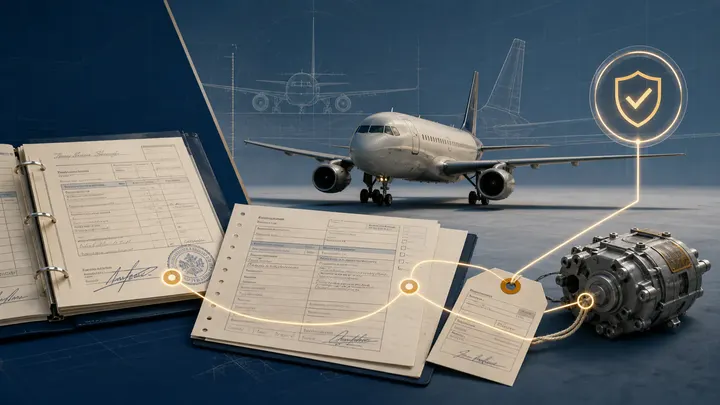
Aircraft Pre-Buy Records Review: Complete Checklist editorial illustration

A pre-buy inspection is not complete until the physical aircraft and the paper history agree. The records may reveal overdue or near-due work, unsupported component times, modifications that require inspection attention, and gaps that change value or closing conditions.

The review scope should be written into the purchase agreement and coordinated with qualified technical, legal, title, tax, insurance, and financing professionals. Radar organizes and connects the evidence; it does not replace required professional judgment.

Start with a records inventory

Before deep review, inventory what was delivered and what appears absent. Separate:

  • Airframe logbooks.
  • Engine logbooks for each engine.
  • APU and propeller records where applicable.
  • Component cards and life-limited-part records.
  • Current maintenance status reports.
  • Work orders, task cards, and shop findings.
  • Airworthiness Directive and Service Bulletin status.
  • Major repair and alteration records.
  • Supplemental Type Certificates and instructions for continued airworthiness.
  • Weight and balance and equipment lists.
  • Engine/APU program documents.
  • FAA registration and airworthiness records.
  • Damage, incident, corrosion, and repair files.

Record page count, date range, duplicates, legibility problems, and obvious gaps. Preserve the original file structure before reorganizing it.

Confirm aircraft and component identity

Verify manufacturer, model, serial number, registration, and installed engine, APU, propeller, and major-component serial numbers. Reconcile changes over time.

Identity errors can propagate into status reports. A component shown on a spreadsheet may have been removed years ago, or a replacement may lack the history needed to establish time and life.

Reconcile total time and cycles

Build continuity from delivery or the earliest available record to the current status. Compare:

  • Airframe total time and cycles.
  • Engine time and cycles since new and since major events.
  • APU time and cycles.
  • Propeller time and overhaul status.
  • Landing gear and other cycle-controlled assemblies.
  • Life-limited-part accumulated and remaining life.

Investigate reversals, unexplained jumps, duplicate entries, and differences between source records and summaries. Do not force the data to match. Document the exception and identify what evidence would resolve it.

Review inspection and maintenance status

Determine which maintenance program applies and establish the current position of hourly, cycle, and calendar items. Review:

  • Annual or progressive inspections as applicable.
  • Phase or letter checks.
  • Engine and APU inspections.
  • Landing gear overhaul.
  • Corrosion prevention and control tasks.
  • Emergency equipment, batteries, oxygen, and fire bottles.
  • Weight checks and other calendar items.
  • Open work orders, deferred discrepancies, and repetitive inspections.

The FAA inspection rule in 14 CFR 91.409 is a starting point. The aircraft’s operating rules, approved program, type design, Airworthiness Directives, and instructions for continued airworthiness may add requirements.

Verify Airworthiness Directive status

Review the current AD status against the aircraft, engines, propellers, appliances, and installed equipment. For each applicable AD, confirm:

  • Applicability basis.
  • Method of compliance.
  • Date and aircraft time at compliance.
  • Whether compliance is terminating or recurring.
  • Next due time, cycle, or date for recurring action.
  • Source entry, work order, or supporting document.
  • Alternative method of compliance where claimed.

14 CFR 91.417 specifically addresses records showing current status of applicable Airworthiness Directives. A summary without linked evidence should be treated as a lead, not final proof.

Life-limited parts and back-to-birth traceability

For each life-limited part, review part number, serial number, installation and removal history, accumulated hours/cycles, life limit, remaining life, and source evidence.

Traceability standards can vary by aircraft, operation, manufacturer, authority, and market. Buyers and lenders may require evidence beyond minimum retention rules. Identify the applicable standard before declaring a part acceptable.

Red flags include:

  • Missing birth or installation evidence.
  • Time carried forward without source support.
  • Serial-number mismatch.
  • Overlapping installations.
  • Unexplained time while off wing.
  • Altered or illegible release documents.
  • Shop-visit records that do not reconcile with the current stack.

Major repairs, alterations, and STCs

Create an indexed list of major repairs and alterations. Review log entries, FAA Form 337 where applicable, approved data, drawings, instructions for continued airworthiness, electrical-load changes, equipment lists, and weight and balance.

For each STC or modification, ask:

  • Is it installed on this serial number?
  • Is the approval package complete?
  • Are continued-airworthiness tasks in the maintenance program?
  • Does it conflict with another modification?
  • Are manuals, wiring diagrams, and parts support available?
  • Does it improve capability while narrowing the resale market?

Damage, corrosion, and repair history

Search across logbooks, work orders, invoices, FAA files, and physical findings. Common clues include skin replacement, structural repair, lightning strike, hard landing, bird strike, foreign-object damage, hail, corrosion removal, gear event, and sudden component replacement.

The objective is not to label every repaired aircraft “damaged.” It is to understand what occurred, how it was repaired, what approval supported it, whether recurring inspection applies, and how the market will perceive it.

Engine and APU program diligence

Obtain current statements directly from the program provider. Reconcile:

  • Enrollment and covered serial numbers.
  • Payment status and any deficit.
  • Hourly rate and minimum utilization.
  • Coverage, exclusions, deductibles, and escalators.
  • Transfer requirements and fees.
  • Shop-visit history and claims.
  • Life-limited-part treatment.

Program status can affect both aircraft valuation and aircraft financing. Test the resulting current- and forward-value assumptions in Radar’s aircraft valuation projection model.

Registration, title, and liens

Technical records review does not replace an aircraft title search. Coordinate the exact owner name, serial number, registration, bills of sale, security interests, lien releases, international interests, and closing documents.

The FAA explains that the Aircraft Registration Branch does not perform title searches and that state law determines lien and security interests. Use qualified title and legal professionals.

Connect physical findings back to records

The best pre-buy process is iterative:

  1. Records identify components, repairs, and inspection areas for physical attention.
  2. The physical inspection finds conditions or configuration that require records support.
  3. Reviewers reconcile the aircraft, status reports, and source entries.
  4. Unresolved items become written exceptions with consequence, owner, and deadline.

A polished summary is not enough if the underlying aircraft and records do not agree.

Classify every pre-buy exception

Classify every pre-buy exception
ClassificationMeaningTypical action
ConfirmedSource evidence supports the conclusionAccept into final aircraft file
Correctable before closingWork or documentation can resolve itAdd a specific closing condition
Commercial adjustmentBuyer may accept with price, reserve, or term changeQuantify consequence and negotiate
UnresolvedEvidence is insufficient by the decision dateExtend, escrow, exclude, or decline
Post-closing monitorAcceptable now but requires follow-upAssign owner, due date, and evidence

Avoid vague notes such as “records look good.” A decision-ready report states what was reviewed, what was found, what remains open, and why it matters.

Deliverables from a strong records review

  • Records inventory and gap map.
  • Aircraft and component identity reconciliation.
  • Time and cycle continuity report.
  • Inspection and maintenance status.
  • AD status with recurring items.
  • Life-limited-part traceability summary.
  • Major repair, alteration, and STC index.
  • Damage and corrosion history.
  • Program standing.
  • Title and registration coordination points.
  • Exceptions register with severity and closing treatment.
  • Source links for every material conclusion.

Sources and further reading

Common questions

Frequently asked questions

What is an aircraft pre-buy records review?

It is the document-based portion of acquisition diligence. Reviewers reconcile the aircraft’s identity, times, maintenance status, compliance, repairs, alterations, component history, and open questions against original records.

Is a records review the same as a physical pre-buy inspection?

No. They complement each other. The physical inspection tests present condition, while the records review tests history, status, approvals, and traceability. Findings from either side should inform the other.

Who should review aircraft records before purchase?

The team may include an A&P mechanic or repair station, an IA where appropriate, type specialists, an appraiser, aviation counsel, a title or escrow company, tax advisors, and the buyer’s lender or insurer.

What happens if aircraft logbooks are missing?

Determine exactly which period and asset are affected, what facts can be reconstructed from independent evidence, what cannot be proven, and how the gap changes airworthiness, value, financing, insurance, and resale.

Make the aircraft history decision-ready

Turn aircraft paperwork into evidence you can use.

Radar digitizes, connects, and verifies the maintenance history behind buying, financing, operating, and selling an aircraft.


Your fleet's records at your fingertips.

Sign up, print a label, and search your first tail within days. Free.

Aircraft Pre-Buy Records Review: Complete Checklist

What to verify in the aircraft records before the purchase agreement, physical inspection, and closing conditions converge.

Pre-buy diligence 14 sections · 6 min read Reviewed July 26, 2026

In brief

A pre-buy records review should prove aircraft identity, time and cycle continuity, maintenance and inspection status, life-limited-part traceability, repairs and alterations, program standing, and the exceptions that must be resolved before acceptance.

Aircraft Pre-Buy Records Review: Complete Checklist editorial illustration

A pre-buy inspection is not complete until the physical aircraft and the paper history agree. The records may reveal overdue or near-due work, unsupported component times, modifications that require inspection attention, and gaps that change value or closing conditions.

The review scope should be written into the purchase agreement and coordinated with qualified technical, legal, title, tax, insurance, and financing professionals. Radar organizes and connects the evidence; it does not replace required professional judgment.

Start with a records inventory

Before deep review, inventory what was delivered and what appears absent. Separate:

  • Airframe logbooks.
  • Engine logbooks for each engine.
  • APU and propeller records where applicable.
  • Component cards and life-limited-part records.
  • Current maintenance status reports.
  • Work orders, task cards, and shop findings.
  • Airworthiness Directive and Service Bulletin status.
  • Major repair and alteration records.
  • Supplemental Type Certificates and instructions for continued airworthiness.
  • Weight and balance and equipment lists.
  • Engine/APU program documents.
  • FAA registration and airworthiness records.
  • Damage, incident, corrosion, and repair files.

Record page count, date range, duplicates, legibility problems, and obvious gaps. Preserve the original file structure before reorganizing it.

Confirm aircraft and component identity

Verify manufacturer, model, serial number, registration, and installed engine, APU, propeller, and major-component serial numbers. Reconcile changes over time.

Identity errors can propagate into status reports. A component shown on a spreadsheet may have been removed years ago, or a replacement may lack the history needed to establish time and life.

Reconcile total time and cycles

Build continuity from delivery or the earliest available record to the current status. Compare:

  • Airframe total time and cycles.
  • Engine time and cycles since new and since major events.
  • APU time and cycles.
  • Propeller time and overhaul status.
  • Landing gear and other cycle-controlled assemblies.
  • Life-limited-part accumulated and remaining life.

Investigate reversals, unexplained jumps, duplicate entries, and differences between source records and summaries. Do not force the data to match. Document the exception and identify what evidence would resolve it.

Review inspection and maintenance status

Determine which maintenance program applies and establish the current position of hourly, cycle, and calendar items. Review:

  • Annual or progressive inspections as applicable.
  • Phase or letter checks.
  • Engine and APU inspections.
  • Landing gear overhaul.
  • Corrosion prevention and control tasks.
  • Emergency equipment, batteries, oxygen, and fire bottles.
  • Weight checks and other calendar items.
  • Open work orders, deferred discrepancies, and repetitive inspections.

The FAA inspection rule in 14 CFR 91.409 is a starting point. The aircraft’s operating rules, approved program, type design, Airworthiness Directives, and instructions for continued airworthiness may add requirements.

Verify Airworthiness Directive status

Review the current AD status against the aircraft, engines, propellers, appliances, and installed equipment. For each applicable AD, confirm:

  • Applicability basis.
  • Method of compliance.
  • Date and aircraft time at compliance.
  • Whether compliance is terminating or recurring.
  • Next due time, cycle, or date for recurring action.
  • Source entry, work order, or supporting document.
  • Alternative method of compliance where claimed.

14 CFR 91.417 specifically addresses records showing current status of applicable Airworthiness Directives. A summary without linked evidence should be treated as a lead, not final proof.

Life-limited parts and back-to-birth traceability

For each life-limited part, review part number, serial number, installation and removal history, accumulated hours/cycles, life limit, remaining life, and source evidence.

Traceability standards can vary by aircraft, operation, manufacturer, authority, and market. Buyers and lenders may require evidence beyond minimum retention rules. Identify the applicable standard before declaring a part acceptable.

Red flags include:

  • Missing birth or installation evidence.
  • Time carried forward without source support.
  • Serial-number mismatch.
  • Overlapping installations.
  • Unexplained time while off wing.
  • Altered or illegible release documents.
  • Shop-visit records that do not reconcile with the current stack.

Major repairs, alterations, and STCs

Create an indexed list of major repairs and alterations. Review log entries, FAA Form 337 where applicable, approved data, drawings, instructions for continued airworthiness, electrical-load changes, equipment lists, and weight and balance.

For each STC or modification, ask:

  • Is it installed on this serial number?
  • Is the approval package complete?
  • Are continued-airworthiness tasks in the maintenance program?
  • Does it conflict with another modification?
  • Are manuals, wiring diagrams, and parts support available?
  • Does it improve capability while narrowing the resale market?

Damage, corrosion, and repair history

Search across logbooks, work orders, invoices, FAA files, and physical findings. Common clues include skin replacement, structural repair, lightning strike, hard landing, bird strike, foreign-object damage, hail, corrosion removal, gear event, and sudden component replacement.

The objective is not to label every repaired aircraft “damaged.” It is to understand what occurred, how it was repaired, what approval supported it, whether recurring inspection applies, and how the market will perceive it.

Engine and APU program diligence

Obtain current statements directly from the program provider. Reconcile:

  • Enrollment and covered serial numbers.
  • Payment status and any deficit.
  • Hourly rate and minimum utilization.
  • Coverage, exclusions, deductibles, and escalators.
  • Transfer requirements and fees.
  • Shop-visit history and claims.
  • Life-limited-part treatment.

Program status can affect both aircraft valuation and aircraft financing. Test the resulting current- and forward-value assumptions in Radar’s aircraft valuation projection model.

Registration, title, and liens

Technical records review does not replace an aircraft title search. Coordinate the exact owner name, serial number, registration, bills of sale, security interests, lien releases, international interests, and closing documents.

The FAA explains that the Aircraft Registration Branch does not perform title searches and that state law determines lien and security interests. Use qualified title and legal professionals.

Connect physical findings back to records

The best pre-buy process is iterative:

  1. Records identify components, repairs, and inspection areas for physical attention.
  2. The physical inspection finds conditions or configuration that require records support.
  3. Reviewers reconcile the aircraft, status reports, and source entries.
  4. Unresolved items become written exceptions with consequence, owner, and deadline.

A polished summary is not enough if the underlying aircraft and records do not agree.

Classify every pre-buy exception

Classify every pre-buy exception
ClassificationMeaningTypical action
ConfirmedSource evidence supports the conclusionAccept into final aircraft file
Correctable before closingWork or documentation can resolve itAdd a specific closing condition
Commercial adjustmentBuyer may accept with price, reserve, or term changeQuantify consequence and negotiate
UnresolvedEvidence is insufficient by the decision dateExtend, escrow, exclude, or decline
Post-closing monitorAcceptable now but requires follow-upAssign owner, due date, and evidence

Avoid vague notes such as “records look good.” A decision-ready report states what was reviewed, what was found, what remains open, and why it matters.

Deliverables from a strong records review

  • Records inventory and gap map.
  • Aircraft and component identity reconciliation.
  • Time and cycle continuity report.
  • Inspection and maintenance status.
  • AD status with recurring items.
  • Life-limited-part traceability summary.
  • Major repair, alteration, and STC index.
  • Damage and corrosion history.
  • Program standing.
  • Title and registration coordination points.
  • Exceptions register with severity and closing treatment.
  • Source links for every material conclusion.

Sources and further reading

Common questions

Frequently asked questions

What is an aircraft pre-buy records review?

It is the document-based portion of acquisition diligence. Reviewers reconcile the aircraft’s identity, times, maintenance status, compliance, repairs, alterations, component history, and open questions against original records.

Is a records review the same as a physical pre-buy inspection?

No. They complement each other. The physical inspection tests present condition, while the records review tests history, status, approvals, and traceability. Findings from either side should inform the other.

Who should review aircraft records before purchase?

The team may include an A&P mechanic or repair station, an IA where appropriate, type specialists, an appraiser, aviation counsel, a title or escrow company, tax advisors, and the buyer’s lender or insurer.

What happens if aircraft logbooks are missing?

Determine exactly which period and asset are affected, what facts can be reconstructed from independent evidence, what cannot be proven, and how the gap changes airworthiness, value, financing, insurance, and resale.

Make the aircraft history decision-ready

Turn aircraft paperwork into evidence you can use.

Radar digitizes, connects, and verifies the maintenance history behind buying, financing, operating, and selling an aircraft.

Your fleet's records at your fingertips.

Sign up, print a label, and search your first tail within days. Free.

Aircraft Pre-Buy Records Review: Complete Checklist

What to verify in the aircraft records before the purchase agreement, physical inspection, and closing conditions converge.

Pre-buy diligence 14 sections · 6 min read Reviewed July 26, 2026

In brief

A pre-buy records review should prove aircraft identity, time and cycle continuity, maintenance and inspection status, life-limited-part traceability, repairs and alterations, program standing, and the exceptions that must be resolved before acceptance.

Aircraft Pre-Buy Records Review: Complete Checklist editorial illustration

A pre-buy inspection is not complete until the physical aircraft and the paper history agree. The records may reveal overdue or near-due work, unsupported component times, modifications that require inspection attention, and gaps that change value or closing conditions.

The review scope should be written into the purchase agreement and coordinated with qualified technical, legal, title, tax, insurance, and financing professionals. Radar organizes and connects the evidence; it does not replace required professional judgment.

Start with a records inventory

Before deep review, inventory what was delivered and what appears absent. Separate:

  • Airframe logbooks.
  • Engine logbooks for each engine.
  • APU and propeller records where applicable.
  • Component cards and life-limited-part records.
  • Current maintenance status reports.
  • Work orders, task cards, and shop findings.
  • Airworthiness Directive and Service Bulletin status.
  • Major repair and alteration records.
  • Supplemental Type Certificates and instructions for continued airworthiness.
  • Weight and balance and equipment lists.
  • Engine/APU program documents.
  • FAA registration and airworthiness records.
  • Damage, incident, corrosion, and repair files.

Record page count, date range, duplicates, legibility problems, and obvious gaps. Preserve the original file structure before reorganizing it.

Confirm aircraft and component identity

Verify manufacturer, model, serial number, registration, and installed engine, APU, propeller, and major-component serial numbers. Reconcile changes over time.

Identity errors can propagate into status reports. A component shown on a spreadsheet may have been removed years ago, or a replacement may lack the history needed to establish time and life.

Reconcile total time and cycles

Build continuity from delivery or the earliest available record to the current status. Compare:

  • Airframe total time and cycles.
  • Engine time and cycles since new and since major events.
  • APU time and cycles.
  • Propeller time and overhaul status.
  • Landing gear and other cycle-controlled assemblies.
  • Life-limited-part accumulated and remaining life.

Investigate reversals, unexplained jumps, duplicate entries, and differences between source records and summaries. Do not force the data to match. Document the exception and identify what evidence would resolve it.

Review inspection and maintenance status

Determine which maintenance program applies and establish the current position of hourly, cycle, and calendar items. Review:

  • Annual or progressive inspections as applicable.
  • Phase or letter checks.
  • Engine and APU inspections.
  • Landing gear overhaul.
  • Corrosion prevention and control tasks.
  • Emergency equipment, batteries, oxygen, and fire bottles.
  • Weight checks and other calendar items.
  • Open work orders, deferred discrepancies, and repetitive inspections.

The FAA inspection rule in 14 CFR 91.409 is a starting point. The aircraft’s operating rules, approved program, type design, Airworthiness Directives, and instructions for continued airworthiness may add requirements.

Verify Airworthiness Directive status

Review the current AD status against the aircraft, engines, propellers, appliances, and installed equipment. For each applicable AD, confirm:

  • Applicability basis.
  • Method of compliance.
  • Date and aircraft time at compliance.
  • Whether compliance is terminating or recurring.
  • Next due time, cycle, or date for recurring action.
  • Source entry, work order, or supporting document.
  • Alternative method of compliance where claimed.

14 CFR 91.417 specifically addresses records showing current status of applicable Airworthiness Directives. A summary without linked evidence should be treated as a lead, not final proof.

Life-limited parts and back-to-birth traceability

For each life-limited part, review part number, serial number, installation and removal history, accumulated hours/cycles, life limit, remaining life, and source evidence.

Traceability standards can vary by aircraft, operation, manufacturer, authority, and market. Buyers and lenders may require evidence beyond minimum retention rules. Identify the applicable standard before declaring a part acceptable.

Red flags include:

  • Missing birth or installation evidence.
  • Time carried forward without source support.
  • Serial-number mismatch.
  • Overlapping installations.
  • Unexplained time while off wing.
  • Altered or illegible release documents.
  • Shop-visit records that do not reconcile with the current stack.

Major repairs, alterations, and STCs

Create an indexed list of major repairs and alterations. Review log entries, FAA Form 337 where applicable, approved data, drawings, instructions for continued airworthiness, electrical-load changes, equipment lists, and weight and balance.

For each STC or modification, ask:

  • Is it installed on this serial number?
  • Is the approval package complete?
  • Are continued-airworthiness tasks in the maintenance program?
  • Does it conflict with another modification?
  • Are manuals, wiring diagrams, and parts support available?
  • Does it improve capability while narrowing the resale market?

Damage, corrosion, and repair history

Search across logbooks, work orders, invoices, FAA files, and physical findings. Common clues include skin replacement, structural repair, lightning strike, hard landing, bird strike, foreign-object damage, hail, corrosion removal, gear event, and sudden component replacement.

The objective is not to label every repaired aircraft “damaged.” It is to understand what occurred, how it was repaired, what approval supported it, whether recurring inspection applies, and how the market will perceive it.

Engine and APU program diligence

Obtain current statements directly from the program provider. Reconcile:

  • Enrollment and covered serial numbers.
  • Payment status and any deficit.
  • Hourly rate and minimum utilization.
  • Coverage, exclusions, deductibles, and escalators.
  • Transfer requirements and fees.
  • Shop-visit history and claims.
  • Life-limited-part treatment.

Program status can affect both aircraft valuation and aircraft financing. Test the resulting current- and forward-value assumptions in Radar’s aircraft valuation projection model.

Registration, title, and liens

Technical records review does not replace an aircraft title search. Coordinate the exact owner name, serial number, registration, bills of sale, security interests, lien releases, international interests, and closing documents.

The FAA explains that the Aircraft Registration Branch does not perform title searches and that state law determines lien and security interests. Use qualified title and legal professionals.

Connect physical findings back to records

The best pre-buy process is iterative:

  1. Records identify components, repairs, and inspection areas for physical attention.
  2. The physical inspection finds conditions or configuration that require records support.
  3. Reviewers reconcile the aircraft, status reports, and source entries.
  4. Unresolved items become written exceptions with consequence, owner, and deadline.

A polished summary is not enough if the underlying aircraft and records do not agree.

Classify every pre-buy exception

Classify every pre-buy exception
ClassificationMeaningTypical action
ConfirmedSource evidence supports the conclusionAccept into final aircraft file
Correctable before closingWork or documentation can resolve itAdd a specific closing condition
Commercial adjustmentBuyer may accept with price, reserve, or term changeQuantify consequence and negotiate
UnresolvedEvidence is insufficient by the decision dateExtend, escrow, exclude, or decline
Post-closing monitorAcceptable now but requires follow-upAssign owner, due date, and evidence

Avoid vague notes such as “records look good.” A decision-ready report states what was reviewed, what was found, what remains open, and why it matters.

Deliverables from a strong records review

  • Records inventory and gap map.
  • Aircraft and component identity reconciliation.
  • Time and cycle continuity report.
  • Inspection and maintenance status.
  • AD status with recurring items.
  • Life-limited-part traceability summary.
  • Major repair, alteration, and STC index.
  • Damage and corrosion history.
  • Program standing.
  • Title and registration coordination points.
  • Exceptions register with severity and closing treatment.
  • Source links for every material conclusion.

Sources and further reading

Common questions

Frequently asked questions

What is an aircraft pre-buy records review?

It is the document-based portion of acquisition diligence. Reviewers reconcile the aircraft’s identity, times, maintenance status, compliance, repairs, alterations, component history, and open questions against original records.

Is a records review the same as a physical pre-buy inspection?

No. They complement each other. The physical inspection tests present condition, while the records review tests history, status, approvals, and traceability. Findings from either side should inform the other.

Who should review aircraft records before purchase?

The team may include an A&P mechanic or repair station, an IA where appropriate, type specialists, an appraiser, aviation counsel, a title or escrow company, tax advisors, and the buyer’s lender or insurer.

What happens if aircraft logbooks are missing?

Determine exactly which period and asset are affected, what facts can be reconstructed from independent evidence, what cannot be proven, and how the gap changes airworthiness, value, financing, insurance, and resale.

Make the aircraft history decision-ready

Turn aircraft paperwork into evidence you can use.

Radar digitizes, connects, and verifies the maintenance history behind buying, financing, operating, and selling an aircraft.

Your fleet's records at your fingertips.

Sign up, print a label, and search your first tail within days. Free.