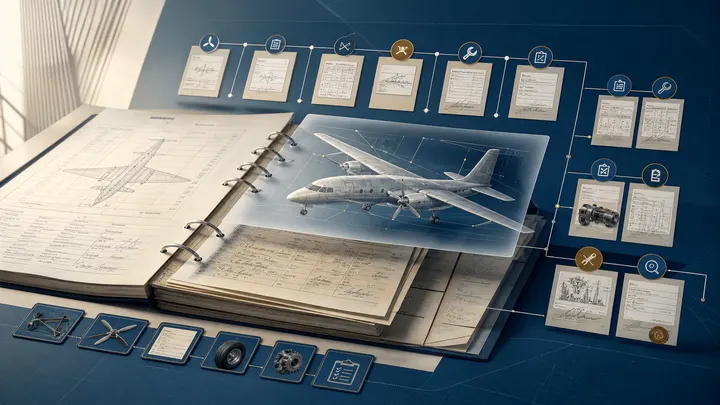
Aircraft Maintenance Records: Requirements and Checklist

What aircraft maintenance records must communicate, how to organize them, and how to keep every status traceable to source evidence.

Maintenance records 11 sections · 6 min read Reviewed July 26, 2026

In brief

Aircraft maintenance records document work performed, approval for return to service, inspection status, total time, life-limited parts, and applicable Airworthiness Directive status. The exact records and retention periods depend on the aircraft, work, and operating rules.
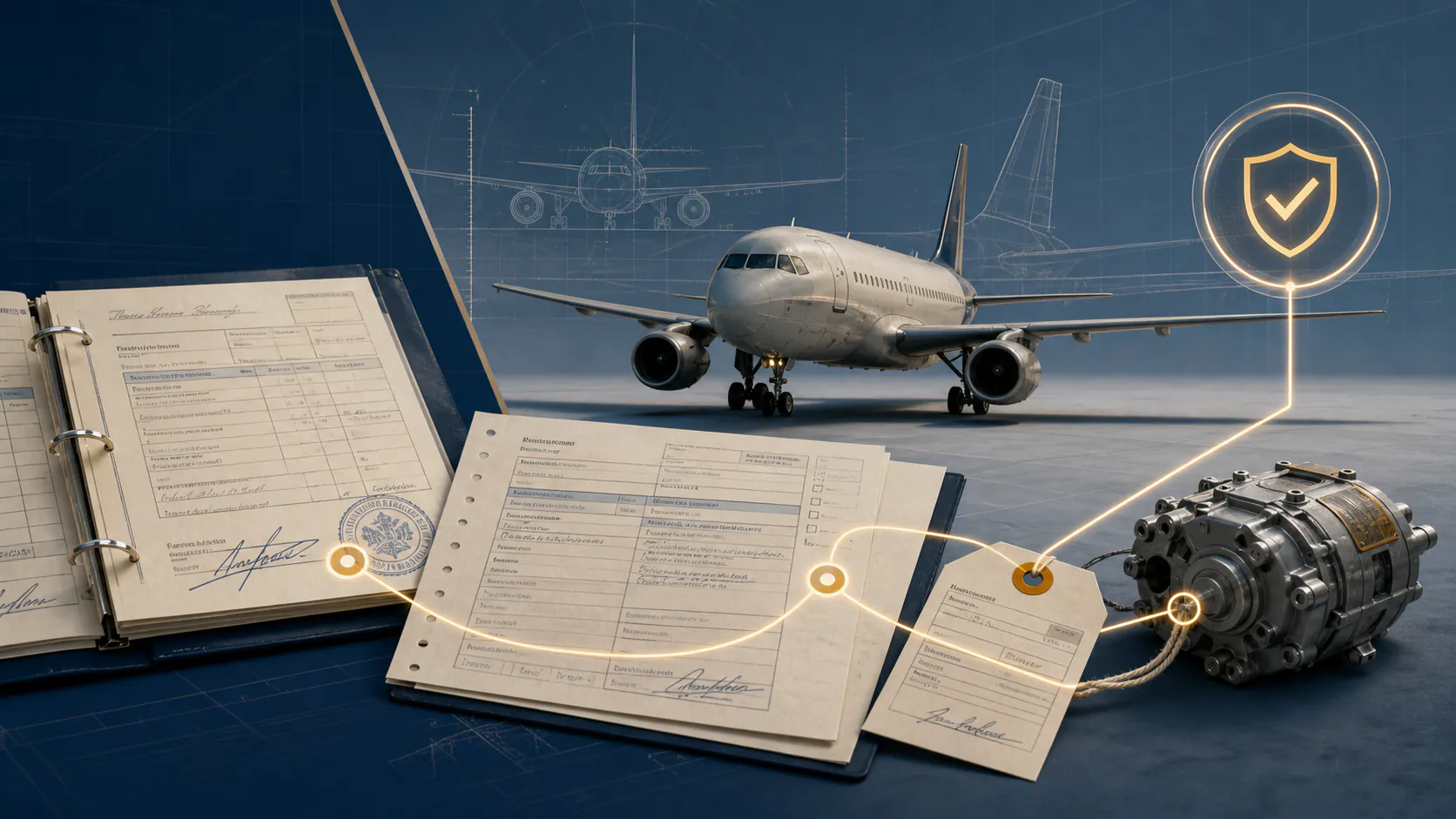
Aircraft Maintenance Records: Requirements and Checklist editorial illustration

Aircraft maintenance records are the evidence chain behind continued operation. They document the work, the approving person, the status of required actions, and the history that follows the aircraft and its components.

This guide summarizes common U.S. federal requirements and operating practices. It is not a substitute for the regulations, an approved program, certificate-holder procedures, or qualified maintenance and legal advice.

Maintenance entry content under 14 CFR 43.9

14 CFR 43.9 addresses the content and form of maintenance, preventive-maintenance, rebuilding, and alteration records, except inspections performed under 14 CFR Part 91 and certain other provisions.

The rule generally calls for:

  • A description of the work performed, or reference to data acceptable to the Administrator.
  • The date the work was completed.
  • The name of the person performing the work if different from the approving person.
  • The signature, certificate number, and kind of certificate held by the person approving the work.

The approving signature constitutes approval for return to service only for the work performed. Context matters: connect the entry with the supporting work order, task card, data, parts records, tests, and inspection findings.

Inspection records

Inspections have their own entry requirements. Review the rules applicable to the inspection and operation, including 14 CFR 43.11 and 14 CFR 91.409.

Confirm the entry identifies the inspection, aircraft or component, date, time in service, airworthy or unairworthy determination as applicable, discrepancy treatment, and approving person.

Owner and operator record retention under 14 CFR 91.417

14 CFR 91.417 distinguishes categories of records and retention.

One category generally covers records of maintenance, preventive maintenance, and alteration, plus specified inspection records. These are retained until the work is repeated, superseded, or for one year after the work, as the rule provides.

Another category includes specified continuing-status records, such as:

  • Total time in service of the airframe, engines, and propellers.
  • Current status of life-limited parts.
  • Time since last overhaul of items required to be overhauled on a specified basis.
  • Current inspection status.
  • Current status of applicable Airworthiness Directives, including method and recurring next due.
  • Copies of forms required by 14 CFR 43.9(d) for major alterations.

These specified records are retained and transferred with the aircraft at sale. Always read the current rule and the requirements applicable to the operation.

A complete aircraft records set

Organize by asset and evidence type:

A complete aircraft records set
Record groupExamplesKey review question
Aircraft identityRegistration, airworthiness, serial numberIs this the correct aircraft and owner?
AirframeLogbooks, inspections, repairsDoes time and condition history reconcile?
Engines/APULogs, shop visits, LLPs, programsCan status and remaining life be proven?
ComponentsCards, installation/removal, releasesIs identity and time traceable?
ComplianceADs, mandatory tasks, approved programWhat applies, what was done, what recurs?
ConfigurationEquipment, STCs, weight and balanceDoes the documented configuration match the aircraft?
Work evidenceWork orders, task cards, tests, partsDoes the summary link to complete support?
ExceptionsMissing, conflicting, illegible recordsWho owns resolution and what is the consequence?

Airworthiness Directive records

Current AD status should show:

  • AD number and revision.
  • Applicability.
  • Method of compliance.
  • Date and aircraft time at compliance.
  • Whether action is recurring or terminating.
  • Next due date, hours, or cycles for recurring action.
  • Source maintenance entry and work package.
  • Alternative method of compliance if used.

An AD status spreadsheet is useful for planning, but reviewers should be able to open the evidence supporting each conclusion.

Life-limited parts and component history

Life-limited-part records need strong identity and time controls. Capture part number, serial number, life limit, accumulated time/cycles, installation and removal history, and source documents.

Avoid merging uncertain records into a clean-looking total. Keep assumptions and gaps explicit. Depending on the asset and market, buyers and operators may expect back-to-birth traceability that exceeds a narrow reading of regulatory retention.

Major repairs, alterations, and configuration

Index:

  • Major repair and alteration entries.
  • FAA Form 337 records where applicable.
  • Approved data and engineering orders.
  • Supplemental Type Certificates.
  • Instructions for continued airworthiness.
  • Electrical load analysis, wiring changes, and equipment lists.
  • Weight and balance revisions.

Confirm continued-airworthiness tasks are reflected in maintenance planning. A modification package that lives outside the tracker can create a silent compliance gap.

Electronic maintenance records

The FAA’s current AC 120-78B provides guidance for electronic signatures, electronic recordkeeping, and electronic manuals.

An electronic-record system should address:

  • Authentication and signer identity.
  • Integrity and protection from unauthorized change.
  • Legibility and accurate reproduction.
  • Access for authorized users and regulators.
  • Audit trail and correction history.
  • Retention and timely retrieval.
  • Backup, recovery, and continuity.
  • Procedures, training, and approval or acceptance where applicable.

Scanning paper for convenience does not automatically change which item is the legally controlling original. Define custody and procedures with qualified advisors.

Records quality controls

Use measurable acceptance criteria:

  • Every page is present, correctly oriented, and legible.
  • Page order and logbook boundaries are preserved.
  • Aircraft and component identity is tagged.
  • Dates and times follow a consistent format without altering source.
  • Duplicate documents are linked, not silently deleted.
  • Extracted values point to source.
  • Conflicts enter a review queue.
  • Reviewer changes retain audit history.
  • New shop records arrive within a defined service level.
  • Backups and exports are tested.

Preparing for an audit, sale, or financing

Build a reusable package containing:

  • Aircraft and component inventory.
  • Current times and cycles.
  • Inspection status and forecast.
  • AD status.
  • Life-limited-part status.
  • Major repairs, alterations, STCs, and continued-airworthiness tasks.
  • Damage and corrosion history.
  • Engine/APU program evidence.
  • Exceptions and open work.
  • Source document index.

For a purchase, use the more detailed pre-buy records review checklist. For financing, connect the records package to value and title in Radar’s aircraft financing guide.

Sources and further reading

Common questions

Frequently asked questions

What information belongs in an aircraft maintenance record entry?

Under 14 CFR 43.9, the entry generally includes a description or reference to the work performed, completion date, name of the person performing the work if different, and the signature, certificate number, and kind of certificate of the approving person.

How long must aircraft maintenance records be kept?

Retention varies by record type. 14 CFR 91.417 distinguishes records retained until work is repeated or superseded and for at least one year from the work, from specified status records retained and transferred with the aircraft. Other operating rules may apply.

Do aircraft maintenance records transfer when an aircraft is sold?

Specified records under 14 CFR 91.417 must be transferred with the aircraft at sale. Transaction practice may transfer a broader history because buyers, lenders, insurers, and future maintainers depend on it.

Can maintenance records be electronic?

Electronic systems may be acceptable when applicable requirements and procedures are met. FAA AC 120-78B provides current guidance for electronic signatures, recordkeeping, and manuals.

Run maintenance from connected evidence

Know what is due—and open the record that proves it.

Radar connects maintenance status, component history, compliance work, and source records across every tail in the fleet.


Your fleet's records at your fingertips.

Sign up, print a label, and search your first tail within days. Free.

Aircraft Maintenance Records: Requirements and Checklist

What aircraft maintenance records must communicate, how to organize them, and how to keep every status traceable to source evidence.

Maintenance records 11 sections · 6 min read Reviewed July 26, 2026

In brief

Aircraft maintenance records document work performed, approval for return to service, inspection status, total time, life-limited parts, and applicable Airworthiness Directive status. The exact records and retention periods depend on the aircraft, work, and operating rules.

Aircraft Maintenance Records: Requirements and Checklist editorial illustration

Aircraft maintenance records are the evidence chain behind continued operation. They document the work, the approving person, the status of required actions, and the history that follows the aircraft and its components.

This guide summarizes common U.S. federal requirements and operating practices. It is not a substitute for the regulations, an approved program, certificate-holder procedures, or qualified maintenance and legal advice.

Maintenance entry content under 14 CFR 43.9

14 CFR 43.9 addresses the content and form of maintenance, preventive-maintenance, rebuilding, and alteration records, except inspections performed under 14 CFR Part 91 and certain other provisions.

The rule generally calls for:

  • A description of the work performed, or reference to data acceptable to the Administrator.
  • The date the work was completed.
  • The name of the person performing the work if different from the approving person.
  • The signature, certificate number, and kind of certificate held by the person approving the work.

The approving signature constitutes approval for return to service only for the work performed. Context matters: connect the entry with the supporting work order, task card, data, parts records, tests, and inspection findings.

Inspection records

Inspections have their own entry requirements. Review the rules applicable to the inspection and operation, including 14 CFR 43.11 and 14 CFR 91.409.

Confirm the entry identifies the inspection, aircraft or component, date, time in service, airworthy or unairworthy determination as applicable, discrepancy treatment, and approving person.

Owner and operator record retention under 14 CFR 91.417

14 CFR 91.417 distinguishes categories of records and retention.

One category generally covers records of maintenance, preventive maintenance, and alteration, plus specified inspection records. These are retained until the work is repeated, superseded, or for one year after the work, as the rule provides.

Another category includes specified continuing-status records, such as:

  • Total time in service of the airframe, engines, and propellers.
  • Current status of life-limited parts.
  • Time since last overhaul of items required to be overhauled on a specified basis.
  • Current inspection status.
  • Current status of applicable Airworthiness Directives, including method and recurring next due.
  • Copies of forms required by 14 CFR 43.9(d) for major alterations.

These specified records are retained and transferred with the aircraft at sale. Always read the current rule and the requirements applicable to the operation.

A complete aircraft records set

Organize by asset and evidence type:

A complete aircraft records set
Record groupExamplesKey review question
Aircraft identityRegistration, airworthiness, serial numberIs this the correct aircraft and owner?
AirframeLogbooks, inspections, repairsDoes time and condition history reconcile?
Engines/APULogs, shop visits, LLPs, programsCan status and remaining life be proven?
ComponentsCards, installation/removal, releasesIs identity and time traceable?
ComplianceADs, mandatory tasks, approved programWhat applies, what was done, what recurs?
ConfigurationEquipment, STCs, weight and balanceDoes the documented configuration match the aircraft?
Work evidenceWork orders, task cards, tests, partsDoes the summary link to complete support?
ExceptionsMissing, conflicting, illegible recordsWho owns resolution and what is the consequence?

Airworthiness Directive records

Current AD status should show:

  • AD number and revision.
  • Applicability.
  • Method of compliance.
  • Date and aircraft time at compliance.
  • Whether action is recurring or terminating.
  • Next due date, hours, or cycles for recurring action.
  • Source maintenance entry and work package.
  • Alternative method of compliance if used.

An AD status spreadsheet is useful for planning, but reviewers should be able to open the evidence supporting each conclusion.

Life-limited parts and component history

Life-limited-part records need strong identity and time controls. Capture part number, serial number, life limit, accumulated time/cycles, installation and removal history, and source documents.

Avoid merging uncertain records into a clean-looking total. Keep assumptions and gaps explicit. Depending on the asset and market, buyers and operators may expect back-to-birth traceability that exceeds a narrow reading of regulatory retention.

Major repairs, alterations, and configuration

Index:

  • Major repair and alteration entries.
  • FAA Form 337 records where applicable.
  • Approved data and engineering orders.
  • Supplemental Type Certificates.
  • Instructions for continued airworthiness.
  • Electrical load analysis, wiring changes, and equipment lists.
  • Weight and balance revisions.

Confirm continued-airworthiness tasks are reflected in maintenance planning. A modification package that lives outside the tracker can create a silent compliance gap.

Electronic maintenance records

The FAA’s current AC 120-78B provides guidance for electronic signatures, electronic recordkeeping, and electronic manuals.

An electronic-record system should address:

  • Authentication and signer identity.
  • Integrity and protection from unauthorized change.
  • Legibility and accurate reproduction.
  • Access for authorized users and regulators.
  • Audit trail and correction history.
  • Retention and timely retrieval.
  • Backup, recovery, and continuity.
  • Procedures, training, and approval or acceptance where applicable.

Scanning paper for convenience does not automatically change which item is the legally controlling original. Define custody and procedures with qualified advisors.

Records quality controls

Use measurable acceptance criteria:

  • Every page is present, correctly oriented, and legible.
  • Page order and logbook boundaries are preserved.
  • Aircraft and component identity is tagged.
  • Dates and times follow a consistent format without altering source.
  • Duplicate documents are linked, not silently deleted.
  • Extracted values point to source.
  • Conflicts enter a review queue.
  • Reviewer changes retain audit history.
  • New shop records arrive within a defined service level.
  • Backups and exports are tested.

Preparing for an audit, sale, or financing

Build a reusable package containing:

  • Aircraft and component inventory.
  • Current times and cycles.
  • Inspection status and forecast.
  • AD status.
  • Life-limited-part status.
  • Major repairs, alterations, STCs, and continued-airworthiness tasks.
  • Damage and corrosion history.
  • Engine/APU program evidence.
  • Exceptions and open work.
  • Source document index.

For a purchase, use the more detailed pre-buy records review checklist. For financing, connect the records package to value and title in Radar’s aircraft financing guide.

Sources and further reading

Common questions

Frequently asked questions

What information belongs in an aircraft maintenance record entry?

Under 14 CFR 43.9, the entry generally includes a description or reference to the work performed, completion date, name of the person performing the work if different, and the signature, certificate number, and kind of certificate of the approving person.

How long must aircraft maintenance records be kept?

Retention varies by record type. 14 CFR 91.417 distinguishes records retained until work is repeated or superseded and for at least one year from the work, from specified status records retained and transferred with the aircraft. Other operating rules may apply.

Do aircraft maintenance records transfer when an aircraft is sold?

Specified records under 14 CFR 91.417 must be transferred with the aircraft at sale. Transaction practice may transfer a broader history because buyers, lenders, insurers, and future maintainers depend on it.

Can maintenance records be electronic?

Electronic systems may be acceptable when applicable requirements and procedures are met. FAA AC 120-78B provides current guidance for electronic signatures, recordkeeping, and manuals.

Run maintenance from connected evidence

Know what is due—and open the record that proves it.

Radar connects maintenance status, component history, compliance work, and source records across every tail in the fleet.

Your fleet's records at your fingertips.

Sign up, print a label, and search your first tail within days. Free.

Aircraft Maintenance Records: Requirements and Checklist

What aircraft maintenance records must communicate, how to organize them, and how to keep every status traceable to source evidence.

Maintenance records 11 sections · 6 min read Reviewed July 26, 2026

In brief

Aircraft maintenance records document work performed, approval for return to service, inspection status, total time, life-limited parts, and applicable Airworthiness Directive status. The exact records and retention periods depend on the aircraft, work, and operating rules.

Aircraft Maintenance Records: Requirements and Checklist editorial illustration

Aircraft maintenance records are the evidence chain behind continued operation. They document the work, the approving person, the status of required actions, and the history that follows the aircraft and its components.

This guide summarizes common U.S. federal requirements and operating practices. It is not a substitute for the regulations, an approved program, certificate-holder procedures, or qualified maintenance and legal advice.

Maintenance entry content under 14 CFR 43.9

14 CFR 43.9 addresses the content and form of maintenance, preventive-maintenance, rebuilding, and alteration records, except inspections performed under 14 CFR Part 91 and certain other provisions.

The rule generally calls for:

  • A description of the work performed, or reference to data acceptable to the Administrator.
  • The date the work was completed.
  • The name of the person performing the work if different from the approving person.
  • The signature, certificate number, and kind of certificate held by the person approving the work.

The approving signature constitutes approval for return to service only for the work performed. Context matters: connect the entry with the supporting work order, task card, data, parts records, tests, and inspection findings.

Inspection records

Inspections have their own entry requirements. Review the rules applicable to the inspection and operation, including 14 CFR 43.11 and 14 CFR 91.409.

Confirm the entry identifies the inspection, aircraft or component, date, time in service, airworthy or unairworthy determination as applicable, discrepancy treatment, and approving person.

Owner and operator record retention under 14 CFR 91.417

14 CFR 91.417 distinguishes categories of records and retention.

One category generally covers records of maintenance, preventive maintenance, and alteration, plus specified inspection records. These are retained until the work is repeated, superseded, or for one year after the work, as the rule provides.

Another category includes specified continuing-status records, such as:

  • Total time in service of the airframe, engines, and propellers.
  • Current status of life-limited parts.
  • Time since last overhaul of items required to be overhauled on a specified basis.
  • Current inspection status.
  • Current status of applicable Airworthiness Directives, including method and recurring next due.
  • Copies of forms required by 14 CFR 43.9(d) for major alterations.

These specified records are retained and transferred with the aircraft at sale. Always read the current rule and the requirements applicable to the operation.

A complete aircraft records set

Organize by asset and evidence type:

A complete aircraft records set
Record groupExamplesKey review question
Aircraft identityRegistration, airworthiness, serial numberIs this the correct aircraft and owner?
AirframeLogbooks, inspections, repairsDoes time and condition history reconcile?
Engines/APULogs, shop visits, LLPs, programsCan status and remaining life be proven?
ComponentsCards, installation/removal, releasesIs identity and time traceable?
ComplianceADs, mandatory tasks, approved programWhat applies, what was done, what recurs?
ConfigurationEquipment, STCs, weight and balanceDoes the documented configuration match the aircraft?
Work evidenceWork orders, task cards, tests, partsDoes the summary link to complete support?
ExceptionsMissing, conflicting, illegible recordsWho owns resolution and what is the consequence?

Airworthiness Directive records

Current AD status should show:

  • AD number and revision.
  • Applicability.
  • Method of compliance.
  • Date and aircraft time at compliance.
  • Whether action is recurring or terminating.
  • Next due date, hours, or cycles for recurring action.
  • Source maintenance entry and work package.
  • Alternative method of compliance if used.

An AD status spreadsheet is useful for planning, but reviewers should be able to open the evidence supporting each conclusion.

Life-limited parts and component history

Life-limited-part records need strong identity and time controls. Capture part number, serial number, life limit, accumulated time/cycles, installation and removal history, and source documents.

Avoid merging uncertain records into a clean-looking total. Keep assumptions and gaps explicit. Depending on the asset and market, buyers and operators may expect back-to-birth traceability that exceeds a narrow reading of regulatory retention.

Major repairs, alterations, and configuration

Index:

  • Major repair and alteration entries.
  • FAA Form 337 records where applicable.
  • Approved data and engineering orders.
  • Supplemental Type Certificates.
  • Instructions for continued airworthiness.
  • Electrical load analysis, wiring changes, and equipment lists.
  • Weight and balance revisions.

Confirm continued-airworthiness tasks are reflected in maintenance planning. A modification package that lives outside the tracker can create a silent compliance gap.

Electronic maintenance records

The FAA’s current AC 120-78B provides guidance for electronic signatures, electronic recordkeeping, and electronic manuals.

An electronic-record system should address:

  • Authentication and signer identity.
  • Integrity and protection from unauthorized change.
  • Legibility and accurate reproduction.
  • Access for authorized users and regulators.
  • Audit trail and correction history.
  • Retention and timely retrieval.
  • Backup, recovery, and continuity.
  • Procedures, training, and approval or acceptance where applicable.

Scanning paper for convenience does not automatically change which item is the legally controlling original. Define custody and procedures with qualified advisors.

Records quality controls

Use measurable acceptance criteria:

  • Every page is present, correctly oriented, and legible.
  • Page order and logbook boundaries are preserved.
  • Aircraft and component identity is tagged.
  • Dates and times follow a consistent format without altering source.
  • Duplicate documents are linked, not silently deleted.
  • Extracted values point to source.
  • Conflicts enter a review queue.
  • Reviewer changes retain audit history.
  • New shop records arrive within a defined service level.
  • Backups and exports are tested.

Preparing for an audit, sale, or financing

Build a reusable package containing:

  • Aircraft and component inventory.
  • Current times and cycles.
  • Inspection status and forecast.
  • AD status.
  • Life-limited-part status.
  • Major repairs, alterations, STCs, and continued-airworthiness tasks.
  • Damage and corrosion history.
  • Engine/APU program evidence.
  • Exceptions and open work.
  • Source document index.

For a purchase, use the more detailed pre-buy records review checklist. For financing, connect the records package to value and title in Radar’s aircraft financing guide.

Sources and further reading

Common questions

Frequently asked questions

What information belongs in an aircraft maintenance record entry?

Under 14 CFR 43.9, the entry generally includes a description or reference to the work performed, completion date, name of the person performing the work if different, and the signature, certificate number, and kind of certificate of the approving person.

How long must aircraft maintenance records be kept?

Retention varies by record type. 14 CFR 91.417 distinguishes records retained until work is repeated or superseded and for at least one year from the work, from specified status records retained and transferred with the aircraft. Other operating rules may apply.

Do aircraft maintenance records transfer when an aircraft is sold?

Specified records under 14 CFR 91.417 must be transferred with the aircraft at sale. Transaction practice may transfer a broader history because buyers, lenders, insurers, and future maintainers depend on it.

Can maintenance records be electronic?

Electronic systems may be acceptable when applicable requirements and procedures are met. FAA AC 120-78B provides current guidance for electronic signatures, recordkeeping, and manuals.

Run maintenance from connected evidence

Know what is due—and open the record that proves it.

Radar connects maintenance status, component history, compliance work, and source records across every tail in the fleet.

Your fleet's records at your fingertips.

Sign up, print a label, and search your first tail within days. Free.