Aircraft Purchase Closing Checklist

How to coordinate the aircraft, documents, money, title, records, insurance, and delivery conditions into one controlled closing.

Aircraft closing 12 sections · 5 min read Reviewed July 26, 2026

In brief

An aircraft closing succeeds when commercial, technical, legal, financing, insurance, and delivery workstreams converge on the same aircraft and the same acceptance conditions. A single checklist should identify every condition, owner, deadline, source document, and final disposition.
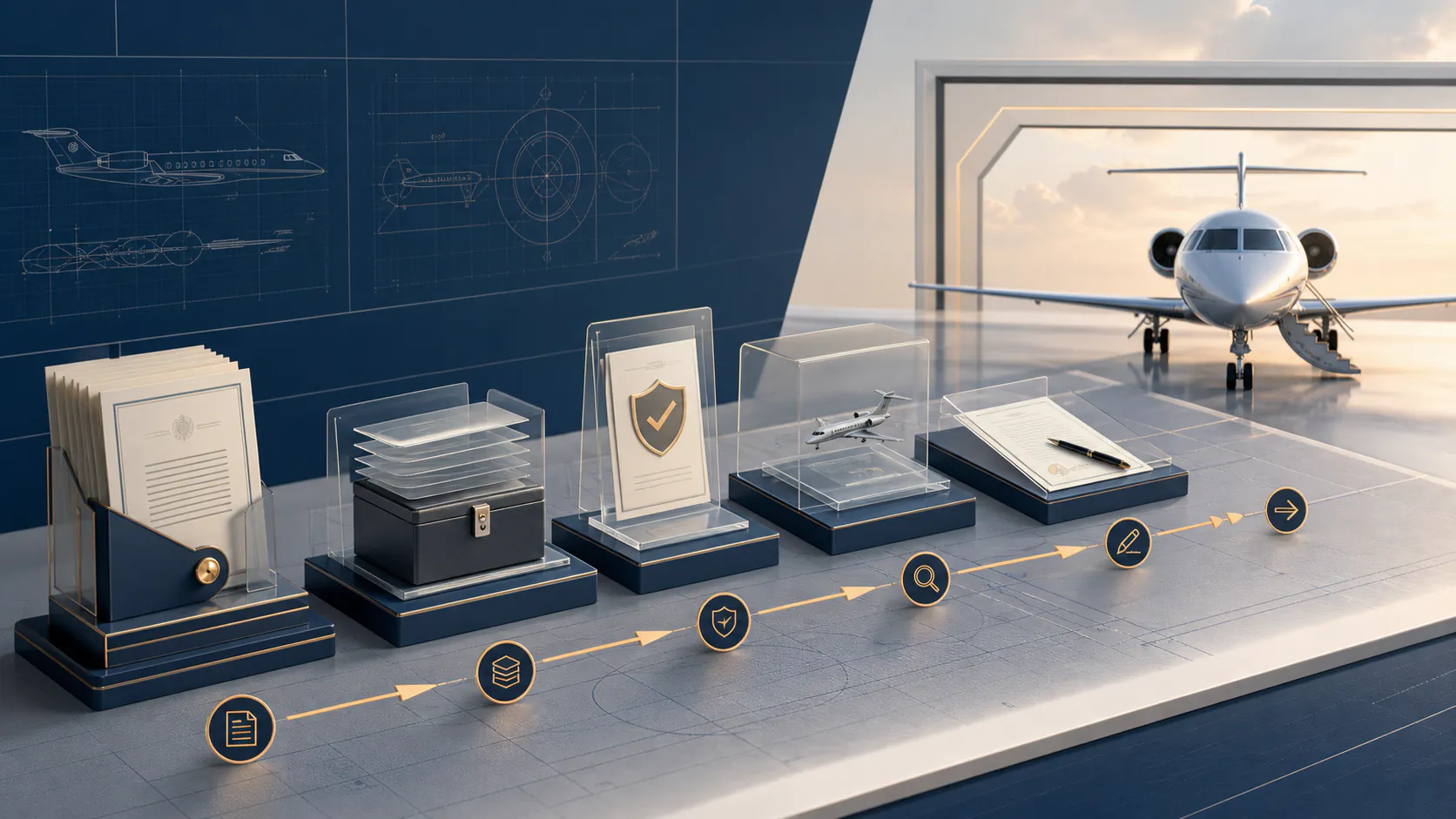
Aircraft Purchase Closing Checklist editorial illustration

An aircraft purchase closes only when multiple versions of “ready” become true at the same time. The buyer may be financially ready while title is not clear. The aircraft may pass inspection while records-delivery conditions remain open. Funds may be in escrow while insurance or lender documents are incomplete.

Use one master checklist to connect every workstream to an owner, deadline, source document, and release condition. Qualified aviation counsel, tax advisors, escrow and title professionals, lenders, insurers, and maintenance providers should control their respective work.

Build the closing team

Identify contact and authority for:

  • Buyer and buyer’s counsel.
  • Seller and seller’s counsel.
  • Aircraft broker or transaction advisor.
  • Escrow and title company.
  • Buyer’s lender and lender’s counsel.
  • Existing lender or lienholder.
  • Insurance broker and underwriter.
  • Pre-buy facility and technical representatives.
  • Appraiser or valuation provider.
  • Management company or operator.
  • Tax advisor.
  • International Registry professionals where applicable.

Clarify who can approve findings, amend instructions, release funds, sign filings, and accept delivery.

Purchase agreement controls

Before the checklist becomes operational, the agreement should address:

  • Exact aircraft, engines, APU, propellers, loose equipment, and records.
  • Deposit amount, custody, refund, and forfeiture.
  • Inspection scope, location, access, and cost.
  • Acceptance, rejection, correction, credit, and escrow rights.
  • Aircraft condition and use before closing.
  • Casualty and risk of loss.
  • Title and lien standard.
  • Delivery condition and location.
  • Taxes and transaction costs.
  • Representations, warranties, and survival.
  • Closing documents and release mechanics.
  • Governing law and dispute terms.

The checklist executes the contract; it should not silently rewrite it.

Technical diligence checklist

Confirm completion and disposition of:

  • Pre-buy physical inspection.
  • Pre-buy records review.
  • Engine, APU, and propeller specialist work.
  • Borescope, oil, filter, or laboratory analysis.
  • Test flight or ground run.
  • Avionics and cabin-system checks.
  • Damage, corrosion, and major-repair review.
  • Program status and transfer.
  • Open discrepancies.
  • Corrective work and reinspection.
  • Final acceptance certificate or written disposition.

Each corrected finding should include the new work order, maintenance entry, parts evidence, test result, and approval for return to service as applicable.

Aircraft records delivery

Attach a records-delivery index rather than relying on “all logbooks.”

Include as applicable:

  • Original airframe, engine, APU, and propeller logs.
  • Current status reports.
  • Work orders and task cards.
  • Life-limited-part and component records.
  • Parts tags and FAA Form 8130-3 records.
  • FAA Form 337, STC, and engineering packages.
  • Damage and repair records.
  • Weight and balance, equipment list, and flight-manual supplements.
  • Engine, APU, warranty, and maintenance-program documents.
  • Manuals and subscriptions that transfer.
  • Electronic system exports and administrator handoff.
  • Pre-buy and corrective-work package.

Define original versus copy, physical versus electronic, location, format, and acceptance procedure.

Valuation and financing conditions

The buyer and lender should confirm:

  • Final purchase price.
  • Accepted aircraft value.
  • Loan amount and buyer equity.
  • Rate, amortization, maturity, and balloon.
  • Borrower and guarantor approval.
  • Appraisal and technical conditions.
  • Lender-required repairs, reserves, or covenants.
  • Insurance requirements.
  • Final loan documents.
  • Funding authorization and funds-flow statement.

If the pre-buy changes value or condition, obtain explicit lender acceptance before closing.

Use the aircraft valuation projection model to quantify revised value scenarios, while preserving the appraisal and serial-specific evidence the lender actually accepted.

Title, liens, and registration

Coordinate the aircraft title search with:

  • Seller ownership name.
  • FAA registration record.
  • Recorded security interests and liens.
  • Payoff statements.
  • Lien releases and terminations.
  • Bill of sale.
  • Buyer registration application.
  • New lender security agreement.
  • FAA filing instructions.
  • State-law lien or tax analysis.
  • International Registry discharge and registration when applicable.

The FAA records documents; it does not issue a legal title opinion. Use experienced aviation title and legal professionals.

Entity and authority documents

For each signing entity:

  • Formation and good-standing evidence.
  • Governing documents.
  • Incumbency or authorized signers.
  • Board, member, manager, trustee, or partner approval.
  • Beneficial ownership information.
  • Tax identification.
  • Power of attorney if used.
  • Lender-required certificates and opinions.

Names must match across the purchase agreement, bill of sale, registration, insurance, financing, escrow, and wire instructions.

Insurance and operational readiness

Before release:

  • Policy or binder is effective at the correct time.
  • Aircraft and registration are correct.
  • Named insured and ownership entity match.
  • Lender clauses satisfy loan conditions.
  • Liability and hull terms are accepted.
  • Pilot, crew, training, and management conditions are met.
  • Territorial and operational use fits the planned mission.
  • Ferry or delivery flight is covered.

Also confirm crew, management, hangar, subscriptions, fuel, permits, and delivery logistics.

Escrow and funds flow

The closing statement should identify:

  • Purchase price.
  • Deposit credit.
  • Loan proceeds.
  • Buyer cash.
  • Existing loan payoff.
  • Seller proceeds.
  • Taxes and fees.
  • Broker commissions.
  • Escrow and title charges.
  • Repair credits or holdbacks.
  • Wire instructions and verification procedure.

Use a known, verified channel to confirm wire instructions. Treat any last-minute email change as a fraud risk requiring independent verification.

Closing-day release sequence

A controlled sequence may include:

  1. Confirm all documents are signed and held.
  2. Confirm funds are received and verified.
  3. Confirm title and lien conditions.
  4. Confirm technical acceptance and aircraft condition.
  5. Confirm insurance effectiveness.
  6. Confirm lender authorization.
  7. Release payoff and required filings.
  8. Release bill of sale, registration, and security documents.
  9. Release seller proceeds under instructions.
  10. Execute delivery receipt and transfer possession, records, keys, and access.

The actual sequence belongs in the parties’ agreed escrow and closing instructions.

Post-closing file

Preserve:

  • Executed purchase agreement and amendments.
  • Final closing statement and escrow confirmation.
  • Bill of sale and registration filings.
  • Title report, releases, and security documents.
  • International Registry evidence where applicable.
  • Loan and guarantee documents.
  • Insurance binder and endorsements.
  • Inspection, acceptance, and corrective-work files.
  • Complete records-delivery index.
  • Delivery receipt.
  • Tax and ownership-structure advice.
  • Final baseline of value, maintenance status, and exceptions.

That file becomes the source for future financing, monitoring, audit, and resale.

Sources and further reading

Common questions

Frequently asked questions

What documents are needed to close an aircraft purchase?

The exact set varies, but commonly includes the purchase agreement, bill of sale, registration documents, title and lien evidence, escrow instructions, financing documents, insurance, entity authority, inspection acceptance, delivery receipt, and aircraft records.

Should an aircraft closing use escrow?

Many transactions use an experienced aviation escrow and title provider to coordinate documents, funds, filings, and releases. The parties and counsel should determine the appropriate arrangement for the transaction.

When does ownership of an aircraft transfer?

The purchase agreement and closing documents should define the closing moment, document and funds release, delivery, risk of loss, and filing sequence. Do not infer transfer solely from physical possession.

What aircraft records should be delivered at closing?

Define the complete records set in the purchase agreement, including logbooks, work packages, component and program records, repair and alteration support, electronic exports, manuals, and the final pre-buy correction evidence.

Make the aircraft history decision-ready

Turn aircraft paperwork into evidence you can use.

Radar digitizes, connects, and verifies the maintenance history behind buying, financing, operating, and selling an aircraft.

Your fleet's records at your fingertips.

Sign up, print a label, and search your first tail within days. Free.

Aircraft Purchase Closing Checklist

How to coordinate the aircraft, documents, money, title, records, insurance, and delivery conditions into one controlled closing.

Aircraft closing 12 sections · 5 min read Reviewed July 26, 2026

In brief

An aircraft closing succeeds when commercial, technical, legal, financing, insurance, and delivery workstreams converge on the same aircraft and the same acceptance conditions. A single checklist should identify every condition, owner, deadline, source document, and final disposition.

Aircraft Purchase Closing Checklist editorial illustration

An aircraft purchase closes only when multiple versions of “ready” become true at the same time. The buyer may be financially ready while title is not clear. The aircraft may pass inspection while records-delivery conditions remain open. Funds may be in escrow while insurance or lender documents are incomplete.

Use one master checklist to connect every workstream to an owner, deadline, source document, and release condition. Qualified aviation counsel, tax advisors, escrow and title professionals, lenders, insurers, and maintenance providers should control their respective work.

Build the closing team

Identify contact and authority for:

  • Buyer and buyer’s counsel.
  • Seller and seller’s counsel.
  • Aircraft broker or transaction advisor.
  • Escrow and title company.
  • Buyer’s lender and lender’s counsel.
  • Existing lender or lienholder.
  • Insurance broker and underwriter.
  • Pre-buy facility and technical representatives.
  • Appraiser or valuation provider.
  • Management company or operator.
  • Tax advisor.
  • International Registry professionals where applicable.

Clarify who can approve findings, amend instructions, release funds, sign filings, and accept delivery.

Purchase agreement controls

Before the checklist becomes operational, the agreement should address:

  • Exact aircraft, engines, APU, propellers, loose equipment, and records.
  • Deposit amount, custody, refund, and forfeiture.
  • Inspection scope, location, access, and cost.
  • Acceptance, rejection, correction, credit, and escrow rights.
  • Aircraft condition and use before closing.
  • Casualty and risk of loss.
  • Title and lien standard.
  • Delivery condition and location.
  • Taxes and transaction costs.
  • Representations, warranties, and survival.
  • Closing documents and release mechanics.
  • Governing law and dispute terms.

The checklist executes the contract; it should not silently rewrite it.

Technical diligence checklist

Confirm completion and disposition of:

  • Pre-buy physical inspection.
  • Pre-buy records review.
  • Engine, APU, and propeller specialist work.
  • Borescope, oil, filter, or laboratory analysis.
  • Test flight or ground run.
  • Avionics and cabin-system checks.
  • Damage, corrosion, and major-repair review.
  • Program status and transfer.
  • Open discrepancies.
  • Corrective work and reinspection.
  • Final acceptance certificate or written disposition.

Each corrected finding should include the new work order, maintenance entry, parts evidence, test result, and approval for return to service as applicable.

Aircraft records delivery

Attach a records-delivery index rather than relying on “all logbooks.”

Include as applicable:

  • Original airframe, engine, APU, and propeller logs.
  • Current status reports.
  • Work orders and task cards.
  • Life-limited-part and component records.
  • Parts tags and FAA Form 8130-3 records.
  • FAA Form 337, STC, and engineering packages.
  • Damage and repair records.
  • Weight and balance, equipment list, and flight-manual supplements.
  • Engine, APU, warranty, and maintenance-program documents.
  • Manuals and subscriptions that transfer.
  • Electronic system exports and administrator handoff.
  • Pre-buy and corrective-work package.

Define original versus copy, physical versus electronic, location, format, and acceptance procedure.

Valuation and financing conditions

The buyer and lender should confirm:

  • Final purchase price.
  • Accepted aircraft value.
  • Loan amount and buyer equity.
  • Rate, amortization, maturity, and balloon.
  • Borrower and guarantor approval.
  • Appraisal and technical conditions.
  • Lender-required repairs, reserves, or covenants.
  • Insurance requirements.
  • Final loan documents.
  • Funding authorization and funds-flow statement.

If the pre-buy changes value or condition, obtain explicit lender acceptance before closing.

Use the aircraft valuation projection model to quantify revised value scenarios, while preserving the appraisal and serial-specific evidence the lender actually accepted.

Title, liens, and registration

Coordinate the aircraft title search with:

  • Seller ownership name.
  • FAA registration record.
  • Recorded security interests and liens.
  • Payoff statements.
  • Lien releases and terminations.
  • Bill of sale.
  • Buyer registration application.
  • New lender security agreement.
  • FAA filing instructions.
  • State-law lien or tax analysis.
  • International Registry discharge and registration when applicable.

The FAA records documents; it does not issue a legal title opinion. Use experienced aviation title and legal professionals.

Entity and authority documents

For each signing entity:

  • Formation and good-standing evidence.
  • Governing documents.
  • Incumbency or authorized signers.
  • Board, member, manager, trustee, or partner approval.
  • Beneficial ownership information.
  • Tax identification.
  • Power of attorney if used.
  • Lender-required certificates and opinions.

Names must match across the purchase agreement, bill of sale, registration, insurance, financing, escrow, and wire instructions.

Insurance and operational readiness

Before release:

  • Policy or binder is effective at the correct time.
  • Aircraft and registration are correct.
  • Named insured and ownership entity match.
  • Lender clauses satisfy loan conditions.
  • Liability and hull terms are accepted.
  • Pilot, crew, training, and management conditions are met.
  • Territorial and operational use fits the planned mission.
  • Ferry or delivery flight is covered.

Also confirm crew, management, hangar, subscriptions, fuel, permits, and delivery logistics.

Escrow and funds flow

The closing statement should identify:

  • Purchase price.
  • Deposit credit.
  • Loan proceeds.
  • Buyer cash.
  • Existing loan payoff.
  • Seller proceeds.
  • Taxes and fees.
  • Broker commissions.
  • Escrow and title charges.
  • Repair credits or holdbacks.
  • Wire instructions and verification procedure.

Use a known, verified channel to confirm wire instructions. Treat any last-minute email change as a fraud risk requiring independent verification.

Closing-day release sequence

A controlled sequence may include:

  1. Confirm all documents are signed and held.
  2. Confirm funds are received and verified.
  3. Confirm title and lien conditions.
  4. Confirm technical acceptance and aircraft condition.
  5. Confirm insurance effectiveness.
  6. Confirm lender authorization.
  7. Release payoff and required filings.
  8. Release bill of sale, registration, and security documents.
  9. Release seller proceeds under instructions.
  10. Execute delivery receipt and transfer possession, records, keys, and access.

The actual sequence belongs in the parties’ agreed escrow and closing instructions.

Post-closing file

Preserve:

  • Executed purchase agreement and amendments.
  • Final closing statement and escrow confirmation.
  • Bill of sale and registration filings.
  • Title report, releases, and security documents.
  • International Registry evidence where applicable.
  • Loan and guarantee documents.
  • Insurance binder and endorsements.
  • Inspection, acceptance, and corrective-work files.
  • Complete records-delivery index.
  • Delivery receipt.
  • Tax and ownership-structure advice.
  • Final baseline of value, maintenance status, and exceptions.

That file becomes the source for future financing, monitoring, audit, and resale.

Sources and further reading

Common questions

Frequently asked questions

What documents are needed to close an aircraft purchase?

The exact set varies, but commonly includes the purchase agreement, bill of sale, registration documents, title and lien evidence, escrow instructions, financing documents, insurance, entity authority, inspection acceptance, delivery receipt, and aircraft records.

Should an aircraft closing use escrow?

Many transactions use an experienced aviation escrow and title provider to coordinate documents, funds, filings, and releases. The parties and counsel should determine the appropriate arrangement for the transaction.

When does ownership of an aircraft transfer?

The purchase agreement and closing documents should define the closing moment, document and funds release, delivery, risk of loss, and filing sequence. Do not infer transfer solely from physical possession.

What aircraft records should be delivered at closing?

Define the complete records set in the purchase agreement, including logbooks, work packages, component and program records, repair and alteration support, electronic exports, manuals, and the final pre-buy correction evidence.

Make the aircraft history decision-ready

Turn aircraft paperwork into evidence you can use.

Radar digitizes, connects, and verifies the maintenance history behind buying, financing, operating, and selling an aircraft.

Your fleet's records at your fingertips.

Sign up, print a label, and search your first tail within days. Free.

Aircraft Purchase Closing Checklist

How to coordinate the aircraft, documents, money, title, records, insurance, and delivery conditions into one controlled closing.

Aircraft closing 12 sections · 5 min read Reviewed July 26, 2026

In brief

An aircraft closing succeeds when commercial, technical, legal, financing, insurance, and delivery workstreams converge on the same aircraft and the same acceptance conditions. A single checklist should identify every condition, owner, deadline, source document, and final disposition.

Aircraft Purchase Closing Checklist editorial illustration

An aircraft purchase closes only when multiple versions of “ready” become true at the same time. The buyer may be financially ready while title is not clear. The aircraft may pass inspection while records-delivery conditions remain open. Funds may be in escrow while insurance or lender documents are incomplete.

Use one master checklist to connect every workstream to an owner, deadline, source document, and release condition. Qualified aviation counsel, tax advisors, escrow and title professionals, lenders, insurers, and maintenance providers should control their respective work.

Build the closing team

Identify contact and authority for:

  • Buyer and buyer’s counsel.
  • Seller and seller’s counsel.
  • Aircraft broker or transaction advisor.
  • Escrow and title company.
  • Buyer’s lender and lender’s counsel.
  • Existing lender or lienholder.
  • Insurance broker and underwriter.
  • Pre-buy facility and technical representatives.
  • Appraiser or valuation provider.
  • Management company or operator.
  • Tax advisor.
  • International Registry professionals where applicable.

Clarify who can approve findings, amend instructions, release funds, sign filings, and accept delivery.

Purchase agreement controls

Before the checklist becomes operational, the agreement should address:

  • Exact aircraft, engines, APU, propellers, loose equipment, and records.
  • Deposit amount, custody, refund, and forfeiture.
  • Inspection scope, location, access, and cost.
  • Acceptance, rejection, correction, credit, and escrow rights.
  • Aircraft condition and use before closing.
  • Casualty and risk of loss.
  • Title and lien standard.
  • Delivery condition and location.
  • Taxes and transaction costs.
  • Representations, warranties, and survival.
  • Closing documents and release mechanics.
  • Governing law and dispute terms.

The checklist executes the contract; it should not silently rewrite it.

Technical diligence checklist

Confirm completion and disposition of:

  • Pre-buy physical inspection.
  • Pre-buy records review.
  • Engine, APU, and propeller specialist work.
  • Borescope, oil, filter, or laboratory analysis.
  • Test flight or ground run.
  • Avionics and cabin-system checks.
  • Damage, corrosion, and major-repair review.
  • Program status and transfer.
  • Open discrepancies.
  • Corrective work and reinspection.
  • Final acceptance certificate or written disposition.

Each corrected finding should include the new work order, maintenance entry, parts evidence, test result, and approval for return to service as applicable.

Aircraft records delivery

Attach a records-delivery index rather than relying on “all logbooks.”

Include as applicable:

  • Original airframe, engine, APU, and propeller logs.
  • Current status reports.
  • Work orders and task cards.
  • Life-limited-part and component records.
  • Parts tags and FAA Form 8130-3 records.
  • FAA Form 337, STC, and engineering packages.
  • Damage and repair records.
  • Weight and balance, equipment list, and flight-manual supplements.
  • Engine, APU, warranty, and maintenance-program documents.
  • Manuals and subscriptions that transfer.
  • Electronic system exports and administrator handoff.
  • Pre-buy and corrective-work package.

Define original versus copy, physical versus electronic, location, format, and acceptance procedure.

Valuation and financing conditions

The buyer and lender should confirm:

  • Final purchase price.
  • Accepted aircraft value.
  • Loan amount and buyer equity.
  • Rate, amortization, maturity, and balloon.
  • Borrower and guarantor approval.
  • Appraisal and technical conditions.
  • Lender-required repairs, reserves, or covenants.
  • Insurance requirements.
  • Final loan documents.
  • Funding authorization and funds-flow statement.

If the pre-buy changes value or condition, obtain explicit lender acceptance before closing.

Use the aircraft valuation projection model to quantify revised value scenarios, while preserving the appraisal and serial-specific evidence the lender actually accepted.

Title, liens, and registration

Coordinate the aircraft title search with:

  • Seller ownership name.
  • FAA registration record.
  • Recorded security interests and liens.
  • Payoff statements.
  • Lien releases and terminations.
  • Bill of sale.
  • Buyer registration application.
  • New lender security agreement.
  • FAA filing instructions.
  • State-law lien or tax analysis.
  • International Registry discharge and registration when applicable.

The FAA records documents; it does not issue a legal title opinion. Use experienced aviation title and legal professionals.

Entity and authority documents

For each signing entity:

  • Formation and good-standing evidence.
  • Governing documents.
  • Incumbency or authorized signers.
  • Board, member, manager, trustee, or partner approval.
  • Beneficial ownership information.
  • Tax identification.
  • Power of attorney if used.
  • Lender-required certificates and opinions.

Names must match across the purchase agreement, bill of sale, registration, insurance, financing, escrow, and wire instructions.

Insurance and operational readiness

Before release:

  • Policy or binder is effective at the correct time.
  • Aircraft and registration are correct.
  • Named insured and ownership entity match.
  • Lender clauses satisfy loan conditions.
  • Liability and hull terms are accepted.
  • Pilot, crew, training, and management conditions are met.
  • Territorial and operational use fits the planned mission.
  • Ferry or delivery flight is covered.

Also confirm crew, management, hangar, subscriptions, fuel, permits, and delivery logistics.

Escrow and funds flow

The closing statement should identify:

  • Purchase price.
  • Deposit credit.
  • Loan proceeds.
  • Buyer cash.
  • Existing loan payoff.
  • Seller proceeds.
  • Taxes and fees.
  • Broker commissions.
  • Escrow and title charges.
  • Repair credits or holdbacks.
  • Wire instructions and verification procedure.

Use a known, verified channel to confirm wire instructions. Treat any last-minute email change as a fraud risk requiring independent verification.

Closing-day release sequence

A controlled sequence may include:

  1. Confirm all documents are signed and held.
  2. Confirm funds are received and verified.
  3. Confirm title and lien conditions.
  4. Confirm technical acceptance and aircraft condition.
  5. Confirm insurance effectiveness.
  6. Confirm lender authorization.
  7. Release payoff and required filings.
  8. Release bill of sale, registration, and security documents.
  9. Release seller proceeds under instructions.
  10. Execute delivery receipt and transfer possession, records, keys, and access.

The actual sequence belongs in the parties’ agreed escrow and closing instructions.

Post-closing file

Preserve:

  • Executed purchase agreement and amendments.
  • Final closing statement and escrow confirmation.
  • Bill of sale and registration filings.
  • Title report, releases, and security documents.
  • International Registry evidence where applicable.
  • Loan and guarantee documents.
  • Insurance binder and endorsements.
  • Inspection, acceptance, and corrective-work files.
  • Complete records-delivery index.
  • Delivery receipt.
  • Tax and ownership-structure advice.
  • Final baseline of value, maintenance status, and exceptions.

That file becomes the source for future financing, monitoring, audit, and resale.

Sources and further reading

Common questions

Frequently asked questions

What documents are needed to close an aircraft purchase?

The exact set varies, but commonly includes the purchase agreement, bill of sale, registration documents, title and lien evidence, escrow instructions, financing documents, insurance, entity authority, inspection acceptance, delivery receipt, and aircraft records.

Should an aircraft closing use escrow?

Many transactions use an experienced aviation escrow and title provider to coordinate documents, funds, filings, and releases. The parties and counsel should determine the appropriate arrangement for the transaction.

When does ownership of an aircraft transfer?

The purchase agreement and closing documents should define the closing moment, document and funds release, delivery, risk of loss, and filing sequence. Do not infer transfer solely from physical possession.

What aircraft records should be delivered at closing?

Define the complete records set in the purchase agreement, including logbooks, work packages, component and program records, repair and alteration support, electronic exports, manuals, and the final pre-buy correction evidence.

Make the aircraft history decision-ready

Turn aircraft paperwork into evidence you can use.

Radar digitizes, connects, and verifies the maintenance history behind buying, financing, operating, and selling an aircraft.
Your fleet's records at your fingertips.

Sign up, print a label, and search your first tail within days. Free.