Aircraft Pre-Buy Inspection Checklist

How to coordinate physical inspection, records review, value, financing, and purchase-agreement rights before accepting an aircraft.

Pre-buy inspection 11 sections · 6 min read Reviewed July 26, 2026

In brief

A pre-buy inspection is a buyer-defined diligence process, not a standardized regulatory inspection. Its scope should match the aircraft, mission, records, value, and purchase agreement—and every physical finding should be reconciled with maintenance history and closing conditions.
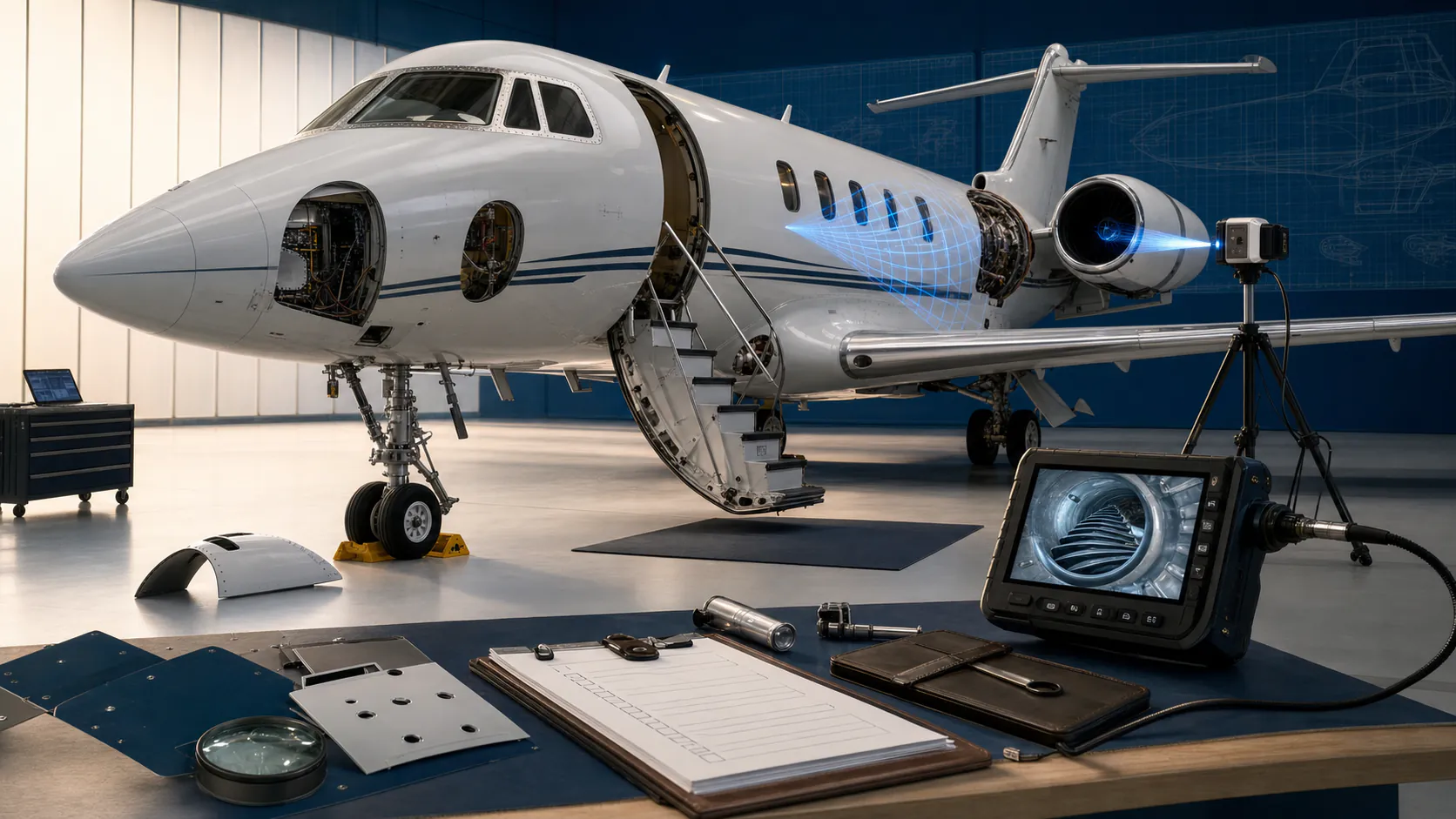
Aircraft Pre-Buy Inspection Checklist editorial illustration

An aircraft pre-buy inspection should answer a commercial question: What exactly is the buyer acquiring, what must be corrected, what uncertainty remains, and how should those findings change price or closing?

It is not a universal checklist and it is not automatically an annual inspection. The buyer, maintenance provider, seller, lender, and advisors must agree on scope, access, documentation, tests, findings, and contractual consequences.

This guide is educational. The inspecting provider and qualified aviation counsel should define the actual scope and purchase-agreement rights.

Before signing the purchase agreement

The strongest pre-buy starts before the aircraft enters a shop. Address:

  • Inspection facility and type-specific qualifications.
  • Independence and conflicts.
  • Physical inspection scope and permitted disassembly.
  • Engine, APU, propeller, and borescope work.
  • Test flight and ground-run authority.
  • Oil, fluid, filter, and laboratory analysis.
  • Avionics and cabin-system functional checks.
  • Records access and copying.
  • Who pays inspection, repositioning, fuel, and corrective work.
  • Deposit refund, rejection, correction, credit, and escrow rights.
  • Deadline extensions for material findings.
  • Aircraft condition and use between inspection and delivery.

Do not assume “standard pre-buy” has a shared meaning. Attach or reference the written scope.

Start with the aircraft records

Reviewing records first helps the physical team target known risk. The pre-buy records review should cover:

  • Aircraft and component identity.
  • Total time and cycle continuity.
  • Current inspection and maintenance status.
  • Airworthiness Directive applicability and compliance.
  • Life-limited-part history.
  • Engine and APU program status.
  • Major repairs, alterations, and STCs.
  • Damage, corrosion, and incident history.
  • Open discrepancies and deferred items.
  • Missing, conflicting, or illegible periods.

A clean physical appearance does not cure an unsupported history. Conversely, a record reference to prior damage should direct the inspector to the repaired area and approval data.

Airframe and structure checklist

Tailor access to known model risks and history:

  • Exterior skins, fasteners, seams, and control surfaces.
  • Corrosion-prone zones, drains, lavatory and galley areas.
  • Pressure vessel and high-cycle areas where applicable.
  • Wings, spars, attach points, empennage, and flight controls.
  • Landing gear structure, actuators, brakes, tires, and steering.
  • Doors, windows, windshields, seals, and latches.
  • Evidence of repairs, paint blending, deformation, or mismatched hardware.
  • Fluid leaks, contamination, and environmental damage.
  • Required structural inspections and sampling status.

Photograph material findings and map them to exact aircraft location, records, and repair data.

Engine, APU, and propeller checklist

Depending on aircraft type and scope:

  • Serial numbers match the records and program accounts.
  • Installed configuration matches approved data.
  • Time, cycles, starts, and maintenance status reconcile.
  • Borescope condition and trend evidence are reviewed.
  • Oil and filter findings are evaluated.
  • Performance runs or trend monitoring are assessed.
  • Leaks, mounts, hoses, wiring, ducts, and controls are inspected.
  • Shop-visit history and life-limited parts are traced.
  • Engine and APU program coverage, exclusions, transfer, and arrears are confirmed.
  • Propeller blades, hubs, governors, and overhaul status are reviewed.

An engine “on program” can still carry exposure if the contract, enrollment basis, utilization, exclusions, or account standing differs from the assumption.

Avionics, electrical, and systems

Functional checks should address the installed equipment and intended mission:

  • Flight deck displays and controls.
  • Communications, navigation, surveillance, and transponders.
  • Autopilot and flight director.
  • Weather radar and detection systems.
  • Databases, software configuration, and subscriptions.
  • Electrical generation, batteries, buses, and emergency power.
  • Pitot-static, RVSM, and other certification status where applicable.
  • Cabin management, connectivity, entertainment, lighting, and power.
  • Oxygen, fire detection, ice protection, environmental, and pressurization systems.
  • Minimum equipment and deferred-defect implications for the intended operation.

Confirm the physical equipment matches the equipment list, weight and balance, STCs, wiring data, and flight-manual supplements.

Interior, cabin, and safety equipment

Review:

  • Seat tracks, restraints, furnishings, and monuments.
  • Emergency equipment identity, location, condition, and expiration.
  • Lavatory, galley, water, and waste systems.
  • Flammability and modification records.
  • Emergency exits, markings, lighting, and placards.
  • Cabin pressure, temperature, noise, and odor issues.
  • Evidence of water intrusion, smoke, heat, or hidden corrosion.

Cosmetic findings may be negotiable; missing approval or continued-airworthiness evidence can be a deeper configuration problem.

Test flight and ground run

If included and safely authorized, establish a written profile that evaluates relevant systems and performance without turning the flight into an improvised test program.

Capture:

  • Crew, authority, insurance, and weather criteria.
  • Weight and fuel assumptions.
  • Engine start and ground indications.
  • Takeoff, climb, cruise, descent, and landing observations.
  • Autopilot and avionics behavior.
  • Pressurization and environmental performance.
  • Vibration, noise, trim, control, and handling observations.
  • Post-flight leak and discrepancy inspection.

Compare findings with aircraft manuals and qualified technical judgment. A successful test flight does not eliminate concealed or historical risk.

Classify every finding

Use a consistent finding model:

Classify every finding
ClassMeaningTypical transaction response
Airworthiness or safetyCondition may affect legal or safe operationGround, correct, or obtain qualified disposition
Contractual rejectionFalls within negotiated rejection rightReject or renegotiate
Value adjustmentAircraft differs from pricing assumptionPrice credit, correction, or reserve
Near-term maintenanceCost is expected soon after closingBudget, escrow, or price adjustment
Records exceptionCondition or status lacks evidenceResearch, reconstruct, inspect, or value adjustment
MonitorAcceptable now but requires follow-upWritten plan and owner
CosmeticAppearance or comfort issueAccept, correct, or negotiate

Do not bury critical exceptions in a long squawk list. Give each finding an owner, source, consequence, and closing disposition.

Connect findings to financing and value

The lender and appraiser may need updated evidence when the pre-buy changes:

  • Accepted condition.
  • Engine or inspection status.
  • Program standing.
  • Damage or modification history.
  • Immediate capital requirement.
  • Aircraft eligibility.
  • Supported value or LTV.

The buyer should not close on the original financing assumptions after the inspection materially changes the aircraft story.

Re-run the aircraft valuation projection model when findings change maintenance timing, configuration, damage assumptions, or expected resale value.

Final pre-buy deliverables

Require:

  • Signed report with aircraft identity and inspection dates.
  • Detailed scope, exclusions, and limitations.
  • Findings with photographs and measurements.
  • Records reviewed and records unavailable.
  • Test results and specialist reports.
  • Regulatory or approved-data references where relevant.
  • Estimated correction or follow-up actions.
  • Corrective-work and reinspection evidence.
  • Final open-item schedule.
  • Buyer acceptance, rejection, credit, or escrow decisions.

Preserve the final package in the aircraft history. It becomes the baseline for future maintenance, financing, and sale.

Sources and further reading

Common questions

Frequently asked questions

Is an aircraft pre-buy inspection the same as an annual inspection?

No. An annual inspection has defined regulatory requirements. A pre-buy is a contractual diligence scope chosen for the transaction. Some buyers negotiate an annual as part of the process, but the objectives and rights remain different.

Who should perform an aircraft pre-buy inspection?

Use an independent, properly qualified maintenance provider with experience in the exact aircraft type and no undisclosed conflict. Separate specialists may be needed for engines, avionics, structures, records, programs, and title.

How long does an aircraft pre-buy inspection take?

Timing depends on aircraft complexity, shop access, records quality, inspection depth, findings, parts, test requirements, and negotiations. The purchase agreement should provide enough time for the full agreed scope and follow-up.

Can a pre-buy inspection find every aircraft problem?

No. Access, disassembly limits, intermittent faults, concealed conditions, sampling, and time constraints create residual risk. The report should state scope, exclusions, findings, evidence, and recommended follow-up.

Make the aircraft history decision-ready

Turn aircraft paperwork into evidence you can use.

Radar digitizes, connects, and verifies the maintenance history behind buying, financing, operating, and selling an aircraft.


Your fleet's records at your fingertips.

Sign up, print a label, and search your first tail within days. Free.

Aircraft Pre-Buy Inspection Checklist

How to coordinate physical inspection, records review, value, financing, and purchase-agreement rights before accepting an aircraft.

Pre-buy inspection 11 sections · 6 min read Reviewed July 26, 2026

In brief

A pre-buy inspection is a buyer-defined diligence process, not a standardized regulatory inspection. Its scope should match the aircraft, mission, records, value, and purchase agreement—and every physical finding should be reconciled with maintenance history and closing conditions.

Aircraft Pre-Buy Inspection Checklist editorial illustration

An aircraft pre-buy inspection should answer a commercial question: What exactly is the buyer acquiring, what must be corrected, what uncertainty remains, and how should those findings change price or closing?

It is not a universal checklist and it is not automatically an annual inspection. The buyer, maintenance provider, seller, lender, and advisors must agree on scope, access, documentation, tests, findings, and contractual consequences.

This guide is educational. The inspecting provider and qualified aviation counsel should define the actual scope and purchase-agreement rights.

Before signing the purchase agreement

The strongest pre-buy starts before the aircraft enters a shop. Address:

  • Inspection facility and type-specific qualifications.
  • Independence and conflicts.
  • Physical inspection scope and permitted disassembly.
  • Engine, APU, propeller, and borescope work.
  • Test flight and ground-run authority.
  • Oil, fluid, filter, and laboratory analysis.
  • Avionics and cabin-system functional checks.
  • Records access and copying.
  • Who pays inspection, repositioning, fuel, and corrective work.
  • Deposit refund, rejection, correction, credit, and escrow rights.
  • Deadline extensions for material findings.
  • Aircraft condition and use between inspection and delivery.

Do not assume “standard pre-buy” has a shared meaning. Attach or reference the written scope.

Start with the aircraft records

Reviewing records first helps the physical team target known risk. The pre-buy records review should cover:

  • Aircraft and component identity.
  • Total time and cycle continuity.
  • Current inspection and maintenance status.
  • Airworthiness Directive applicability and compliance.
  • Life-limited-part history.
  • Engine and APU program status.
  • Major repairs, alterations, and STCs.
  • Damage, corrosion, and incident history.
  • Open discrepancies and deferred items.
  • Missing, conflicting, or illegible periods.

A clean physical appearance does not cure an unsupported history. Conversely, a record reference to prior damage should direct the inspector to the repaired area and approval data.

Airframe and structure checklist

Tailor access to known model risks and history:

  • Exterior skins, fasteners, seams, and control surfaces.
  • Corrosion-prone zones, drains, lavatory and galley areas.
  • Pressure vessel and high-cycle areas where applicable.
  • Wings, spars, attach points, empennage, and flight controls.
  • Landing gear structure, actuators, brakes, tires, and steering.
  • Doors, windows, windshields, seals, and latches.
  • Evidence of repairs, paint blending, deformation, or mismatched hardware.
  • Fluid leaks, contamination, and environmental damage.
  • Required structural inspections and sampling status.

Photograph material findings and map them to exact aircraft location, records, and repair data.

Engine, APU, and propeller checklist

Depending on aircraft type and scope:

  • Serial numbers match the records and program accounts.
  • Installed configuration matches approved data.
  • Time, cycles, starts, and maintenance status reconcile.
  • Borescope condition and trend evidence are reviewed.
  • Oil and filter findings are evaluated.
  • Performance runs or trend monitoring are assessed.
  • Leaks, mounts, hoses, wiring, ducts, and controls are inspected.
  • Shop-visit history and life-limited parts are traced.
  • Engine and APU program coverage, exclusions, transfer, and arrears are confirmed.
  • Propeller blades, hubs, governors, and overhaul status are reviewed.

An engine “on program” can still carry exposure if the contract, enrollment basis, utilization, exclusions, or account standing differs from the assumption.

Avionics, electrical, and systems

Functional checks should address the installed equipment and intended mission:

  • Flight deck displays and controls.
  • Communications, navigation, surveillance, and transponders.
  • Autopilot and flight director.
  • Weather radar and detection systems.
  • Databases, software configuration, and subscriptions.
  • Electrical generation, batteries, buses, and emergency power.
  • Pitot-static, RVSM, and other certification status where applicable.
  • Cabin management, connectivity, entertainment, lighting, and power.
  • Oxygen, fire detection, ice protection, environmental, and pressurization systems.
  • Minimum equipment and deferred-defect implications for the intended operation.

Confirm the physical equipment matches the equipment list, weight and balance, STCs, wiring data, and flight-manual supplements.

Interior, cabin, and safety equipment

Review:

  • Seat tracks, restraints, furnishings, and monuments.
  • Emergency equipment identity, location, condition, and expiration.
  • Lavatory, galley, water, and waste systems.
  • Flammability and modification records.
  • Emergency exits, markings, lighting, and placards.
  • Cabin pressure, temperature, noise, and odor issues.
  • Evidence of water intrusion, smoke, heat, or hidden corrosion.

Cosmetic findings may be negotiable; missing approval or continued-airworthiness evidence can be a deeper configuration problem.

Test flight and ground run

If included and safely authorized, establish a written profile that evaluates relevant systems and performance without turning the flight into an improvised test program.

Capture:

  • Crew, authority, insurance, and weather criteria.
  • Weight and fuel assumptions.
  • Engine start and ground indications.
  • Takeoff, climb, cruise, descent, and landing observations.
  • Autopilot and avionics behavior.
  • Pressurization and environmental performance.
  • Vibration, noise, trim, control, and handling observations.
  • Post-flight leak and discrepancy inspection.

Compare findings with aircraft manuals and qualified technical judgment. A successful test flight does not eliminate concealed or historical risk.

Classify every finding

Use a consistent finding model:

Classify every finding
ClassMeaningTypical transaction response
Airworthiness or safetyCondition may affect legal or safe operationGround, correct, or obtain qualified disposition
Contractual rejectionFalls within negotiated rejection rightReject or renegotiate
Value adjustmentAircraft differs from pricing assumptionPrice credit, correction, or reserve
Near-term maintenanceCost is expected soon after closingBudget, escrow, or price adjustment
Records exceptionCondition or status lacks evidenceResearch, reconstruct, inspect, or value adjustment
MonitorAcceptable now but requires follow-upWritten plan and owner
CosmeticAppearance or comfort issueAccept, correct, or negotiate

Do not bury critical exceptions in a long squawk list. Give each finding an owner, source, consequence, and closing disposition.

Connect findings to financing and value

The lender and appraiser may need updated evidence when the pre-buy changes:

  • Accepted condition.
  • Engine or inspection status.
  • Program standing.
  • Damage or modification history.
  • Immediate capital requirement.
  • Aircraft eligibility.
  • Supported value or LTV.

The buyer should not close on the original financing assumptions after the inspection materially changes the aircraft story.

Re-run the aircraft valuation projection model when findings change maintenance timing, configuration, damage assumptions, or expected resale value.

Final pre-buy deliverables

Require:

  • Signed report with aircraft identity and inspection dates.
  • Detailed scope, exclusions, and limitations.
  • Findings with photographs and measurements.
  • Records reviewed and records unavailable.
  • Test results and specialist reports.
  • Regulatory or approved-data references where relevant.
  • Estimated correction or follow-up actions.
  • Corrective-work and reinspection evidence.
  • Final open-item schedule.
  • Buyer acceptance, rejection, credit, or escrow decisions.

Preserve the final package in the aircraft history. It becomes the baseline for future maintenance, financing, and sale.

Sources and further reading

Common questions

Frequently asked questions

Is an aircraft pre-buy inspection the same as an annual inspection?

No. An annual inspection has defined regulatory requirements. A pre-buy is a contractual diligence scope chosen for the transaction. Some buyers negotiate an annual as part of the process, but the objectives and rights remain different.

Who should perform an aircraft pre-buy inspection?

Use an independent, properly qualified maintenance provider with experience in the exact aircraft type and no undisclosed conflict. Separate specialists may be needed for engines, avionics, structures, records, programs, and title.

How long does an aircraft pre-buy inspection take?

Timing depends on aircraft complexity, shop access, records quality, inspection depth, findings, parts, test requirements, and negotiations. The purchase agreement should provide enough time for the full agreed scope and follow-up.

Can a pre-buy inspection find every aircraft problem?

No. Access, disassembly limits, intermittent faults, concealed conditions, sampling, and time constraints create residual risk. The report should state scope, exclusions, findings, evidence, and recommended follow-up.

Make the aircraft history decision-ready

Turn aircraft paperwork into evidence you can use.

Radar digitizes, connects, and verifies the maintenance history behind buying, financing, operating, and selling an aircraft.

Your fleet's records at your fingertips.

Sign up, print a label, and search your first tail within days. Free.

Aircraft Pre-Buy Inspection Checklist

How to coordinate physical inspection, records review, value, financing, and purchase-agreement rights before accepting an aircraft.

Pre-buy inspection 11 sections · 6 min read Reviewed July 26, 2026

In brief

A pre-buy inspection is a buyer-defined diligence process, not a standardized regulatory inspection. Its scope should match the aircraft, mission, records, value, and purchase agreement—and every physical finding should be reconciled with maintenance history and closing conditions.

Aircraft Pre-Buy Inspection Checklist editorial illustration

An aircraft pre-buy inspection should answer a commercial question: What exactly is the buyer acquiring, what must be corrected, what uncertainty remains, and how should those findings change price or closing?

It is not a universal checklist and it is not automatically an annual inspection. The buyer, maintenance provider, seller, lender, and advisors must agree on scope, access, documentation, tests, findings, and contractual consequences.

This guide is educational. The inspecting provider and qualified aviation counsel should define the actual scope and purchase-agreement rights.

Before signing the purchase agreement

The strongest pre-buy starts before the aircraft enters a shop. Address:

  • Inspection facility and type-specific qualifications.
  • Independence and conflicts.
  • Physical inspection scope and permitted disassembly.
  • Engine, APU, propeller, and borescope work.
  • Test flight and ground-run authority.
  • Oil, fluid, filter, and laboratory analysis.
  • Avionics and cabin-system functional checks.
  • Records access and copying.
  • Who pays inspection, repositioning, fuel, and corrective work.
  • Deposit refund, rejection, correction, credit, and escrow rights.
  • Deadline extensions for material findings.
  • Aircraft condition and use between inspection and delivery.

Do not assume “standard pre-buy” has a shared meaning. Attach or reference the written scope.

Start with the aircraft records

Reviewing records first helps the physical team target known risk. The pre-buy records review should cover:

  • Aircraft and component identity.
  • Total time and cycle continuity.
  • Current inspection and maintenance status.
  • Airworthiness Directive applicability and compliance.
  • Life-limited-part history.
  • Engine and APU program status.
  • Major repairs, alterations, and STCs.
  • Damage, corrosion, and incident history.
  • Open discrepancies and deferred items.
  • Missing, conflicting, or illegible periods.

A clean physical appearance does not cure an unsupported history. Conversely, a record reference to prior damage should direct the inspector to the repaired area and approval data.

Airframe and structure checklist

Tailor access to known model risks and history:

  • Exterior skins, fasteners, seams, and control surfaces.
  • Corrosion-prone zones, drains, lavatory and galley areas.
  • Pressure vessel and high-cycle areas where applicable.
  • Wings, spars, attach points, empennage, and flight controls.
  • Landing gear structure, actuators, brakes, tires, and steering.
  • Doors, windows, windshields, seals, and latches.
  • Evidence of repairs, paint blending, deformation, or mismatched hardware.
  • Fluid leaks, contamination, and environmental damage.
  • Required structural inspections and sampling status.

Photograph material findings and map them to exact aircraft location, records, and repair data.

Engine, APU, and propeller checklist

Depending on aircraft type and scope:

  • Serial numbers match the records and program accounts.
  • Installed configuration matches approved data.
  • Time, cycles, starts, and maintenance status reconcile.
  • Borescope condition and trend evidence are reviewed.
  • Oil and filter findings are evaluated.
  • Performance runs or trend monitoring are assessed.
  • Leaks, mounts, hoses, wiring, ducts, and controls are inspected.
  • Shop-visit history and life-limited parts are traced.
  • Engine and APU program coverage, exclusions, transfer, and arrears are confirmed.
  • Propeller blades, hubs, governors, and overhaul status are reviewed.

An engine “on program” can still carry exposure if the contract, enrollment basis, utilization, exclusions, or account standing differs from the assumption.

Avionics, electrical, and systems

Functional checks should address the installed equipment and intended mission:

  • Flight deck displays and controls.
  • Communications, navigation, surveillance, and transponders.
  • Autopilot and flight director.
  • Weather radar and detection systems.
  • Databases, software configuration, and subscriptions.
  • Electrical generation, batteries, buses, and emergency power.
  • Pitot-static, RVSM, and other certification status where applicable.
  • Cabin management, connectivity, entertainment, lighting, and power.
  • Oxygen, fire detection, ice protection, environmental, and pressurization systems.
  • Minimum equipment and deferred-defect implications for the intended operation.

Confirm the physical equipment matches the equipment list, weight and balance, STCs, wiring data, and flight-manual supplements.

Interior, cabin, and safety equipment

Review:

  • Seat tracks, restraints, furnishings, and monuments.
  • Emergency equipment identity, location, condition, and expiration.
  • Lavatory, galley, water, and waste systems.
  • Flammability and modification records.
  • Emergency exits, markings, lighting, and placards.
  • Cabin pressure, temperature, noise, and odor issues.
  • Evidence of water intrusion, smoke, heat, or hidden corrosion.

Cosmetic findings may be negotiable; missing approval or continued-airworthiness evidence can be a deeper configuration problem.

Test flight and ground run

If included and safely authorized, establish a written profile that evaluates relevant systems and performance without turning the flight into an improvised test program.

Capture:

  • Crew, authority, insurance, and weather criteria.
  • Weight and fuel assumptions.
  • Engine start and ground indications.
  • Takeoff, climb, cruise, descent, and landing observations.
  • Autopilot and avionics behavior.
  • Pressurization and environmental performance.
  • Vibration, noise, trim, control, and handling observations.
  • Post-flight leak and discrepancy inspection.

Compare findings with aircraft manuals and qualified technical judgment. A successful test flight does not eliminate concealed or historical risk.

Classify every finding

Use a consistent finding model:

Classify every finding
ClassMeaningTypical transaction response
Airworthiness or safetyCondition may affect legal or safe operationGround, correct, or obtain qualified disposition
Contractual rejectionFalls within negotiated rejection rightReject or renegotiate
Value adjustmentAircraft differs from pricing assumptionPrice credit, correction, or reserve
Near-term maintenanceCost is expected soon after closingBudget, escrow, or price adjustment
Records exceptionCondition or status lacks evidenceResearch, reconstruct, inspect, or value adjustment
MonitorAcceptable now but requires follow-upWritten plan and owner
CosmeticAppearance or comfort issueAccept, correct, or negotiate

Do not bury critical exceptions in a long squawk list. Give each finding an owner, source, consequence, and closing disposition.

Connect findings to financing and value

The lender and appraiser may need updated evidence when the pre-buy changes:

  • Accepted condition.
  • Engine or inspection status.
  • Program standing.
  • Damage or modification history.
  • Immediate capital requirement.
  • Aircraft eligibility.
  • Supported value or LTV.

The buyer should not close on the original financing assumptions after the inspection materially changes the aircraft story.

Re-run the aircraft valuation projection model when findings change maintenance timing, configuration, damage assumptions, or expected resale value.

Final pre-buy deliverables

Require:

  • Signed report with aircraft identity and inspection dates.
  • Detailed scope, exclusions, and limitations.
  • Findings with photographs and measurements.
  • Records reviewed and records unavailable.
  • Test results and specialist reports.
  • Regulatory or approved-data references where relevant.
  • Estimated correction or follow-up actions.
  • Corrective-work and reinspection evidence.
  • Final open-item schedule.
  • Buyer acceptance, rejection, credit, or escrow decisions.

Preserve the final package in the aircraft history. It becomes the baseline for future maintenance, financing, and sale.

Sources and further reading

Common questions

Frequently asked questions

Is an aircraft pre-buy inspection the same as an annual inspection?

No. An annual inspection has defined regulatory requirements. A pre-buy is a contractual diligence scope chosen for the transaction. Some buyers negotiate an annual as part of the process, but the objectives and rights remain different.

Who should perform an aircraft pre-buy inspection?

Use an independent, properly qualified maintenance provider with experience in the exact aircraft type and no undisclosed conflict. Separate specialists may be needed for engines, avionics, structures, records, programs, and title.

How long does an aircraft pre-buy inspection take?

Timing depends on aircraft complexity, shop access, records quality, inspection depth, findings, parts, test requirements, and negotiations. The purchase agreement should provide enough time for the full agreed scope and follow-up.

Can a pre-buy inspection find every aircraft problem?

No. Access, disassembly limits, intermittent faults, concealed conditions, sampling, and time constraints create residual risk. The report should state scope, exclusions, findings, evidence, and recommended follow-up.

Make the aircraft history decision-ready

Turn aircraft paperwork into evidence you can use.

Radar digitizes, connects, and verifies the maintenance history behind buying, financing, operating, and selling an aircraft.

Your fleet's records at your fingertips.

Sign up, print a label, and search your first tail within days. Free.