

In brief
Fleet maintenance software should create one operating view without flattening aircraft-specific differences. Every fleet metric must remain traceable to the correct tail, configuration, requirement, work package, component, and source record.
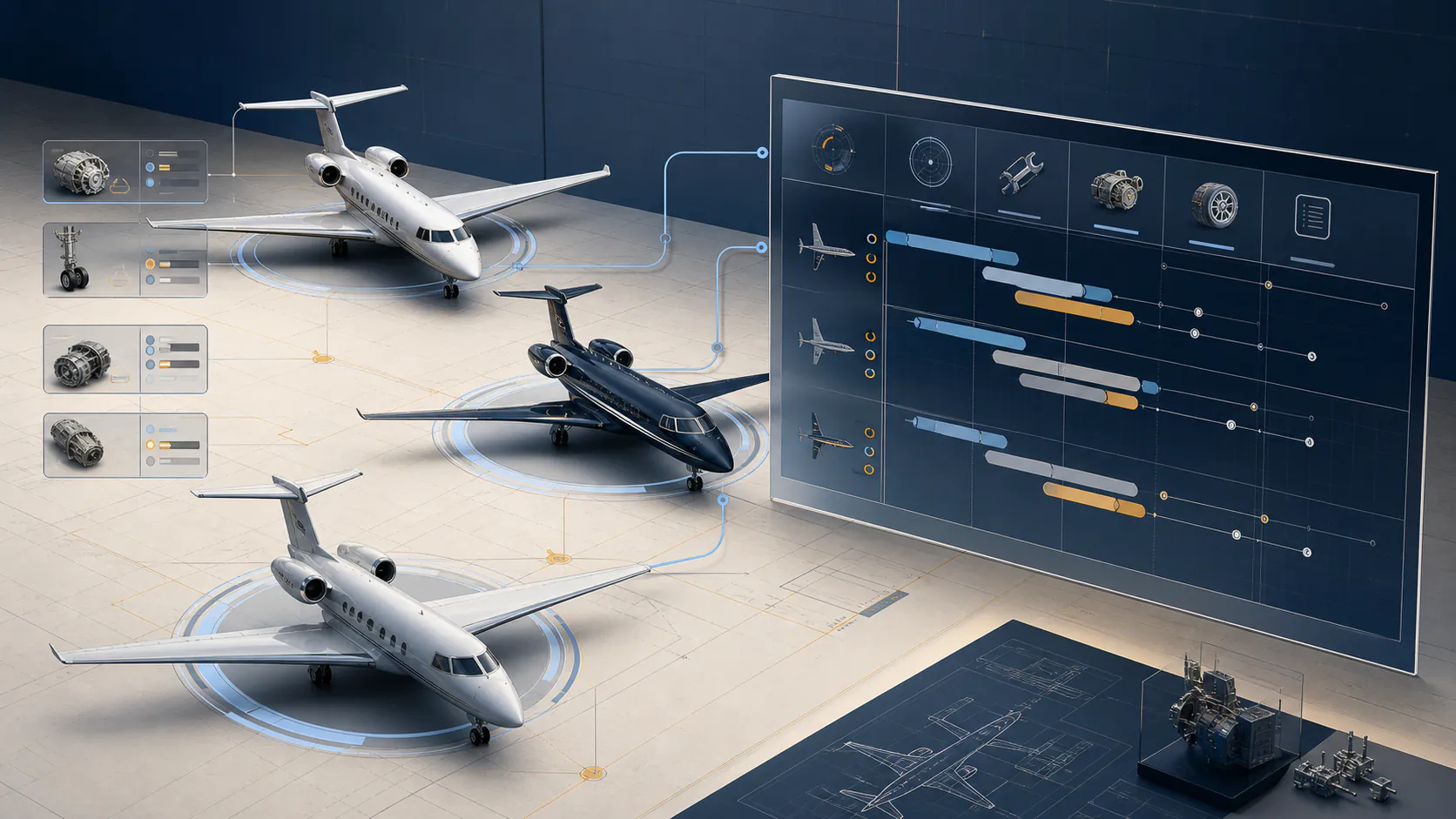
Fleet maintenance software must solve two opposing problems at once:
- Give management one consistent operating picture.
- Preserve the exact maintenance truth of each aircraft.
The system fails if it creates 50 isolated tail databases. It also fails if it produces a clean fleet dashboard by erasing differences in configuration, program, records, and utilization.
Fleet operating model
Define the hierarchy:
- Organization and business unit.
- Certificate holder or operator.
- Fleet and subfleet.
- Aircraft.
- Engine, APU, propeller, and major assemblies.
- Serialized components.
- Requirements and work.
- Records and evidence.
Support aircraft entering, leaving, leasing, changing operator, changing registration, or moving between fleets without losing history.
Mixed-fleet configuration
Each tail may differ by:
- Make, model, series, serial, and year.
- Maintenance or inspection program.
- Operational authority and use.
- Modification and service-bulletin embodiment.
- Engine, APU, avionics, and cabin configuration.
- Utilization counters.
- Maintenance-program enrollment.
- Geography and authority.
- Records quality.
Fleet templates should accelerate setup, but tail-specific effectivity must control the final requirement set.
Maintenance forecasting
Forecast across:
- Calendar.
- Flight hours.
- Cycles, landings, or starts.
- Expected routes and schedule.
- Seasonal utilization.
- Parts and shop capacity.
- Crew and operational demand.
- Bundling opportunities.
- Heavy events and lease returns.
Show confidence and input freshness. Forecasting 90 days from stale utilization is false precision.
Fleet capacity and downtime
Connect maintenance planning with operation:
- Scheduled downtime.
- Unscheduled aircraft-on-ground events.
- Spare-aircraft coverage.
- Shop slots.
- Ferry and positioning.
- Parts availability.
- Test and return-to-service time.
- Record-acceptance delay.
Management should see whether the fleet can operate the planned schedule after maintenance. A per-tail list of due tasks does not answer that question.
Work-package control
The software should assemble work from:
- Scheduled requirements.
- ADs and service bulletins.
- Deferred maintenance.
- Defects and reliability actions.
- Engineering orders.
- Component removals and changes.
- Cabin and cosmetic work.
- Campaigns and fleet modifications.
Track planned scope versus actual scope, findings, additions, parts, labor, tests, signoffs, and accepted records.
Component and pool visibility
Fleet economics depend on major components:
- Engine and APU positions.
- Landing gear and propellers.
- Life-limited parts.
- Rotable pool.
- Loaners and exchanges.
- Components in external repair.
- Cores and return obligations.
- Warranty and program coverage.
Use aircraft component tracking to keep identity and utilization through every movement.
Records and provenance
Fleet software should not treat document management as an attachment field. The records layer should:
- Preserve original documents.
- Identify aircraft and component.
- Group complete work packages.
- Extract and verify structured facts.
- Link requirements to accomplishments.
- Surface missing and conflicting records.
- Track records acceptance after maintenance.
- Export a complete tail history.
An aircraft may be physically returned to service while the fleet still carries a records-control exception. Make that state visible.
Reliability and repeat defects
Connect maintenance events across time:
- Repeat write-ups.
- Chronic removals.
- No-fault-found events.
- Unscheduled component demand.
- Delay and cancellation contribution.
- Findings by ATA system.
- Corrective-action effectiveness.
- Vendor and part performance.
Reliability conclusions should link to the underlying events and records. Otherwise, the dashboard becomes an unexplained count.
Vendor and MRO collaboration
Provide controlled access for external providers to:
- Receive approved work scope.
- Exchange records and findings.
- Submit quotes and change requests.
- Report progress.
- Deliver parts evidence.
- Upload final records.
- Resolve rejected records.
Keep operator acceptance separate from vendor submission. The provider can say the package is complete; the operator must verify it.
Cost and budget control
Connect cost to aircraft and event:
- Planned versus actual work.
- Labor, parts, freight, travel, and outside services.
- Program coverage and exclusions.
- Warranty recovery.
- Exchange and core charges.
- Downtime cost.
- Maintenance reserves.
- Capital versus operating treatment.
The aircraft maintenance reserve calculator can support planning, but actual fleet budgets must use aircraft-specific status and contracts.
Executive dashboard
Show:
- Fleet availability with context.
- Aircraft at risk of schedule interruption.
- Maintenance due by horizon.
- Major-event exposure.
- Open safety and compliance issues.
- Records awaiting acceptance.
- Repeat defects and reliability actions.
- AOG aging.
- Vendor performance.
- Cost and reserve variance.
- Data-quality and configuration exceptions.
Every KPI should drill into the exact tails and events producing it.
Implementation roadmap
- Define fleet, aircraft, component, and requirement data ownership.
- Inventory legacy systems and records.
- Select representative difficult tails.
- Build and verify tail-specific baselines.
- Reconcile utilization and component history.
- Configure work, records, and approval workflows.
- Run parallel forecasting.
- Accept critical status against source.
- Train by role.
- Cut over with rollback and complete export.
Vendor demonstration checklist
- Mixed fleet with different programs.
- Tail-specific modification effectivity.
- Aircraft transfer between fleets.
- Fast utilization and forecast change.
- Major component swap.
- Work package with added findings.
- Vendor submission rejected for missing record.
- Repeat defect linked across events.
- Executive KPI drilled to source.
- Full aircraft export.
Sources and further reading
Common questions
Frequently asked questions
What is aircraft fleet maintenance software?
It is a system for controlling maintenance requirements, utilization, due dates, work, components, records, downtime, vendors, and performance across multiple aircraft while preserving tail-specific configuration.
Can one platform support a mixed aircraft fleet?
Yes, if it supports different aircraft types, programs, utilization counters, authorities, operations, configurations, and workflows without forcing them into one generic template.
What fleet maintenance metrics matter most?
Useful metrics include dispatch and availability context, due and overdue work, forecasted downtime, repeat defects, work awaiting records, component exposure, vendor turnaround, maintenance cost, and data-quality exceptions.
How should fleet maintenance software handle source records?
Every accomplishment, status change, component event, and exception should link to the accepted maintenance record and supporting work package so fleet summaries can be verified.
Keep researching
Related aircraft guides



Run maintenance from connected evidence
Know what is due, and open the record that proves it.
Radar reads every logbook back to birth and builds the due list from the signed entries, with the page behind every line.