
DEEP DIVE: AIRCRAFT RECORDS
Time in service: TT, TSN, TSO and cycles.
How the airframe, each engine and the APU keep their own time, what an overhaul resets, why some parts count cycles, and how to check that the books agree. Built from four years of real records for Challenger 350 N395PD, then written out below.




Sound on for the soundtrack; captions are on by default. Keys: Space plays and pauses, arrows skip 5 seconds, 1 to 6 jump to a chapter. Download the MP4.
THE SHORT VERSION
Six terms, one airframe.
Each with its real value from N395PD’s records.
| Term | What it counts | On N395PD |
|---|---|---|
| TTTotal time in service | The airframe’s hours since new. For maintenance records, time in service runs from the moment the aircraft leaves the ground until it touches down at the next landing (14 CFR 1.1). Entries also write it as TAT, ACTT, TTAF or Total AC time. | 3,446.5 hours on 14 Jul 2026 |
| TSNTime since new | Hours on a component since it was built, on every aircraft it has flown on. It never resets, not even at overhaul. | LPT stub shaft: 4,648.98 hours when installed |
| TSOTime since overhaul | Hours since the component was last overhauled. Overhaul starts this clock again at zero. TSN keeps counting. | The same shaft: overhauled 10 Mar 2026, so TSO started at 0 |
| CSNCycles since new | Engine cycles since new. An engine cycle is usually one flight, from start to shutdown, but the manufacturer defines exactly what counts. CSO is cycles since overhaul. | Each engine: 2,405 cycles on 14 Jul 2026 |
| LDGLandings | The airframe’s count of landings, kept separately from engine cycles. The two numbers need not match, and both should only go up. | 2,393 landings on 14 Jul 2026 |
| LLPLife-limited part | A part that must be removed by a set limit in its manufacturer’s instructions. Engine rotating parts are limited in cycles, so each needs a traceable history back to new. | LPT stub shaft P/N 3035691-1, on Honeywell’s life-limited part log |
EVERY CLOCK
The airframe, each engine and the APU keep their own time.
An aircraft has more than one clock. The airframe has total time and landings. Each engine has its own hours and cycles, and so does the APU. On N395PD, one shop entry from 23 May 2022, under its earlier registration N575MW, lists all of them in its header: airframe 1,853.8 hours and 1,527 landings, each engine 1,853.8 hours and 1,538 cycles, and the APU 1,971.5 hours.
Engines and APUs can be removed, sent for overhaul or lease, and installed on another aircraft. That is why each one keeps its own record, and why an engine’s hours can be higher or lower than the airframe it is on. On this airframe both engines read the same hours as the airframe in every record we checked. The APU reads more: it keeps its own hour meter, and the APU often runs on the ground when the airframe’s clock is stopped.
The rule behind it is 14 CFR 91.417(a)(2): the owner keeps the total time in service of the airframe and of each engine and propeller, the current status of life-limited parts, and the time since last overhaul of anything that must be overhauled on a set schedule. Those records transfer with the aircraft when it is sold.
TSN AND TSO
Overhaul resets one clock, never the other.
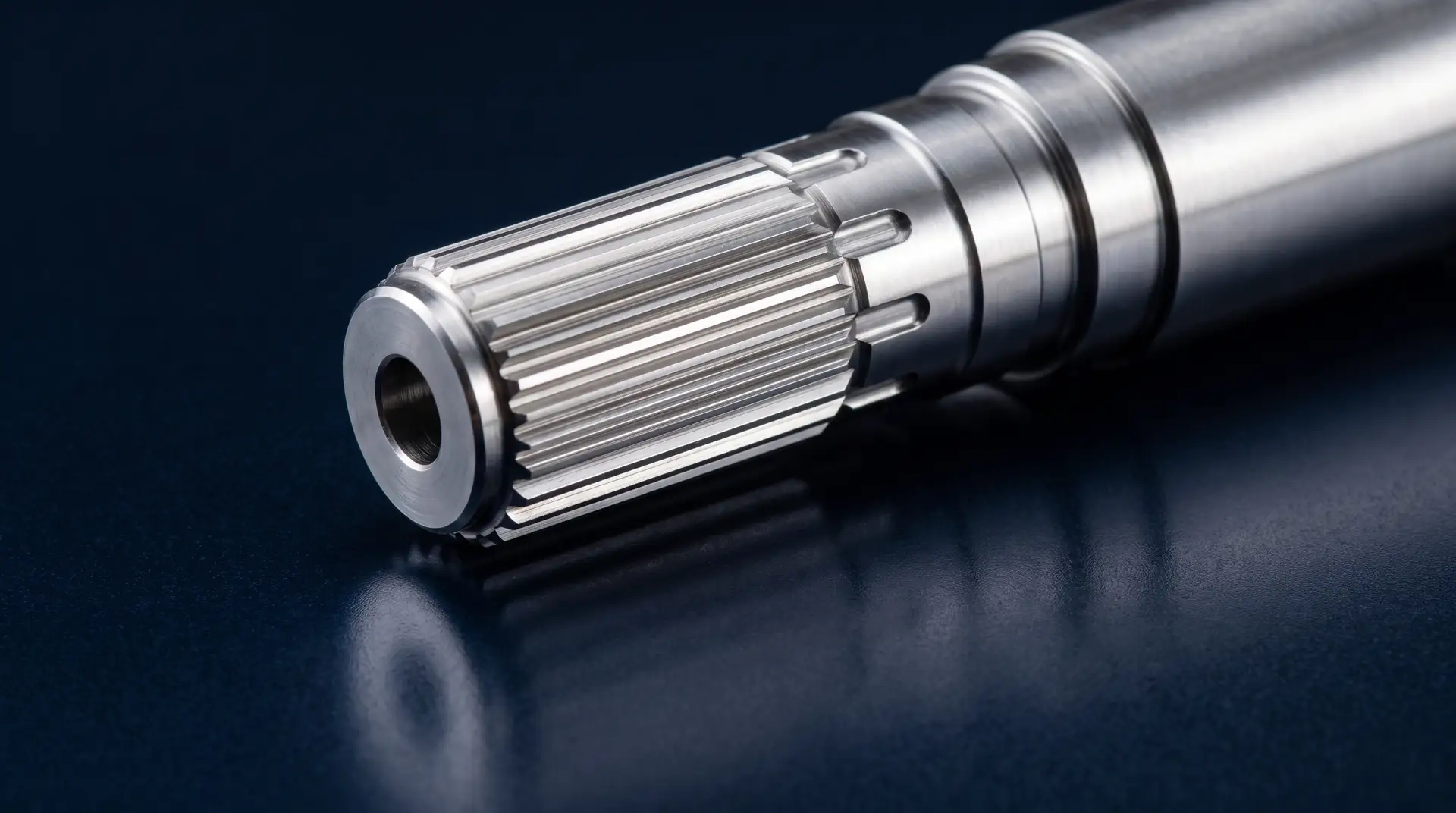
The left engine’s LPT stub shaft, P/N 3035691-1, S/N 12-162684-00105, shows both clocks. Its record card says it ran 4,648.98 hours and 2,563 cycles in another engine before it was removed. Honeywell overhauled it on 10 Mar 2026, and its FAA Form 8130-3 repeats those totals as TSN and CSN in block 12. On 14 Jul 2026 it went into N395PD’s left engine, S/N P136235.
At that moment its TSO was zero and its TSN was 4,648.98: more hours than the whole airframe, which had 3,446.5. The card records the engine’s own time at installation, 3,446.5 hours and 2,405 cycles, so the part’s totals can be worked out from the engine’s from then on: 4,648.98 plus every engine hour after 3,446.5.
An overhaul is a defined thing. Under 14 CFR 43.2(a), an item can only be recorded as overhauled if it was disassembled, cleaned, inspected, repaired as needed, reassembled and tested to approved standards. Only a manufacturer’s rebuild can give an engine a new record with zero total time (14 CFR 91.421). An overhaul never does.
CYCLES
Some parts wear by the flight, not by the hour.
Every flight puts an engine through the same swing: start, spool up to takeoff power, run, then cool and stop. Disks, shafts and hot section parts heat up, spin up and carry their highest loads, then relax. Metal fatigue comes from the number of those swings much more than from hours at cruise. A one hour hop and a five hour trip each count as one cycle.
So engine life limits are set in cycles. 14 CFR 33.70 requires an approved life, in engine cycles, for each engine life-limited part, and the manufacturer publishes those limits in its instructions for continued airworthiness. Honeywell tracks the LPT stub shaft on a life-limited part log for that reason. The airframe counts landings for the same kind of reason: each landing loads the gear and each flight pressurizes the cabin once.
Engine cycles and airframe landings are counted separately, so they can differ. On 14 Jul 2026, N395PD’s engines showed 2,405 cycles at 2,393 airframe landings. What matters is that each count only goes up and that every record of it agrees.
THE READINGS
Total time only goes forward.
Inspection entries record the aircraft’s total time (14 CFR 43.11), and most shops write it on every entry. Read in date order, those numbers form a line that can go flat but never down. A flat stretch is normal: the aircraft sat. A total that drops, or jumps further than the calendar allows, needs a source.
N395PD’s entries from May 2022 to July 2026 climb from 1,853.8 to 3,446.5 hours. From June 2024 to January 2025 they added 3 hours. The entries we checked from 22 June to 16 July 2026, a run of shop visits, all read 3,446.5 hours and 2,393 landings. The same number is written as TT, Hours, ACTT, Hours (TSN), Airframe hours, TAT, Hrs, Total AC time and A/C TT, depending on who made the entry.
HOW TO CHECK TIMES AGREE
One total, in every book.
On 14 Jul 2026, N395PD’s airframe book, its engine book (work order 39023) and the operator’s work package all read 3,446.5 hours and 2,393 landings, and both records that carry engine cycles read 2,405. That is what agreement looks like. Here is how to check it on any aircraft.
WHEN THEY DON’T
Trace a mismatch to its source first.
The film’s mismatch is an example, not from this aircraft: one record reading 3,464.5 where the others read 3,446.5, two digits swapped. The fix starts with the source pages. Find which entry first used the wrong number, whether later entries copied it forward, and whether the error is a typo or a sign of missing time. The usual practice is a new, signed entry that explains the correction, with the original left readable; your maintenance program may set its own procedure. Buyers and their inspectors ask about times that go backward or disagree, so it pays to find them first.
ABOUT THIS EXAMPLE
Every real value in the film and on this page comes from the records of one airframe, Challenger 350 serial 20577, registered N395PD (records before 2026 name its earlier registration, N575MW): shop and operator entries from May 2022 to July 2026, a 2023 status page, and the record card and FAA Form 8130-3 of the LPT stub shaft installed under work order 39023. Shop and operator names, logos and addresses, technician names, signatures and certificate numbers, and the engine and aircraft the shaft came from are redacted. In the film, the three strips in the last chapter are real scans; the May 2022 header and the record card are redrawn from the real pages; the flight profile and load curves are illustrations; the mismatch is an example; the photographs are illustrations, not this aircraft.
THE LOGBOOK SERIES
GET A DEMO
Check the times in your own records.
Send us one aircraft’s logbooks. Radar reads every entry back to birth, lines up airframe, engine and APU times in date order, and flags any total that goes backward or disagrees between books, with the page it came from.
This page explains the rules in general terms. Your maintenance program, the manufacturer’s instructions and your operating rules set the limits that apply to your aircraft.