
PART 2 OF 3 · THE RADAR LOGBOOK SERIES
ADs, SBs and 8130s, on one real job.
Work orders, release tags, service bulletins and Airworthiness Directives, and how one logbook entry ties them together. Built from the real records of an engine shop visit to Challenger 350 N395PD, then written out below.








Sound on for the soundtrack; captions are on by default. Keys: Space plays and pauses, arrows skip 5 seconds, 1 to 7 jump to a chapter. Download the MP4.
THE SHORT VERSION
Nine terms, one job.
Each with its real example from work order 39023.
- EntryLogbook entry
- The signed record of maintenance in the airframe, engine or propeller logbook. 14 CFR 43.9 sets what it must say, and 43.11 adds more for inspections.
- On N395PDEngine log, left engine, 14 Jul 2026
- WOWork order
- The shop’s job file for one visit. Task cards, findings, parts and paperwork carry its number, and the entry can point to it instead of repeating it.
- On N395PDWO 39023: four tasks, two parts replaced per engine
- P/NPart number
- Identifies the design. Every unit built to that design shares it.
- On N395PD3035691-1, an LPT stub shaft
- S/NSerial number
- Identifies one physical unit. It is how a part’s history is followed from job to job and from aircraft to aircraft.
- On N395PD12-162684-00105, the shaft that went on
- 8130-3FAA Form 8130-3
- The Authorized Release Certificate, or airworthiness approval tag, that travels with a part. A maker certifies a new part in block 13a. A repair station certifies its work on a used part and approves that part for return to service in block 14a. It covers the part, not the aircraft.
- On N395PDSeal 26-169020-00568: NEW, block 13a, 8 May 2026
- Form 1EASA Form 1
- Europe’s equivalent of the 8130-3. A shop approved by both the FAA and EASA can issue one form that serves as both, a dual release.
- On N395PDThe overhauled shaft’s tag carries an EASA Part-145 release statement
- SBService bulletin
- The manufacturer’s notice to inspect, modify or replace something. Advisory for Part 91 operators unless an AD, the operator’s maintenance program or a contract requires it.
- On N395PDHoneywell SB AS907-72-9094 R0, improved No. 4 bearing carbon seal
- ADAirworthiness Directive
- An FAA rule under 14 CFR Part 39 that corrects an unsafe condition. Compliance is mandatory for every product it applies to. Some are done once; others repeat on a schedule.
- On N395PDAD 74-08-09 R3 (k): every 1,000 hours or less
- RTSReturn to service
- The approval that lets an aircraft fly after maintenance. An authorized person gives it by signing the logbook entry, for the work that entry describes.
- On N395PDSigned 14 Jul 2026, with certificate number
HOW THEY CONNECT
One page records the whole chain.
The work order holds the job. Parts come off and go on, each new one with its 8130-3. The bulletin and the AD are complied with. The signed entry records every one of those facts and approves the return to service.
P/N 3035691-1S/N 050319003015P/N 3035691-1S/N 12-162684-001058130-3 · OVERHAULED · block 14a · 10 Mar 2026P/N 3035532-6S/N 20-169020-02279P/N 70041289-2S/N 26-169020-005688130-3 · NEW · block 13a · 8 May 2026THE WORK ORDER
One number ties the job together.
When N395PD, a Challenger 350, went to an engine shop in July 2026, the shop opened work order 39023. Each engine got the same four tasks: service the engine, perform Honeywell SB AS907-72-9094, a part opportunity inspection of the fan hub and LP shafts, and a fluorescent penetrant (NDT) inspection by an outside shop.
The part opportunity inspection found the low pressure turbine stub shaft worn at its knife seal grooves, so the shaft was replaced. That finding, the replacement part and its paperwork all carry the work order number, which is how a reviewer finds them later.
A shop has to keep its own copy of the work for two years (14 CFR 145.219). The owner’s copy is often the only one left after that, so keep work order packages with the logbooks.
PARTS OFF, PARTS ON
Every swap names the part that left and the part that arrived.
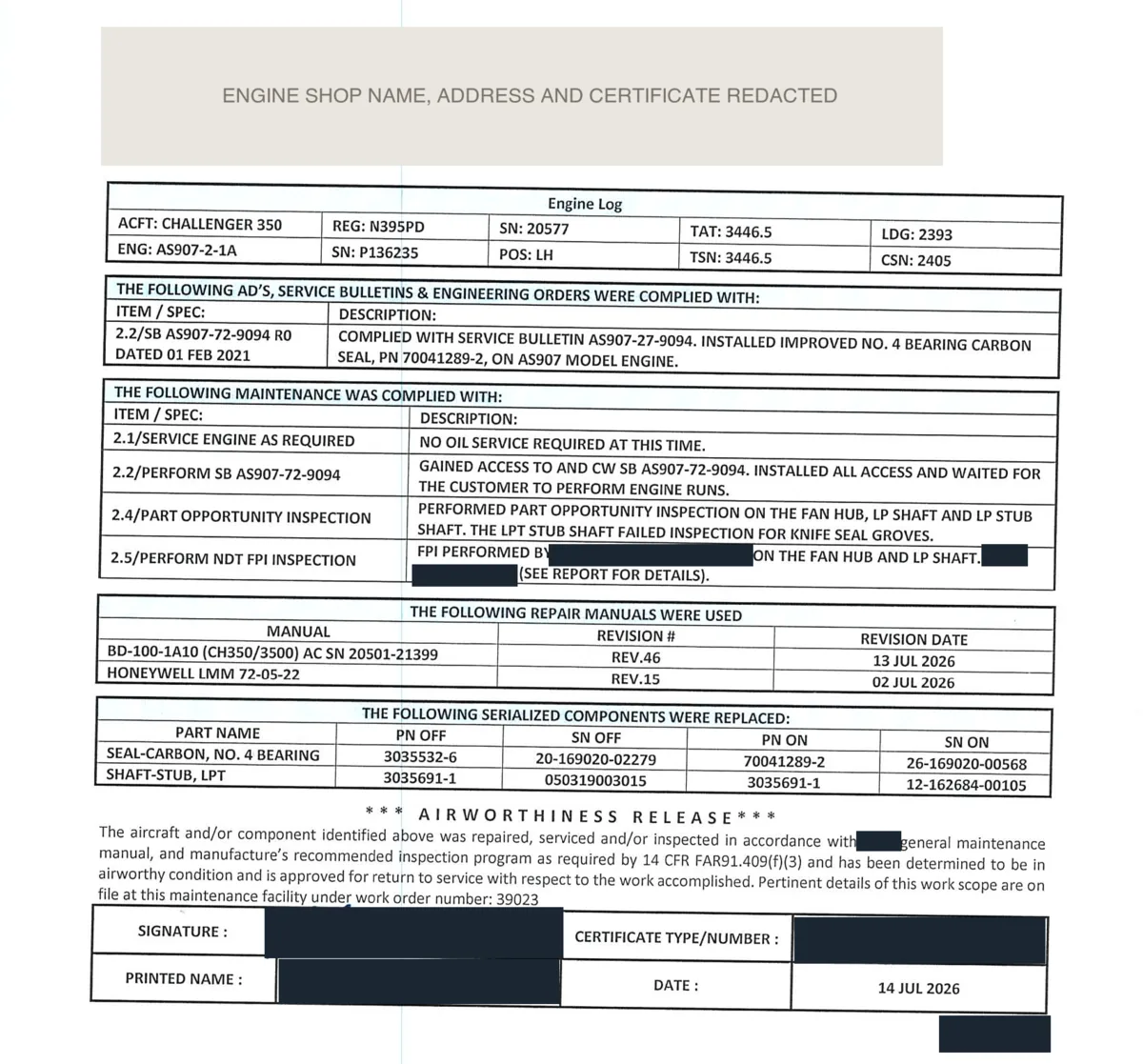
The entry lists each serialized part removed and installed, with both part numbers and both serial numbers. On the left engine:
BACK TO BIRTH
A part’s history can start on another aircraft.
The replacement shaft was not new. Its record card shows it ran 4,648.98 hours and 2,563 cycles on another engine before it was removed. Honeywell overhauled it in March 2026, and its 8130-3 repeats those totals in block 12. On 14 Jul 2026 it was installed on N395PD’s left engine.
For a life-limited part, that card matters as much as the tag. The latest 8130-3 describes one shop visit. The full history back to new is what shows how much life the part has left.
THE 8130-3
The tag releases the part. The entry releases the aircraft.
Each part installed on work order 39023 arrived with an FAA Form 8130-3. The new seal’s tag was signed by Honeywell under block 13a: made to approved design data and in a condition for safe operation. The overhauled shaft’s tag was signed by Honeywell’s repair station under block 14a: the work in block 12 was done under Part 43 and the part is approved for return to service.
Three things a tag does not do. It does not approve the aircraft for return to service; only the logbook entry does that. It does not by itself authorize installing the part on a particular aircraft; the installer still confirms the part is eligible (the form says so in its own fine print). And it is not the only acceptable release: AC 20-62E also accepts other records that carry the same information.
What a reviewer checks is simple: the tag’s part number and serial number match the part and the entry that installed it.
SBs AND ADs
One comes from the maker. The other is the law.
Service bulletins come from manufacturers. Honeywell SB AS907-72-9094 R0, dated 01 Feb 2021, introduces an improved No. 4 bearing carbon seal. For an aircraft operated under Part 91, the FAA treats a bulletin as advisory, even one marked mandatory, unless an AD, the operator’s maintenance program or a contract requires it. This owner chose to comply, and the entry says so.
Airworthiness Directives come from the FAA under 14 CFR Part 39. On the same airframe, the 600 hour package of 10 Feb 2026 records AD 74-08-09 R3 paragraph (k), which requires inspecting the lavatory waste receptacle doors at intervals of no more than 1,000 hours. The record gives the method (complied with), the date, 3,015.4 hours and 2,174 landings, so the next inspection is due by 4,015.4 hours.
The two meet when an AD requires a bulletin. AD 2024-18-03 paragraph (g) refers to Safran SB 975GC02Y-24-018. Once an AD requires a bulletin’s actions, they are mandatory, and where the two differ the AD controls (14 CFR 39.27). This airframe’s entry of January 2025 records the AD as complied with, through a left DCPC unit, P/N 975GC02Y07, installed per the bulletin.
| Service bulletin | Airworthiness Directive | |
|---|---|---|
| Issued by | The manufacturer | The FAA, under 14 CFR Part 39 |
| Under Part 91 | Advisory, unless an AD, your maintenance program or a contract requires it | Mandatory for every product it applies to |
| How often | As the bulletin says | Once, or recurring on a schedule |
| What the record shows | The bulletin, its revision and that it was complied with | The AD number and revision, the method of compliance and, if it recurs, when it is next due |
| On N395PD | Honeywell SB AS907-72-9094 R0 | AD 74-08-09 R3 (k) |
THE LOGBOOK ENTRY
The entry is where the job becomes a record.
The engine log entry for work order 39023 records, in one page: the aircraft, engine and their times (3,446.5 hours, 2,393 landings); the bulletin complied with; each task; the manuals and revisions used; every part off and on with its serial number; and an airworthiness release that cites the manufacturer’s inspection program under 14 CFR 91.409(f)(3) and approves the engine for return to service for the work accomplished.
Under 14 CFR 43.9, the signature, certificate number and kind of certificate of the person approving the work are what make it a return to service, and only for the work that entry describes. Under 91.407, the aircraft cannot fly after maintenance until that approval is in the record.
Two kinds of records come out of a job like this (14 CFR 91.417). The record of the work itself, and the status records that travel with the aircraft when it is sold: total times, life-limited parts, and the status of every applicable AD with its method of compliance and, for recurring ADs, when the next action is due.
AT THE PRE-BUY
What a buyer’s inspector checks.
A records review walks the chain backward, from the entry to the work order, the parts, the tags and the AD list. These are the checks that catch most gaps.
WHY GAPS MATTER
A gap becomes a question for the seller.
Records are how an aircraft proves its condition. When a link in the chain is missing, the buyer’s side asks for it, and the deal waits for the answer.
A missing 8130-3
Without its release document, the records cannot show a part was airworthy when installed. The usual fixes are finding the paperwork from the shop or the vendor, having the part inspected and released again, or replacing it. Each takes time, and buyers often price that time into the deal.
An AD with no recorded compliance
If the records cannot show how and when an applicable AD was met, a buyer’s inspector treats it as not complied with. Operating a product that does not meet an applicable AD violates 14 CFR 39.7, so the usual fix is to do the AD again and record it. A recurring AD with no last-done time has no next-due time either.
A serial number that does not match
When the tag, the part’s data plate and the entry disagree, nobody can say which part is installed. It becomes a question for the seller, and often a trip to the aircraft to read the data plate.
ABOUT THIS EXAMPLE
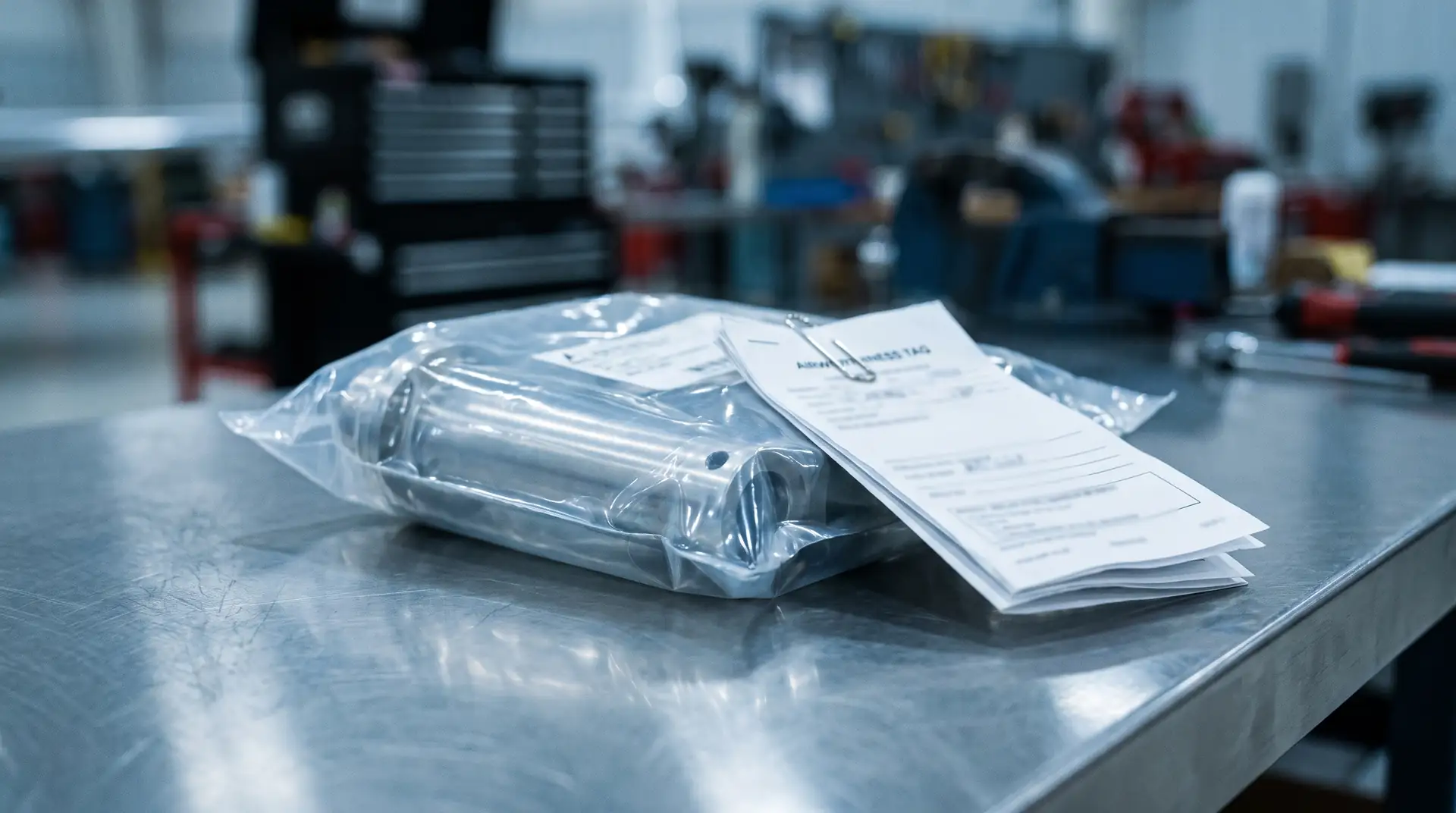
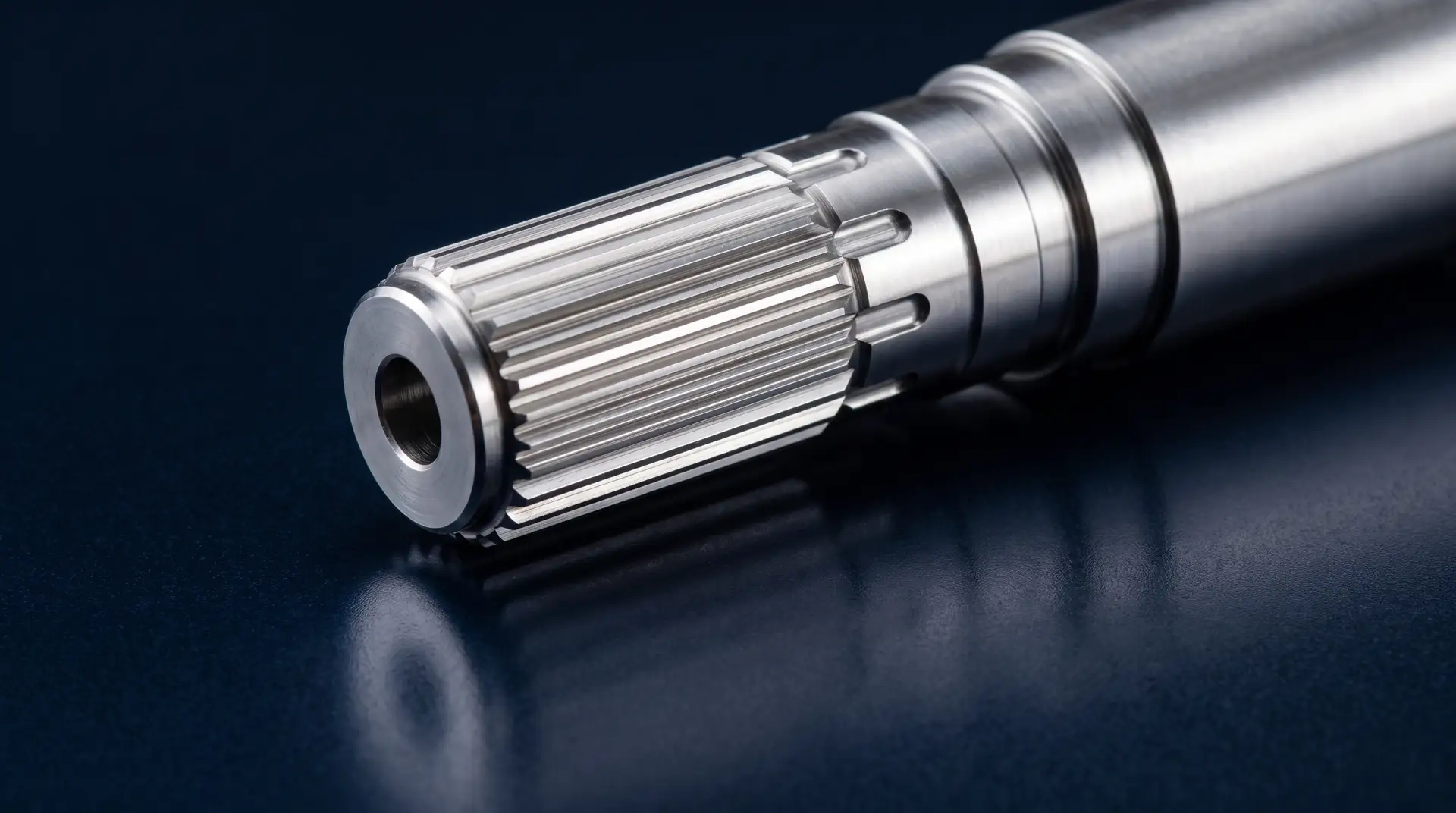
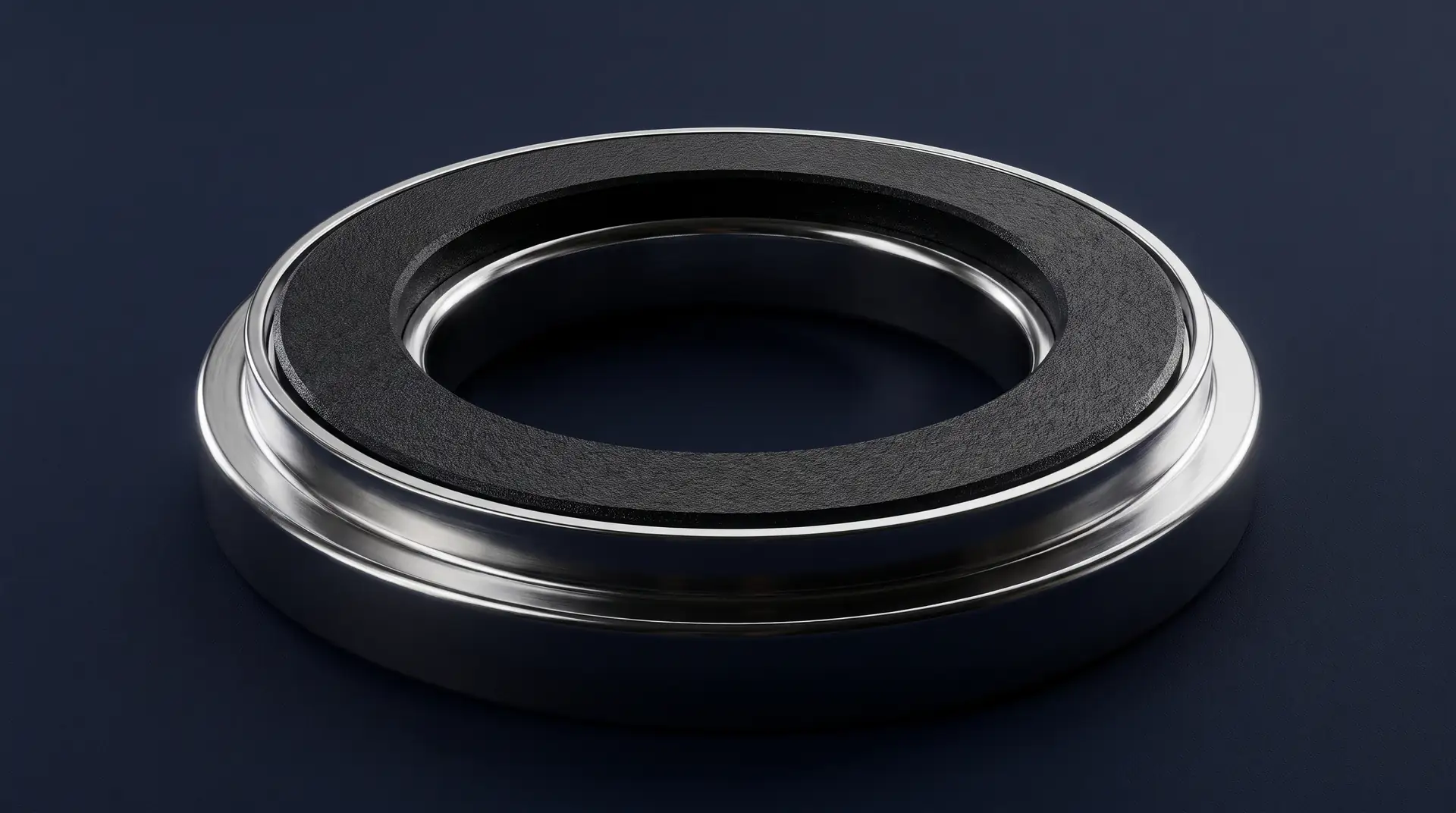
Every value in the film and on this page comes from the records of one airframe, Challenger 350 serial 20577, registered N395PD: the engine log entries and 8130-3 tags of work order 39023 (14 Jul 2026), the 600 hour package of 10 Feb 2026, and the airframe entry of January 2025. The two earlier records name the aircraft’s previous registration, N575MW. Names, signatures, certificate numbers, the shop, the NDT vendor and its work order, purchase orders and 8130-3 tracking numbers are redacted. In the film, the logbook entry and the three strips are the real scans; the work order sheet and the two 8130-3 forms are redrawn from the real records; the photographs of the hangar, parts and paperwork are illustrations, not this aircraft.
KEEP READING
SOURCES
GET A DEMO
See the chain in your own records.
Send us one aircraft’s logbooks. Radar reads every page back to birth, and each work order opens with its parts off and on, their 8130-3 tags, and the ADs and SBs it complied with, each on the page it came from.
This page explains the rules in general terms. Your inspection program, operating rules and contracts can add requirements.