
RETURN TO SERVICE
Sign the release with nothing missing.
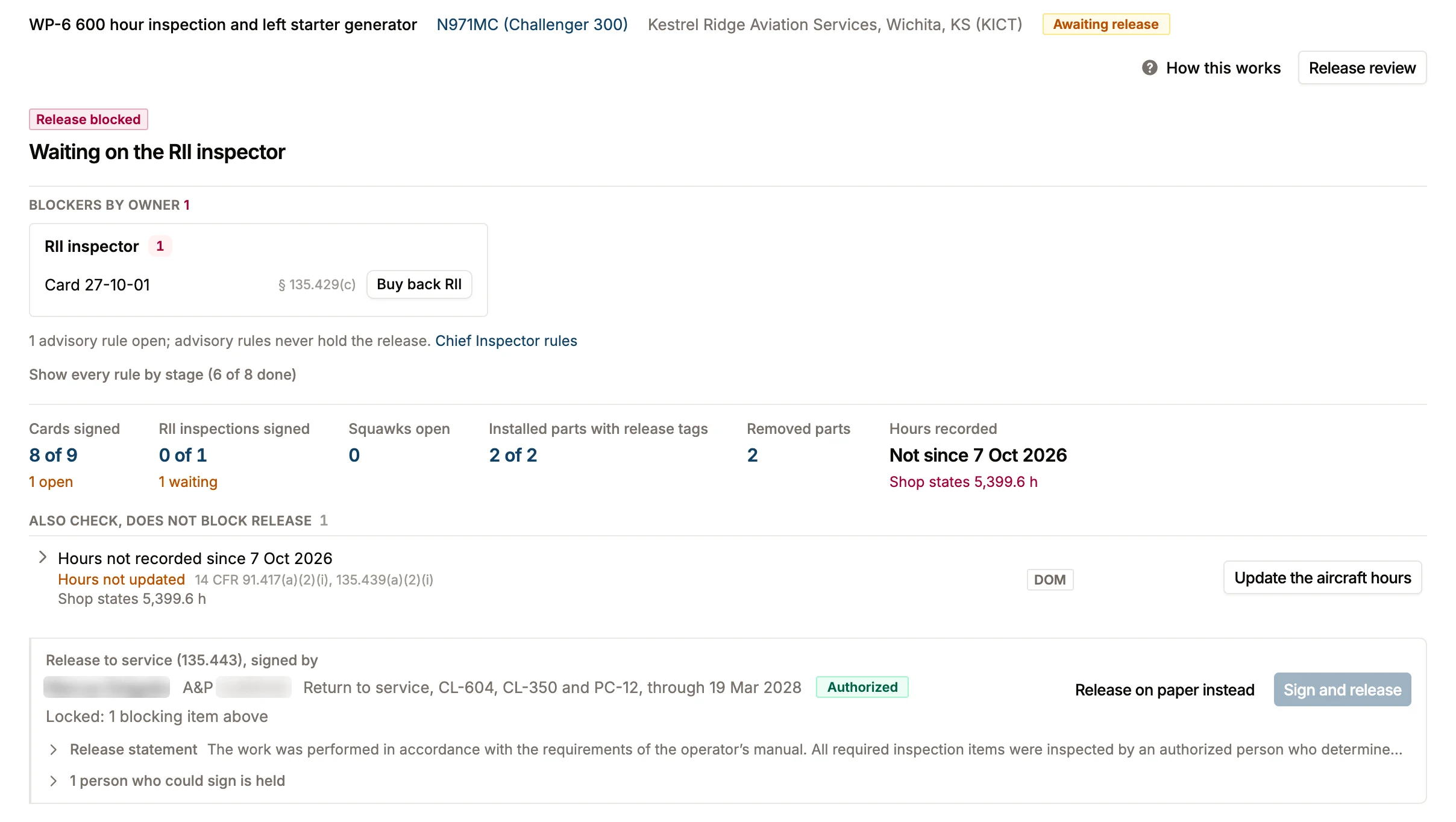
A release signed with a missing 8130-3, an RII nobody bought back or an open squawk is a violation, so Radar keeps the release locked until each one is fixed.
THE PROBLEM
One return to service, spread across six places.
Before an aircraft flies again, the DOM has to tie every piece below to the same work order, by hand. When one piece is missed, it usually turns up at the next audit.
- The due listCAMP or a spreadsheet
- The estimate and the findingsA PDF, then email threads with the shop
- The work order authorizationSigned on paper or in DocuSign
- Log pages and 8130-3 tagsEmail attachments, chased one by one
- The releaseTyped and signed on paper
- FilingA shared folder, named by hand
ONE VISIT, START TO FINISH
Follow one aircraft from going down to the logbook entry.
-
Step 1 of 8
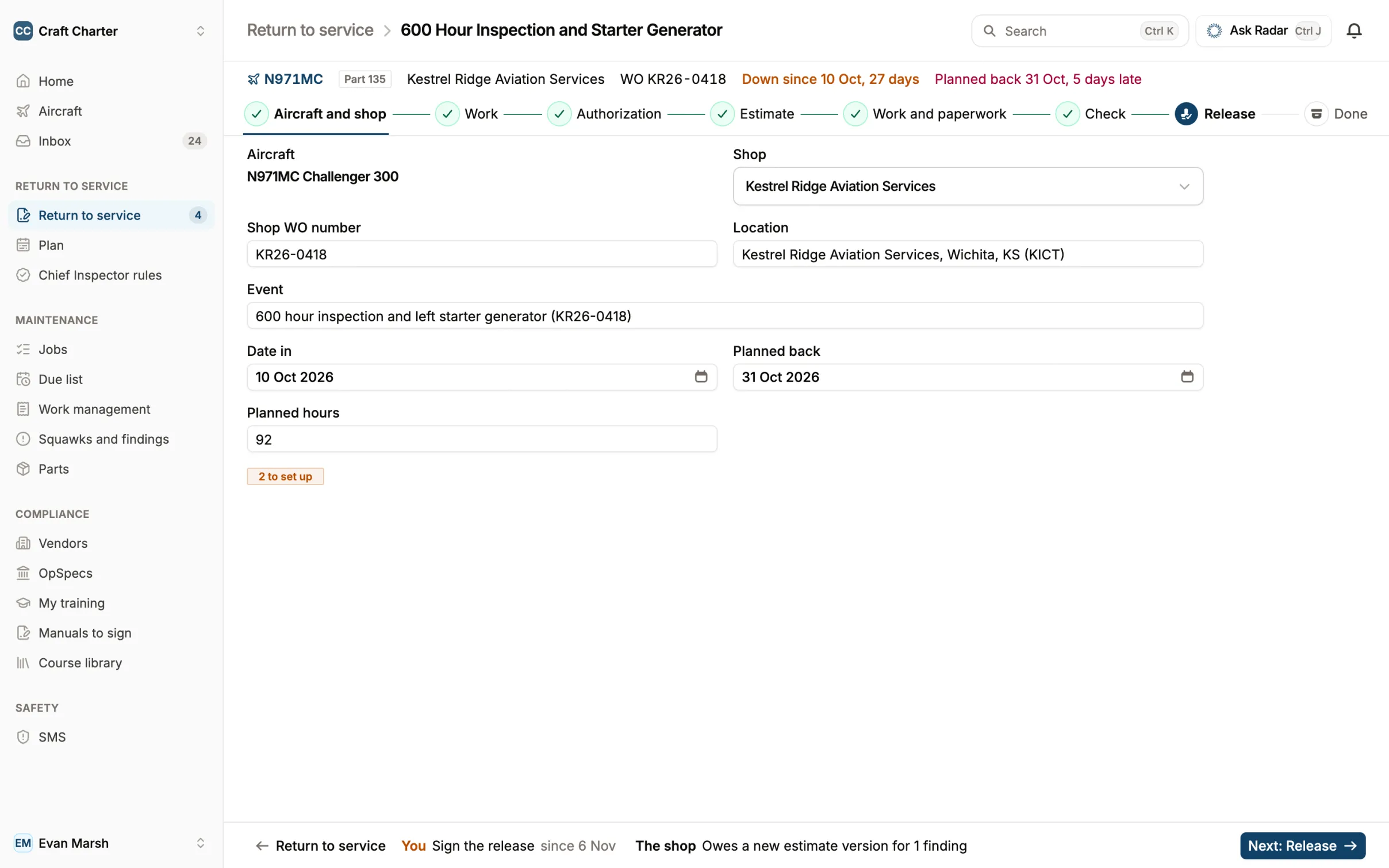
Going down
The DOM names the shop, the dates and the event. Radar counts the days down and flags what is not set up yet, like a shop off the approved vendor list.
-
Step 2 of 8
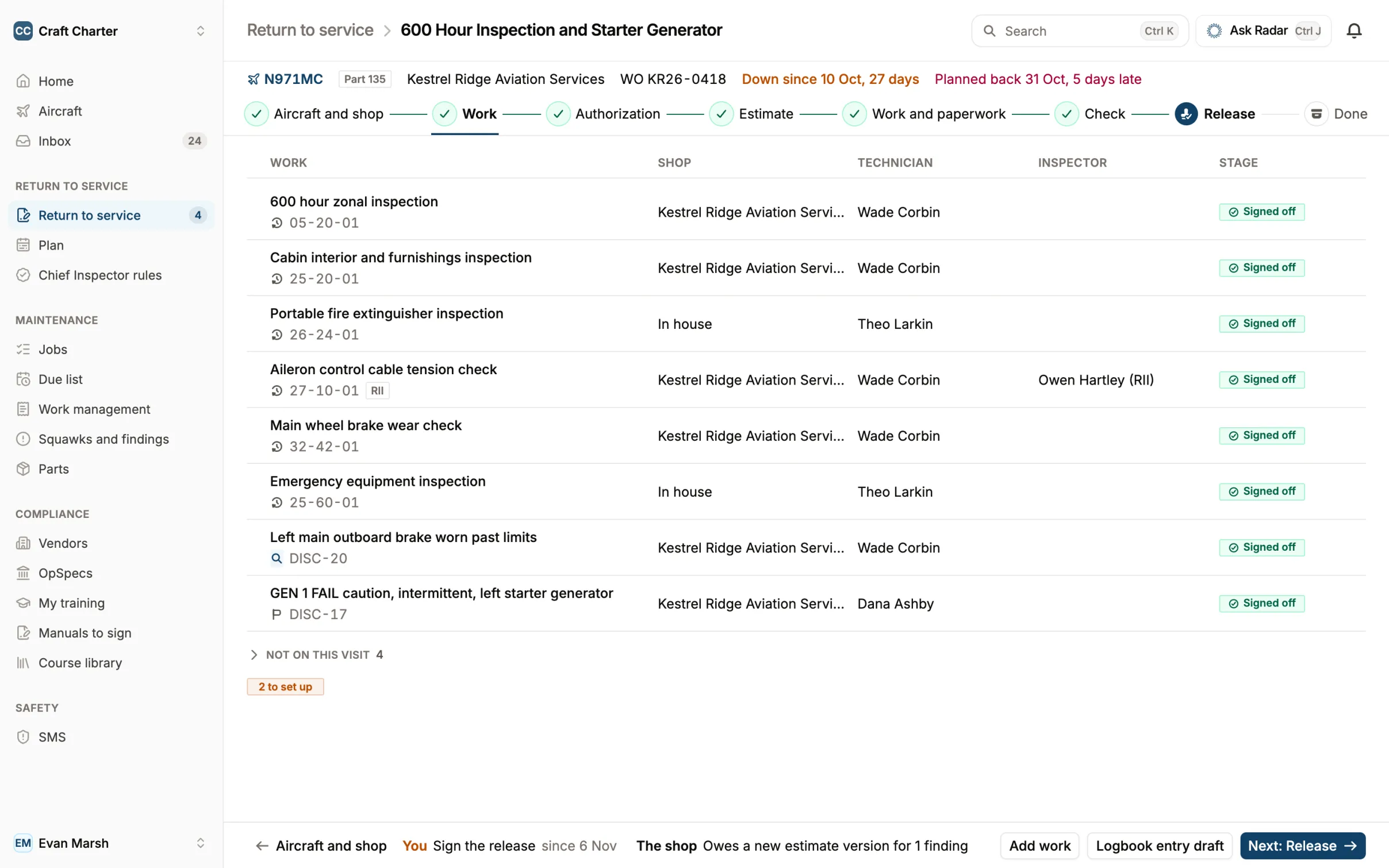
Work
The DOM adds due items and squawks to the visit. Radar names anything coming due before the next visit that would be left off.
-
Step 3 of 8
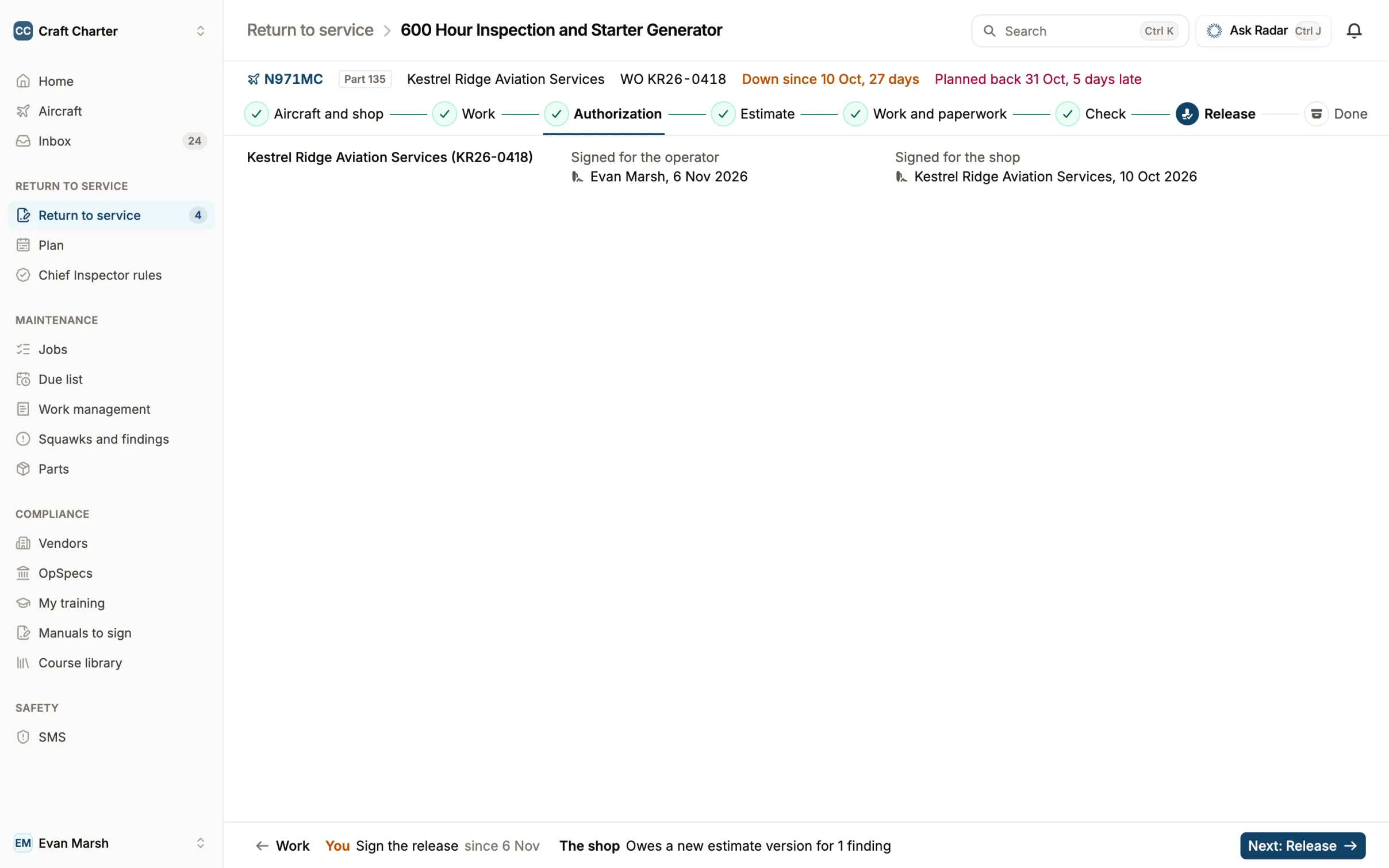
Authorization
The DOM and the shop each sign the work order authorization. On a Part 135 aircraft, Radar holds the release until both have.
-
Step 4 of 8
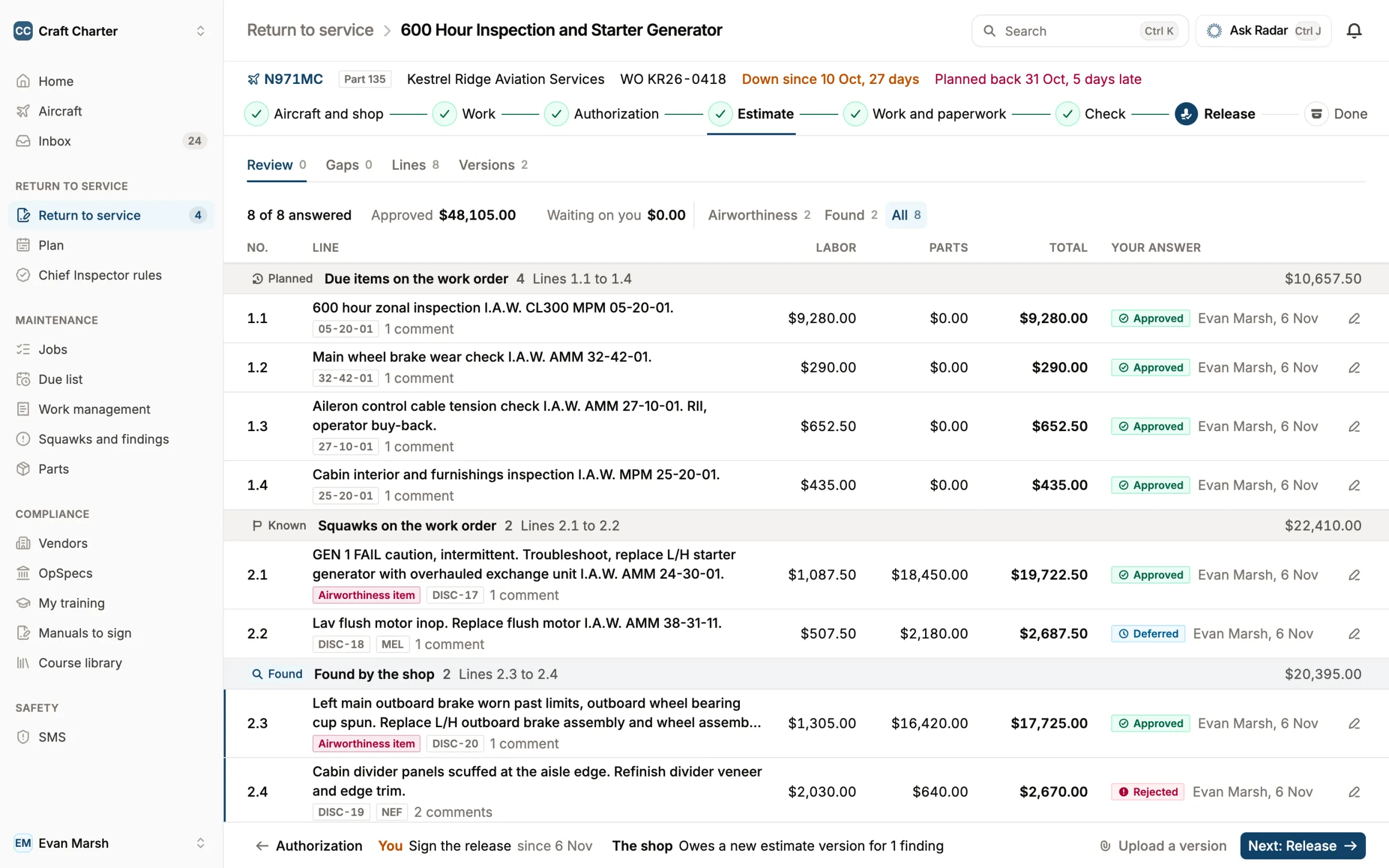
Estimate
The DOM approves, rejects or defers each line, with a reason for a no. Radar flags any line it is unsure of, and an airworthiness item can only be deferred.
-
Step 5 of 8
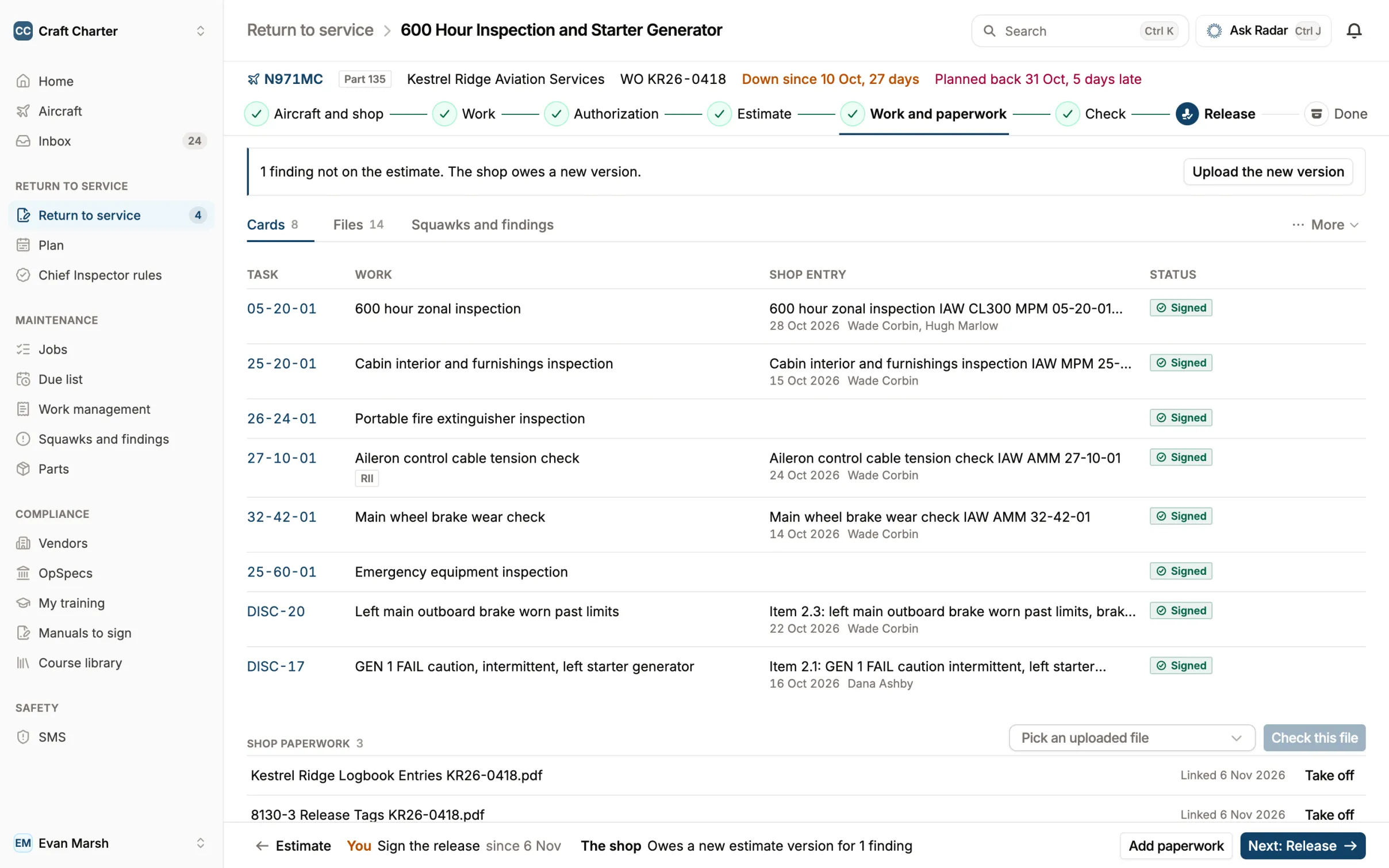
Paperwork
The DOM drops the shop's files on the visit and each entry lands on its card. Radar flags a missing 8130-3 or a serial that does not match the part installed.
-
Step 6 of 8
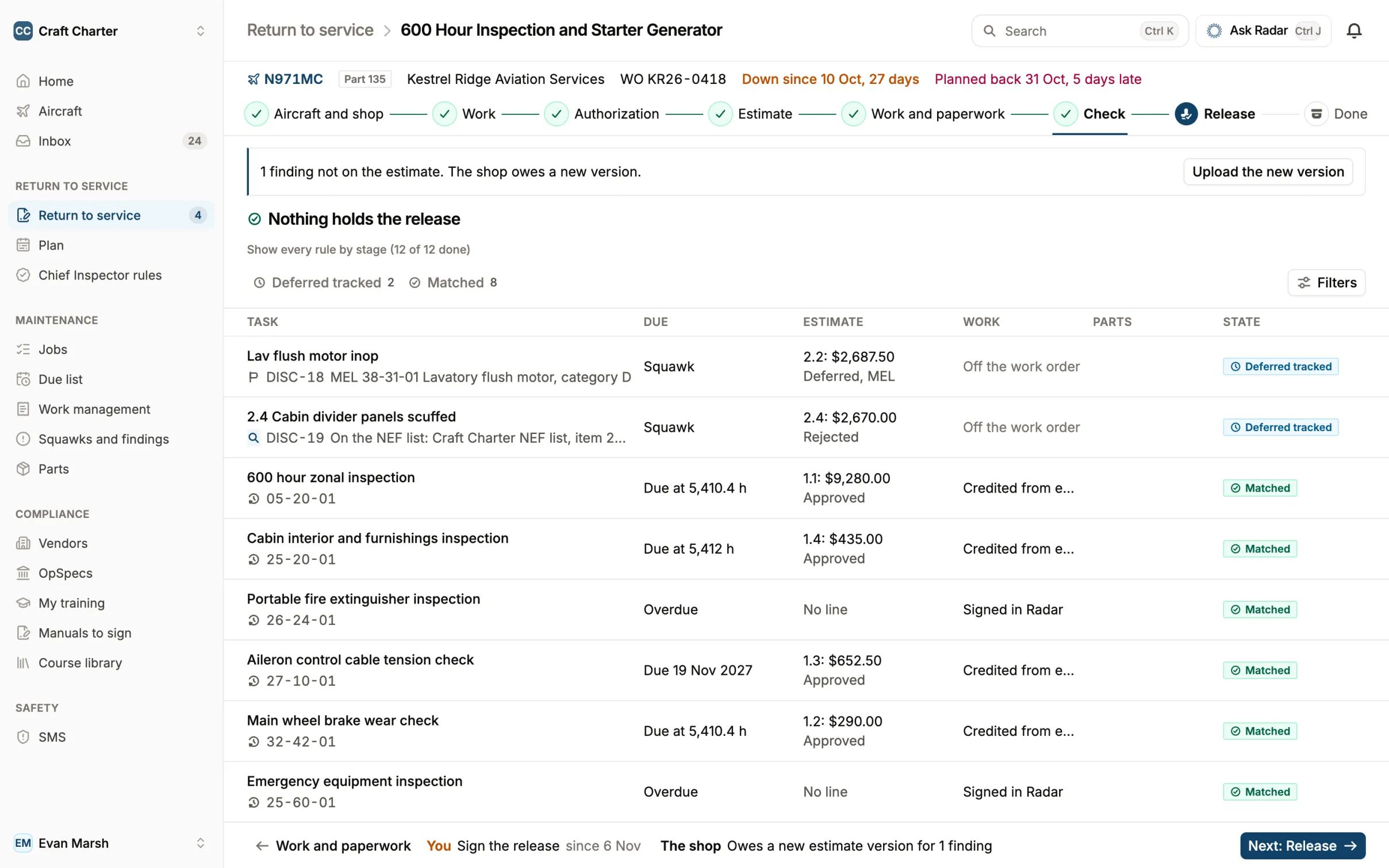
Check
The DOM reads each task against its estimate line, entry and due item. Radar names what holds the release and who has to act, and refuses the release until it clears.
-
Step 7 of 8
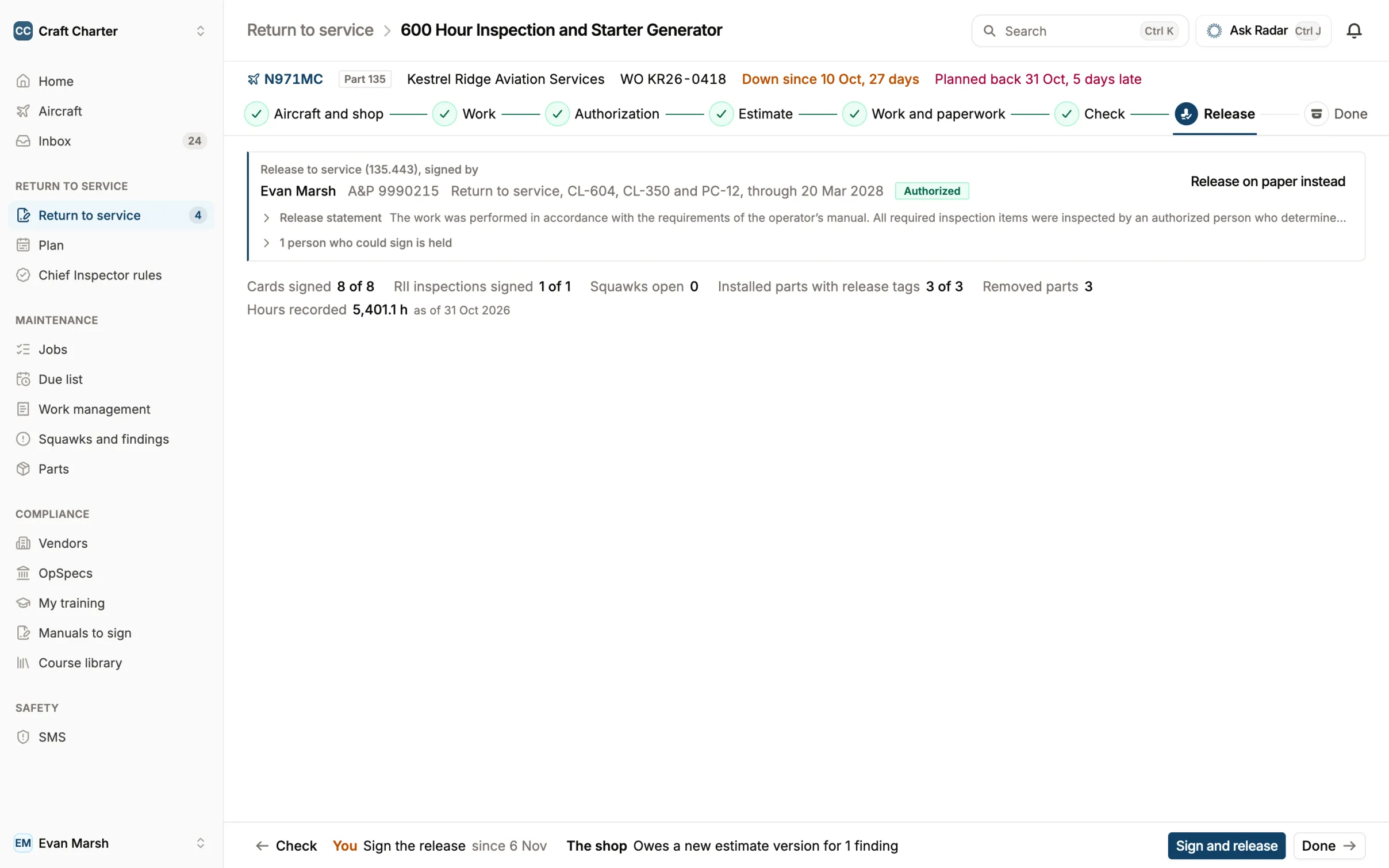
Release
The DOM signs in Radar with their password. Radar takes the name and certificate number from the certificate on file, and refuses a signer without a current one.
-
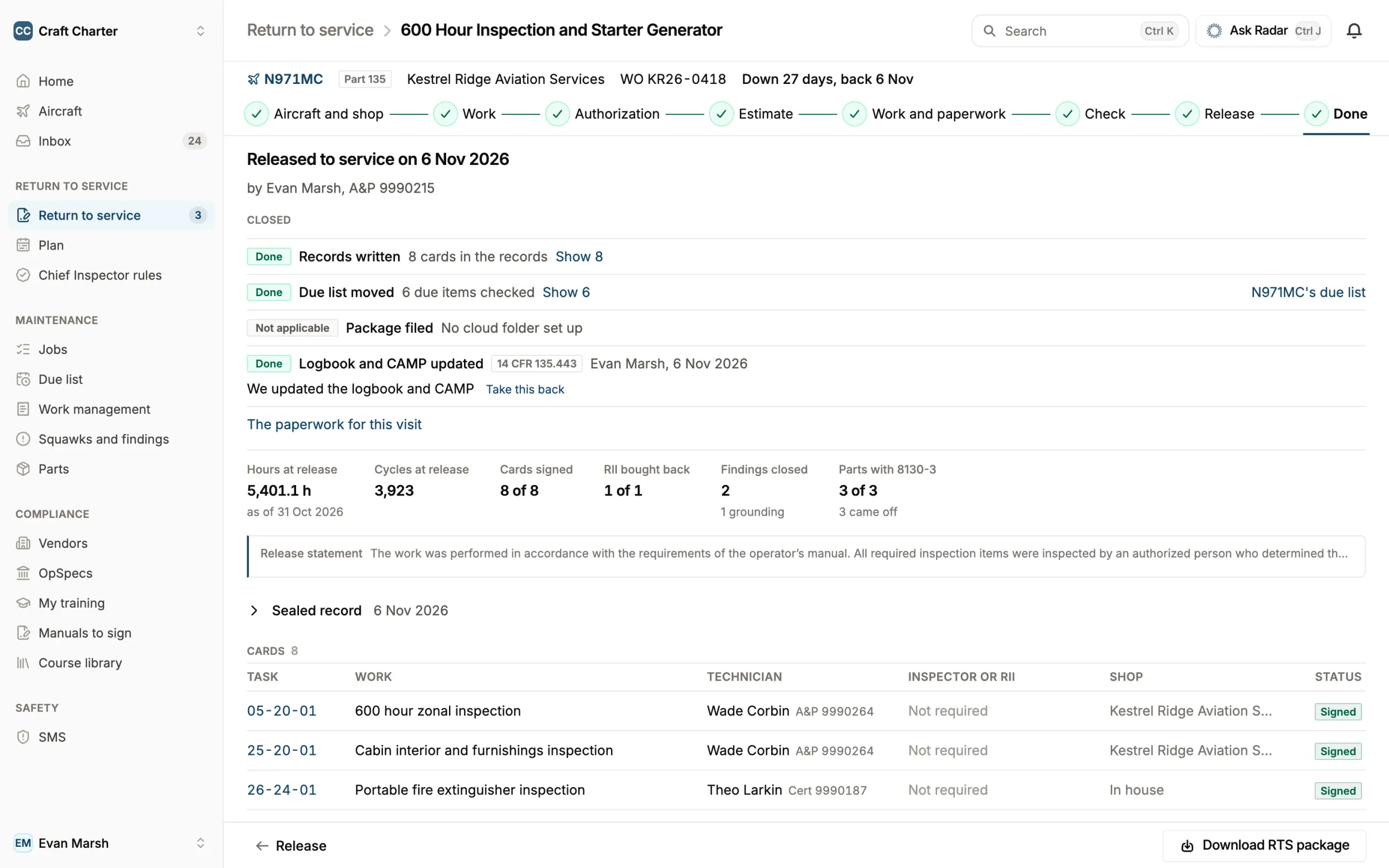
Step 8 of 8
Close-out
The DOM confirms the logbook entry is made. Radar keeps the visit open until the records are written, the due list has moved and that entry is confirmed.


Coming next
- Importing the CAMP due list as the baseline, beyond the comparison.
WHAT GETS RECONCILED
What Radar matches before anyone signs.
WHO DOES WHAT
Each person does their part, and Radar holds the line.
WHAT RADAR CHECKS
The rules behind the gate.
- Every task has a signed entry with the certificate number
14 CFR 43.9(a), 43.11(a) - The work is done and recorded
14 CFR 91.407(a) - Every installed part has its 8130-3 on file
14 CFR 43.13(b), AC 20-62E - Required inspections bought back by someone who did none of the work
14 CFR 135.429(c) - Every squawk closed, or deferred inside its MEL limit
14 CFR 91.213, 135.179 - The signer holds a current certificate and authorization
14 CFR 65.85 to 65.95, 135.443(a)
The whole workflow, from the due list to the filed package: How to return an aircraft to service
GET A DEMO
Run your next work order in Radar.
Send us one aircraft’s records and its next shop visit. We set up the rest with you.
Radar checks the paperwork. Your authorized people inspect the aircraft and sign the release.