

In brief
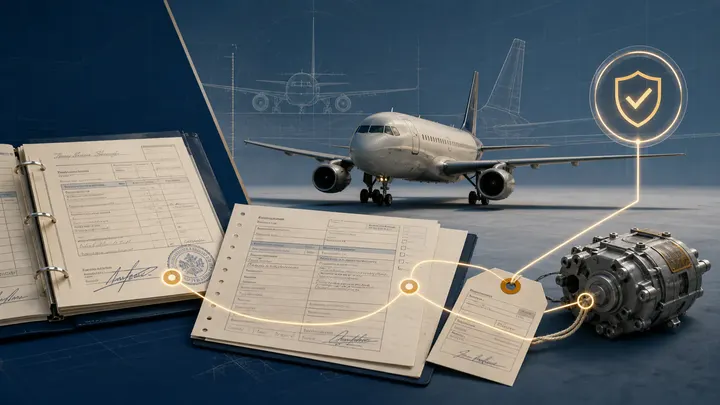
MRO document management should control the work package from induction through customer delivery: the approved scope, the task and inspection evidence behind each finding, parts trace, and the signed release records, with every revision and correction auditable.

The maintenance event is not finished when the aircraft leaves the hangar. It is finished when the provider and customer can prove the work performed, findings resolved, parts installed, inspections completed, and approval for return to service.
MRO document management should make records completeness a production control throughout the visit, not an administrative project at delivery.
The MRO document lifecycle
| Stage | Records created or controlled |
|---|---|
| Quote and planning | Proposal, assumptions, exclusions, customer scope |
| Induction | Aircraft identity, incoming status, discrepancy list, records received |
| Work execution | Task cards, measurements, findings, photos, labor, parts |
| Nonroutine work | Discrepancy, quote, approval, engineering, corrective action |
| Inspection | Required inspection, independent inspection, test results |
| Release | Maintenance entry, airworthiness release, certificates, open items |
| Delivery | Final package, source index, customer acceptance, revisions |
| Retention | Controlled archive, retrieval, corrections, audit history |
Each stage should inherit the exact aircraft, component, work order, and approved data context.
Induction and scope control
At induction:
- Verify aircraft, engine, APU, propeller, and component identity.
- Record incoming times and cycles.
- Confirm customer-authorized scope.
- Identify maintenance program and source revision.
- Inventory customer-furnished records.
- Capture open discrepancies and deferred items.
- Define customer communication and approval authority.
- Establish required delivery format.
Freeze the accepted scope version. Later additions should be explicit changes with time, cost, authority, and supporting finding.
Task cards and approved data
Every task should identify:
- Requirement or work-scope source.
- Approved or acceptable data as applicable.
- Revision status.
- Effectivity.
- Required tools, parts, measurements, and inspections.
- Technician authorization.
- Start, interruption, handoff, and completion.
- Findings and corrective action.
- Signatures or electronic authentication.
Do not detach completed task evidence from the revision and aircraft configuration under which the task was performed.
Nonroutine findings
Use a controlled chain:
- Document condition and exact location.
- Record detection task and inspector.
- Classify operational and airworthiness effect.
- Identify approved disposition or engineering need.
- Obtain customer authorization where required.
- Record corrective action, parts, measurements, and tests.
- Complete required inspections.
- Link closure to source evidence.
The quote, engineering disposition, work card, photographs, parts documents, and release should remain connected as one finding story.
Parts and material records
For installed material, capture:
- Part number, serial number, and quantity.
- Eligibility and effectivity.
- Supplier and purchase order.
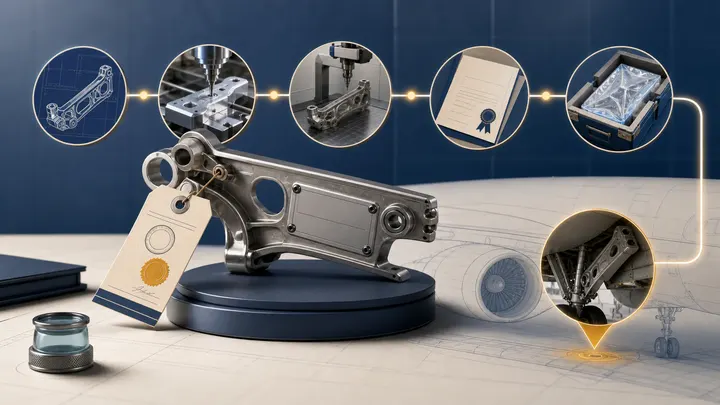
- Release certificate or approval tag.
- Shelf life and storage status.
- Batch or lot where relevant.
- Removal and installation event.
- Life and utilization data.
- Trace and ownership documents.
Link the FAA Form 8130-3 or other release document to the exact item. Do not use one tag as generic support for unrelated serialized parts.
Engineering and configuration
Control:
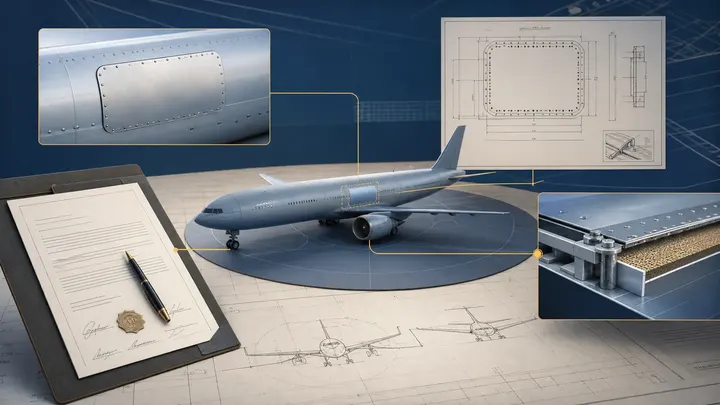
- Repairs and alterations.
- Approved data.
- Engineering orders.
- Supplemental Type Certificates.
- Instructions for continued airworthiness.
- Electrical and structural substantiation.
- Software and hardware configuration.
- Weight and balance.
- Equipment list.
- Flight-manual supplements.
- FAA Form 337 when applicable.
A modification delivery is incomplete if continued-airworthiness tasks never reach the customer’s maintenance program.
Inspection and signoff
The system should enforce:
- Authorized person and certificate or role.
- Required inspection item.
- Independent or duplicate inspection where applicable.
- Measurement and acceptance criteria.
- Tool and calibration reference.
- Date and aircraft or component utilization.
- Correction and reinspection history.
- Approval for return to service.
Electronic workflow must prevent one person from bypassing segregation required by the approved process.
Electronic records and corrections
FAA AC 120-78B provides guidance for electronic signatures, recordkeeping, and manuals. System controls should include:
- Unique user identity.
- Role and authorization.
- Signature meaning.
- Tamper evidence and audit trail.
- Controlled correction without erasing original data.
- Legible reproduction.
- Retention and retrieval.
- Backup, recovery, and continuity.
- Customer and regulator access under procedure.
Customer delivery standard
Deliver:
- Final work-scope reconciliation.
- Routine and nonroutine task cards.
- Findings and corrective actions.
- Parts and release documents.
- Engineering and approval data.
- Test and inspection results.
- Major repair and alteration records.
- Maintenance entry or airworthiness release.
- Open-item and carry-forward list.
- Updated status inputs.
- Searchable source index.
Organize by aircraft, visit, system, and task. A single 5,000-page PDF is technically digital but operationally hostile.
Repair-station retention and retrieval
U.S. repair stations should review 14 CFR 145.219, their repair-station manual, quality control system, operations specifications, customer contracts, and other applicable requirements.
The system should retrieve a record by:
- Aircraft or component serial.
- Customer.
- Work order.
- Date.
- Task.
- Part.
- Technician or inspector.
- Release document.
- Finding or engineering order.
MRO performance controls
Measure:
- Work completed but records unsigned.
- Customer records rejected.
- Nonroutine approval turnaround.
- Parts received without acceptable documents.
- Engineering aging.
- Final package delivery time.
- Correction frequency.
- Missing source records.
- Repeat findings after maintenance.
Records quality is a leading indicator of production control. Waiting until delivery to measure it finds problems too late.
Sources and further reading
Common questions
Frequently asked questions
What documents belong in an aircraft MRO work package?
The package varies by work, but often includes approved scope, work order, task cards, findings, nonroutine work, engineering data, parts and release documents, measurements, tests, inspections, signatures, maintenance entries, and return-to-service records.
How long must a repair station retain records?
Applicable requirements depend on the certificate, work, jurisdiction, and procedures. U.S. repair stations should review 14 CFR 145.219 and their accepted manual and quality system with qualified compliance personnel.
Can an MRO use electronic signatures and records?
Electronic systems may be used when applicable requirements and accepted procedures are satisfied. The system should control identity, authorization, integrity, audit history, retention, retrieval, backup, and correction.
Why should the customer receive source-linked records?
Source-linked delivery lets the operator verify what was accomplished, update maintenance status, support future audits, and find parts or engineering evidence without searching an unstructured PDF package.
Keep researching
Related aircraft guides

Deliver a cleaner record with every event
Connect the work package to the aircraft history.
Radar organizes work orders, task cards, parts evidence, approvals, and return-to-service records into a source-linked customer deliverable.