In brief
FAA Form 337 documents specified major repairs and alterations under Part 43. The form is only one part of the evidence package: reviewers must also reconcile maintenance entries, approved data, configuration changes, instructions for continued airworthiness, weight and balance, and physical embodiment.
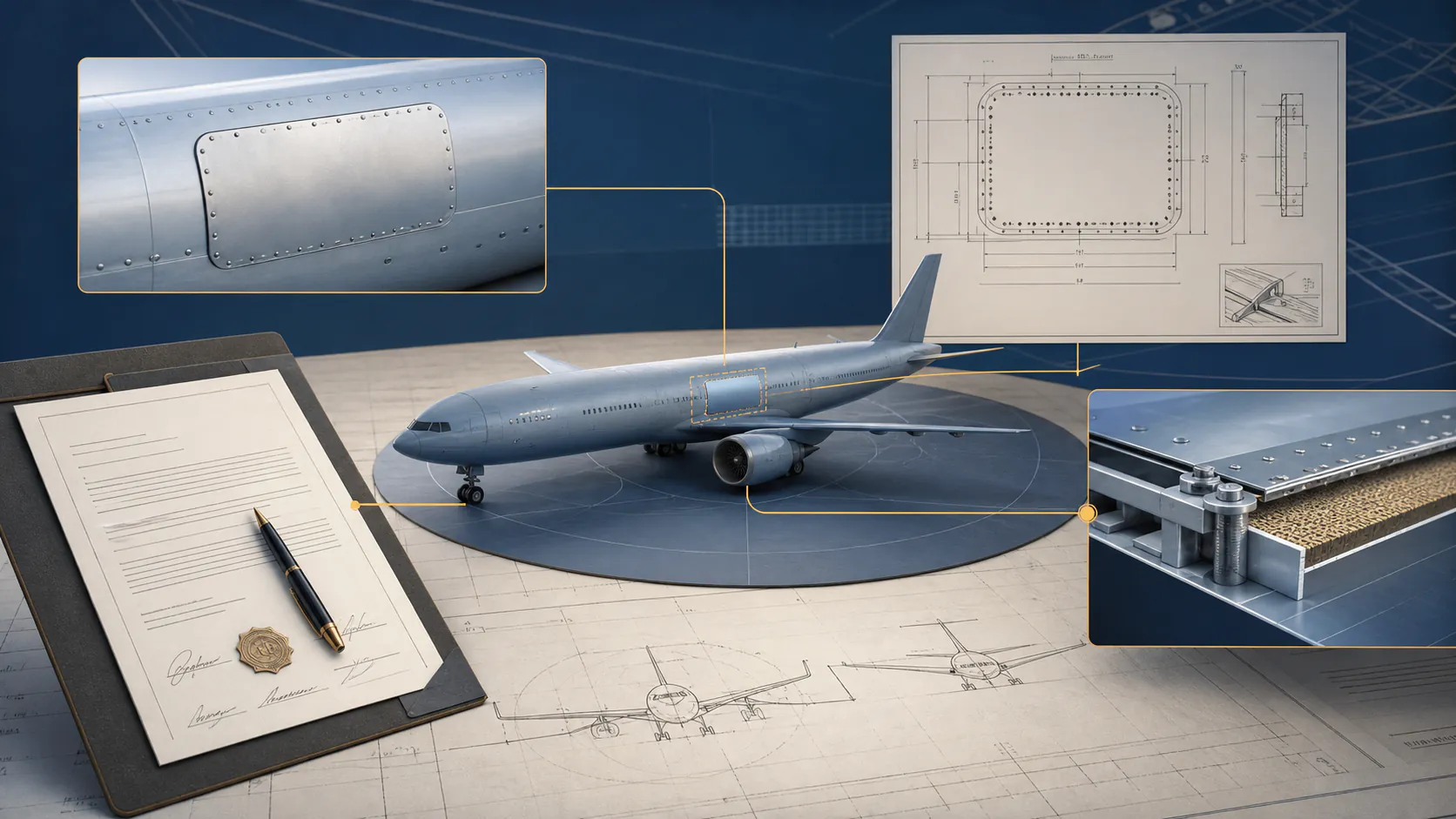
FAA Form 337 is titled Major Repair and Alteration (Airframe, Powerplant, Propeller, or Appliance). It creates a structured record of specified major work, approval for return to service, and—when applicable—FAA approval of technical data.
The form should never be reviewed alone. Its description, data, signatures, maintenance entries, weight and balance, equipment list, flight-manual supplements, and instructions for continued airworthiness must tell one consistent aircraft story.
The FAA’s active AC 43.9-1G provides the controlling completion guidance for users. Always review the current rule, form, circular, and FAA policy for the work.
When FAA Form 337 is used
Part 43 addresses maintenance, preventive maintenance, rebuilding, and alteration. Appendix A to Part 43 identifies major alterations, major repairs, and preventive maintenance categories.
The person classifying the work should evaluate:
- Product affected: airframe, powerplant, propeller, or appliance.
- Scope and complexity.
- Effect on weight, balance, structural strength, performance, powerplant operation, flight characteristics, or other airworthiness qualities.
- Whether the work can be done by elementary operations.
- Approved or acceptable data required.
- Any special reporting or field-approval process.
Do not decide that a repair is minor merely because the physical area is small.
Form 337 block-by-block review
| Block | Review focus |
|---|---|
| 1. Aircraft | Registration, serial number, make, model, and series |
| 2. Owner | Name and address consistent with current record |
| 3. FAA use | Field approval or other FAA action when applicable |
| 4. Type | Repair, alteration, or both |
| 5. Unit identification | Airframe, powerplant, propeller, or appliance identity |
| 6. Conformity statement | Performing agency, certificate, certification, signature, date |
| 7. Approval for return to service | Authorized person, approval or rejection, certificate, signature, date |
| 8. Description | Detailed work, data, location, instructions, attachments |
Use the actual current form and AC instructions. This summary is an audit aid, not completion authority.
Approved data and field approvals
A major repair or alteration generally requires appropriate approved data. Depending on the work, the support may include:
- Type Certificate or Supplemental Type Certificate data.
- Airworthiness Directive.
- FAA-approved manufacturer data.
- Designated Engineering Representative-approved data.
- Field-approved data.
- Other data approved under applicable authority.
The FAA describes the field approval process for a specific serial-numbered aircraft. A field approval is not interchangeable with an STC and is not suitable for every project.
Description of work
Block 8 and attachments should let a qualified reviewer understand:
- What was removed, repaired, or installed.
- Exact location.
- Product and component identity.
- Approved data and revision.
- Materials and major processes.
- Drawings, diagrams, or instructions.
- Tests and inspections.
- Operational limitations.
- Weight-and-balance change.
- Flight-manual or placard change.
- Instructions for continued airworthiness.
- Attachments that form part of the record.
Avoid vague language such as “installed per manufacturer data” without identifying the data.
Form 337 and the maintenance entry
The form does not eliminate other maintenance-record requirements. Reconcile it with 14 CFR 43.9, the associated maintenance entry, and the detailed work package.
The record set should connect:
- Work performed.
- Date.
- Person performing or supervising.
- Approval for return to service.
- Aircraft or component time where relevant.
- Approved data.
- Parts and release evidence.
- Inspection and test results.
- Configuration changes.
Filing and record disposition
Part 43 Appendix B and AC 43.9-1G address disposition. Use current FAA instructions for timing, copies, electronic submission, and special cases.
From a records-control perspective, preserve:
- Final signed form.
- FAA-accepted or filed copy evidence.
- All referenced attachments.
- Approved data.
- Maintenance entry.
- Work order and task cards.
- Weight-and-balance and equipment changes.
- Continued-airworthiness instructions.
- Photos and inspection evidence when material.
An expired OMB date printed on an older PDF does not itself answer whether the form or process is current. Use the FAA’s active form and guidance pages.
Reviewing an existing Form 337
Check:
- Aircraft and owner identity.
- Repair or alteration classification.
- Unit identification.
- Performing agency and certificate.
- Return-to-service authority.
- Dates and signatures.
- Approved-data reference.
- Work description and attachments.
- Weight and balance.
- Flight-manual supplements and placards.
- Instructions for continued airworthiness.
- Physical aircraft configuration.
- Related maintenance entries.
- FAA aircraft-file copy where available.
Record discrepancies; do not “fix” the historical form by editing the source file.
Common Form 337 records problems
- Wrong aircraft or component serial number.
- Owner name inconsistent with the period.
- Missing signature, certificate, or date.
- Approved data not clearly identified.
- Attachment referenced but absent.
- Work description too vague to reproduce or inspect.
- Weight-and-balance change missing.
- STC or flight-manual supplement absent.
- Continued-airworthiness tasks not added to tracking.
- Physical configuration differs from the record.
- Form appears in FAA file but not aircraft records, or vice versa.
Each problem has a different corrective path. Use qualified maintenance, engineering, legal, and FAA support as appropriate.
Form 337 in a pre-buy or financing review
For each material form:
- Identify the affected system and value consequence.
- Confirm the work is physically present.
- Review the approved data and completeness.
- Find subsequent inspections or repeat issues.
- Confirm continued-airworthiness requirements.
- Check damage and repair disclosure.
- Connect the form to valuation and lender diligence.
The absence of a Form 337 in a search is not proof that no major repair or alteration occurred. Review the full records and physical aircraft.
Sources and further reading
Common questions
Frequently asked questions
What is FAA Form 337?
FAA Form 337 is the Major Repair and Alteration form used to record specified major repairs and major alterations of an airframe, powerplant, propeller, or appliance under applicable Part 43 requirements.
Who completes FAA Form 337?
Responsibilities depend on the work and applicable rules. FAA AC 43.9-1G provides active instructions for completion and disposition. Qualified certificated persons and, where required, FAA or authorized approval should control the form.
Is every aircraft repair documented on Form 337?
No. The classification of work as major or minor depends on applicable definitions and Part 43 Appendix A. Maintenance-record entries are still required as applicable even when Form 337 is not.
Can you find FAA Form 337 records in the FAA aircraft file?
Filed forms may appear in FAA aircraft records. The registry file should be reconciled with the aircraft’s own maintenance records because each source may contain context the other lacks.
Keep researching
Related aircraft guides




Run maintenance from connected evidence
Know what is due—and open the record that proves it.
Radar connects maintenance status, component history, compliance work, and source records across every tail in the fleet.