
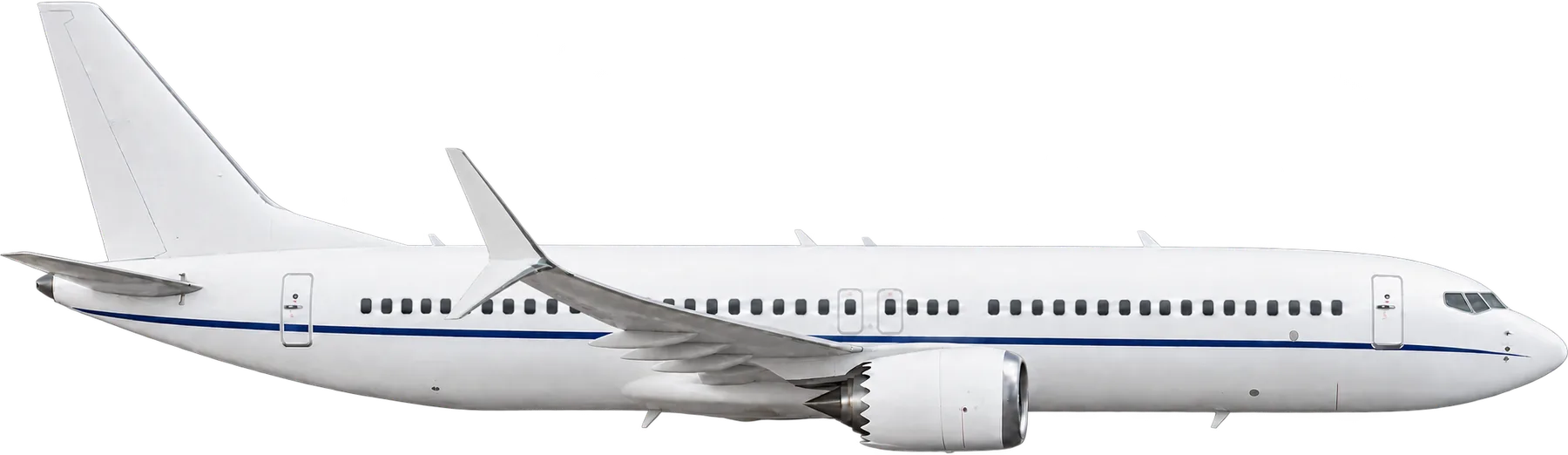
N17417 Boeing 737 MAX 9
- 48Seats
- 3,300 nmRange
- 453 ktCruise
- 41,000 ftCeiling
SPECIFICATIONS
Boeing 737 MAX 9 specs
Published figures for the type, from public sources. A given aircraft varies with its completion, weight and mods.
- Model
- Boeing 737 MAX 9
- Serial number
- 64448
- Engines
- 2 × CFM International LEAP-1B
- Thrust
- 29,317 lbf each
- Seats
- Up to 48
- Range
- 3,300 nm
- Cruise
- 453 ktas
- Published Mach
- 0.79
- Ceiling
- 41,000 ft
- ICAO type
- B39M
THE AIRCRAFT’S LIFE
N17417 on the registry.
Registration events from FAA records, compiled November 2025. Maintenance, damage and component history live in the logbooks, not the registry.
-
Latest FAA registry action
FAA registry
FAA REGISTRATION
Registration details
- Registration
- N17417
- Last FAA action
- Sep 12, 2025
- Mode S code (hex)
- A12AA4
- Aircraft category
- Fixed-wing multi engine
- Weight class
- Over 20,000lbs
From FAA registry data as of November 2025. Check the FAA registry for the current record.
OWNERSHIP
Registered owner
Boeing Co
ESTIMATED VALUE
What N17417 might be worth
EstimateAbout $129 million
A rough market estimate compiled in November 2025 from public listings and market reports for the type and year. It is not an appraisal. It does not account for this aircraft's total time, engine program, damage history or the state of its logbooks, which can move a price by millions.
Open the aircraft value toolRESEARCH NOTES
About N17417
Compiled with AI assistance from the public sources listed below, November 2025. Not checked against the aircraft's logbooks.
Overview
This airframe, registered as N17417, is a Boeing 737 MAX 9 with manufacturer designation Boeing Co and manufacturer serial number 64448. The aircraft is recorded as owned by Boeing Co (corporate owner) and carries a United States registration. Build year and operator/home base details are not published in the supplied data.
Operations & Cabin
The cabin of this airframe is configured with 48 seats, indicating a layout tailored for higher-capacity, short- to medium-haul operations relative to smaller business or regional types. Avionics fit and interior specification details are not published in the supplied data; however, the aircraft’s performance figures, 3,300 nm range and 453 kts cruise, support point-to-point missions that can include transcontinental or island-hopping sectors within its range band. Maintenance considerations for this airframe center on its twin CFM International LEAP-1B engines, each rated at 29,317 lbf, and the typical OEM support pathways attributable to a factory-owned airframe. Operator base and specific route assignments are not published.
Model & Market Context
As a member of the Boeing 737 MAX family, the Boeing 737 MAX 9 airframe occupies a performance niche balancing higher passenger capacity against single-aisle operational economics, with the supplied range and cruise supporting medium-haul markets. Resale prospects and charter demand for this model typically hinge on fleet commonality, engine program participation, and the airframe’s completed avionics and interior specification, which are not detailed in the provided data.
SOURCES
Where this page comes from
Built from FAA registry records, manufacturer specifications, and public flight-tracking and market data, compiled November 2025. Values come from Radar’s aircraft value model. Owners and operators can ask for a correction or removal.
BUYING, SELLING OR FINANCING
What to check before a deal
- Pre-buy records reviewWhat to read in the logbooks before you sign
- Aircraft title searchLiens, registrations and the chain of title
- Aircraft valuationHow records, time and programs move the price
- Aircraft maintenance recordsWhat a complete records package holds
Own or manage N17417? Put its logbooks in Radar.
Radar reads every logbook page, typed or handwritten, and builds one searchable record for the aircraft: times, inspections, ADs and components, each tied to the page it came from.
N17417 is not a Radar customer record. This page is built from public sources as of November 2025. Owners and operators can ask for a correction or removal.